J. Soc. Cosmetic Chemists 19 245-261 (1968) ¸ 1968 Society of Cosmetic Chemists of Great Britain Some experiences in developing a Votator plant and process C. PUGH* Presented at the Symposium on "Processing and Manu- facturing", organised by the Society of Cosmetic Chemists of Great Britain, at Leamington, Warwicks. on 14th November 1967. Synopsis--Experiments made in adapting the Votator heat exchange plant for the manu- facture of toothpaste led to the development of some apparently novel techniques in the design of product handling equipment, and also to a hypothesis for the changes taking place during conversion from raw materials to finished product. This hypothesis showed good agreement with the effects found for the range of process variables studied. The experiments are used purely as examples and no attempt is made to discuss the formulation or actual manufacture of toothpaste. INTRODUCTION Some years ago we investigated the Votator type of heat exchanger as a means of continuous production of toothpaste. This is not a novel application of this principle, e.g. Proctor & Gamble have a patent des- cribing such an application (1) and its use for cosmetic products has been described by Bolanowski (2). However, these do not cover many of the lessons we learned from our experiences, both in the handling of products and in the control of processes. Although not necessarily novel now to the engineering profession these were new to us at the time, and they may well prove novel to others. The attraction of a continuous process lies in the very high degree of control of the mechanical force, mixing efficiency, temperature and other *Formerly with Beecham Toiletry Division, Great West Road, Brentford, Middx. Now at Yardley & Co., Ltd., Basildon, Essex. 245

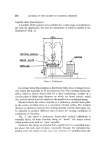
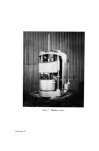
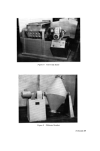
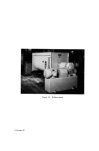
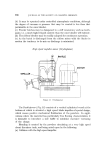
246 JOURNAL OF THE SOCIETY OF COSMETIC CHEMISTS physical variables that can be achieved by working on a small, continuously replaced quantity of matehal rather than an enormous batch. This accurate control is only valuable if the matehals can be fed into the mixing zone with accuracy in their proportioning comparable to that of the physical controls. Liquid or fluid ingredients are easy to handle accurately with metering pumps dry solids are very difficult to meter with comparable precision, and this has to be taken into account in designing a continuous production plant. One of the disadvantages of a continuous process is the high relative cost of starting up and shutting down, which is due to the need to blend off or scrap the incompletely treated product produced while equilibrium conditions are being achieved or lost. These considerations make all but the simplest of cold liquid blending operations uneconomic unless plants are run on a 24 hr basis. DEVELOPMENT OF THE PLANT A toothpaste plant has to start with a multiplicity of raw matehals such as the solid polishing agent, solid detergent, solid colloid stabilising gum, liquid flavouring oils and aqueous vehicle, and has then to convert all of these into a homogeneous emulsion in which the detergent and gum have been dissolved and uniformly dispersed together with the other ingredients. The difficulty of finding accurate, continuous feeding devices for solids (which comprise about half the bulk of most toothpastes) excluded any question of feeding all ingredients directly to the continuous mixer in our experiments. A semi-continuous arrangement was finally adopted in which all ingredients were homogeneously blended cold before feeding into the continuous processing unit. This pre-blending stage was conventional and will not be discussed. The processing unit has to accept this cold premix, heat it to a sufficient- ly high temperature first to disperse all the stabilising gum and the deter- gent into solution then to complete emulsification of the insoluble flavouring component in this solution, subsequently to complete the dispersion of the solid polishing agent in this emulsion, and finally to cool the product to a suitable temperature for packing into tubes. The process plant adopted for the experiments had three stages. The first was a Votator heating unit comprising a steam-jacketed, hard chrome-plated, stainless steel cylinder inside which rotated a shaft carrying
Purchased for the exclusive use of nofirst nolast (unknown)
From: SCC Media Library & Resource Center (library.scconline.org)