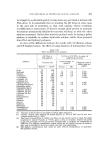
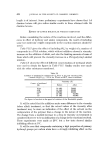
j. Soc. Cosmet. Chem. 94 427-440 {1970) ¸ 197o Society of Cosmetic Chemists of Great Britain Some applications of rigidity and yield values in a study of gelatin and Laponite gels j. E. CARLESS and J. R. NIXON* Presented at the Symposium on "Gums and Thickeners", organised by the Society of Cosmetic Chemists of Great Britain, at Oxford, on lSth October 1969. SInopsls--The measurement of RIGIDITY is a valuable parameter of rigid GELS such as those produced by GELATIN. Whilst it has proved possible to measure a function of rigidity with dilute synthetic hectoritc gels, a far more important property of this THIXOTROPIC material is the relatively rapid SOL-GEL TRANSFORMATION. LAPONITE gels of the same yield value as bentonitc ones poured easier because of their lower plastic VISCOSITY. Laponite gels also show a more rapid build up of "static" yield value than bentonitc gels. If GEL REFORMATION is too slow some settling of suspended SOLIDS can take place. INTRODUCTION Gels, both the rigid type such as gelatin and the thixotropic materials such as bentonire and hectorire, exhibit rheological properties which suggest they possess an internal lattice structure. Whereas this gel mesh network is sufficiently strong in the case of gelatin to withstand reasonably large shearing forces without breaking down the gels produced by ben- tonRe exhibit thixotropy. That is, the internal structure breaks down when a sufficiently high shearing force is applied and a gel-sol transformation takes place. On removal of the force a gradual reformation of the gel occurs. Natural clays such as bentonRe possess disadvantages such as gritty impurities and for this reason a synthetic colloidal clay possessing the same *Dept. of Pharmacy, Chelsea College of Science and Technology, London, S.W.3. 427

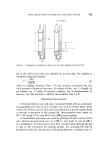
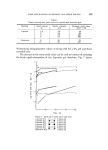
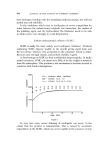
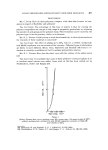
428 JOURNAL OF THE SOCIETY OF COSMETIC CHEMISTS structure as hectorire and capable of forming colourless translucent gels is a distinct advantage. Such a material is Laponite. This paper considers the measurement of rigidity in gelatin gels con- taining glycerin and the possibility of using the same method of measure- ment on Laponite gels. It also examines the much more important para- meter, for the latter, of static and dynamic yield values. EXPERIMENTAL Gelatins. Alkali processed hide materials from a single source supplied by Richard Hodgsons, Beverley, Yorks., were used. The characteristics of these materials have been given previously {1). Synthetic hectorite. This was Laponite B supplied by The Fullers Earth Union Ltd., Redhill. This material is similar to mica in that it has a variable layer lattice structure of Si, Mg, Li, O, (OH), and F ions. The soluble fluoride was less than 0.5% and the pH of a 2% solution was 8.3. Bentonite. This material complied with the specification given in the British Pharmacopoeia. Glycerin. A nalar material was used. Preparation of gels Gelatin and distilled water were allowed to imbibe at 5 ø for 1 h before solution at 50 ø . The glycerin, also at 50 ø , was added and the mixture gently, but thoroughly, stirred. Gels were allowed to mature at 25 ø + 0.1 ø for 16 h before rigidity measurements were made Bentonire and Laponite gels were made by sprinkling the material on the surface of distilled water and agitating with a non aerating high speed stirrer for half-an-hour. Ageing was in sealed containers at room temper- ature for at least two days. Measurement of rigidity The Saunders and Ward (2) rigidometer method was used. The volume displacement of a gelatin column, maintained at Tø+ 0.1 ø, on the appli- cation of air pressure was measured by means of the movement of a mercury thread in a side arm (Fig. 1). This allowed very small changes in volume to register as large movements of the mercury meniscus. The adhesion of the
Purchased for the exclusive use of nofirst nolast (unknown)
From: SCC Media Library & Resource Center (library.scconline.org)