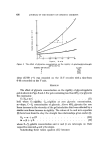
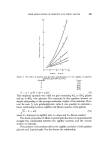
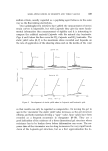
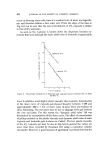
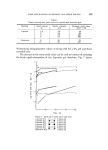
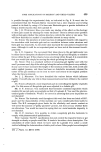
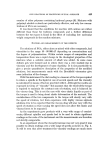
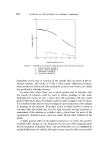
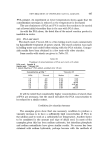
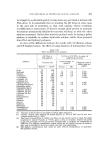
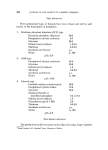
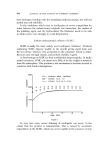
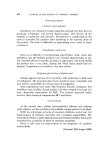
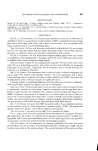
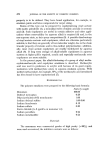
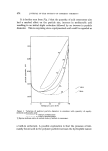
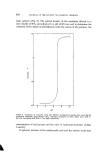
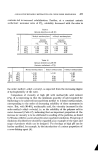
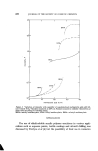
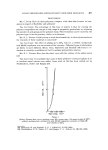
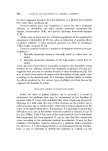
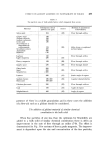
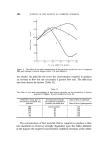
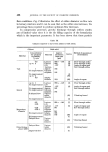
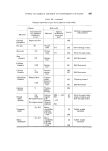
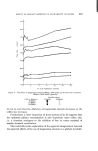
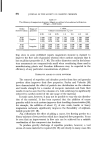
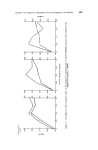
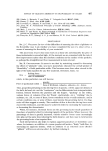
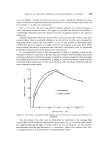
SOME APPLICATIONS OF RIGIDITY AND YIELD VALUES 435 Table I Plastic viscosity and yield values of Laponite and bentonire gels Material Laponite Solid content 1.5 4 Plastic viscosity (ce) 4.6 5.5 6.2 5.7 Dynamic yield value (Nm -2 x 10) 18 82 226 382 Bentonire 8 32 73 10 59 400 Weissenberg rheogoniometer values of Cheng (12) for a 2% gel and those recorded here. The increase in the static yield value can be used as a means of assessing the fairly rapid reformation of the Laponite gel structure. Fig. 7 shows 2.7 4 8 12 .16 Time, rain Figur• ?' Build up of yield value with time. Laponit• 2• ¸ ¸ 2 days old Laponite 9, •o • 9 days old Laponit• $•o U [] 2 days old Laponit• $ •o ffi [] 9 days old Laponit• 4 •o A A 2 days old Laponite 4 % ß ß 9 days old Bentonire 8•o x--x 2 days old

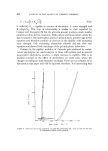
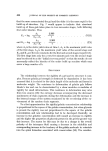
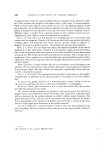
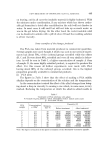
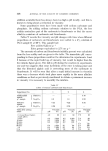
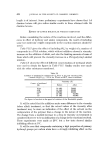
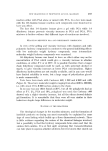
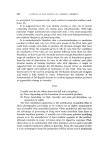
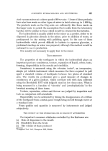
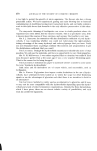
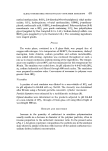
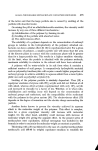
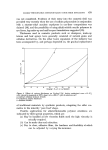
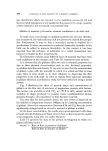
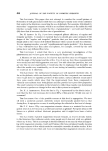
436 JOURNAL OF THE SOCIETY OF COSMETIC CHEMISTS that the more concentrated the gel and the older it is the more rapid is the build up of structure. Fig. 7 would appear [o indicate that structural build up of these gels takes place in two successive stages, both following first order kinetics. Thus A 1 2.303 K 1 = log A 1--At t A 2 2.303 and K 2 = log A 2--At t (vIn) (ix) where At is the static yield value at time t, A 1 is the maximum yield value of the first stage, A 2 is the maximum yield value of the second stage and K 1 and K 2 are the rate constants for the first and second stages respectively. The first stage lasts only for a very few minutes and even the second stage may be referred to as the "initial recovery period" so that the results do not necessarily reflect the kinetics of the entire build up reaction which may cover a large number of h. DISCUSSION The relationship between the rigidity of a gel and its structure is com- plex. Because gelatin gel strength is destroyed by degradation it has been assumed that it is related to the chain length of the molecule and hence its molecular weight. The resistance to deformation of gelatin gels follows Hooke's law and can be characterised by a shear modulus or modulus of rigidity for small deformations. This resistance to deformation may arise from two sources (13): the entropy decrease accompanying the decreased randomness of chain segments during the deformation and the increase in the internal energy of the system occasioned by the re-ordering of the en- vironment of the random chain segments. To a first approximation the rigidity/gelatin concentration relationship is proportional to the square of the gelatin concentration, but when glycerin is present the rigidity was not proportional to the square of the gelatin concentration and new relationships had to be developed. Basically, an increase in the gelation concentration still caused an increase in rigidity and the higher the proportion of glycerin present in the gel the greater was this increase. The reason for this may be due to a change in the overall polarity of the interspace fluid causing a decrease in the solubility and corresponding increase in the tendency of the gelatin molecule to orientate into the spiral formation associated with coacervation {14). The consider-
Purchased for the exclusive use of nofirst nolast (unknown)
From: SCC Media Library & Resource Center (library.scconline.org)