470 JOURNAL OF THE SOCIETY OF COSMETIC CHEMISTS is too high to permit the gro•vth of micro-organisms. The flavour also has a strong germicidal action. \¾e have experienced gassing and tube blowing due to bacterial contamination of dentifrices having lower humectant levels, and our fairly extensive work in this field shows that formalin is the only effective preservative in this situa- tion. The enzymatic thinning of toothpastes can occur in sterile products where the organisms have been killed, but the enzyme remains. This is a speculative area, little is known about the sources of trace enzymes, and anyway the trouble is very rare. MR. S. J. STmANSE: In connection with the distribution coefficient of your hydro- colloids, I was wondering whether you could not tailor-make the right product, taking advantage of the many hydroxyl and carboxyl groups that you have. Could you not ethoxylate them or perhaps combine ethoxylation and propoxylation to get the distribution coefficient that you want? TI•E L•cxtm•R: Perhaps the hydrocolloid manufacturer should take note of that question. We only use the materials, and have no opportunity to vary their properties. MR. R. H. McDowm•x•: I was rather surprised that no mention was made of Irish moss because I gather that a few years ago it was a very popular thickening agent. What is the reason for its being dropped? Ti• LECXtJR•R: I restricted my paper to materials •vhich I consider to come under the term 'Synthetic hydrocolloids'. Irish moss and its derivatives are of course widely, and successfully, used in toothpastes. MR. A. Fosx•m If glycerine does impose certain limitations in the use of hydro- colloids, have alternatives been looked at to widen the scope for other thickening agents or are the advantages of glycerine such that there is no incentive to look for an alternative? T•F• L•cxtmFm: Sorbitol is widely used as an alternative to glycerine, and it may or may not be more compatible with the hydrocolloids depending upon the hydro- colloid and a host of other formulation considerations. Outside the three formulations which I have given, there are an almost infinite variety of possibilities, and each must be considered separately.

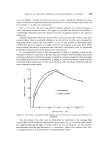
J. Soc. Cosmet. Chem. 9,1 471-482 (1970) ¸ 197o Society of Cosmetic Chemists of Great Britain A group of alkali-thickenable methacrylate copolymer emulsions E. V. GULBEKIAN* Presented at the Symposium on "Gums and Thickeners", organised by the Society of Cosmetic Chemists of Great Britain, at Oxford, on 15th October 1969. $yn0p$i•The alkali-thickening of a group of alkyl methacrylate-methacryli½ acid COPOLYMER EMULSIONS has been examined. The VISCOSITY achieved at high pH is shown to depend on the quantity of copolymerized acid and the nature of the ALKYL group of [the methacrylate ester. The use of such ALKALI-THICKENABLE polymer emulsions is discussed. INTRODUCTION The introduction of synthetic colloids to replace or complement natural products has increased the variety of thickening agents available to various industries and enabled materials to be designed for specific applications. Alkali-thickenable polymers are an example of a family of products which can be tailor-made to give a wide range of properties such as hardness, flexibility and solution viscosity. Alkali-thickenable and alkali-soluble polymers are essentially high molecular weight materials containing pendant carboxyl groups in the polymer chain, the salts of which swell or dissolve in water. Properties may be varied by adjusting the polymer composition and the number and dis- tribution of --COOH groups in the chain. Emulsions of such polymers have the unique advantage of being thickenable in situ, and can thus be stored and handled as low viscosity fluids until such time as their thickening *Vinyl Products Ltd., Carshalton, Surrey. 471
Purchased for the exclusive use of nofirst nolast (unknown)
From: SCC Media Library & Resource Center (library.scconline.org)