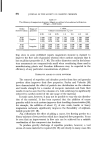
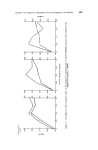
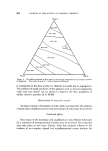
468 JOURNAL OF THE SOCIETY OF COSMETIC CHEMISTS NON-CELLULOSICS Carboxyl vinyl polymers Dentifrices can certainly be made using this material, but they have no particular advantages and several disadvantages. The flavour of the material is unpleasant and obtrusive. Manufacture is complicated by the need to neutralise the polymer after dissolving in the aqueous phase of the product. This leads to difficulties in maintaining even, batch to batch consistency. Polyethylene oxide resin There is no difficulty in incorporating polyethylene oxide resins into dentifrices, but the finished products have unusual characteristics in use. The extruded ribbon is smooth and shiny in appearance, but in the mouth the product has a very slimy, cloying feel which many people find un- pleasant. Dispersion in the mouth is very slow indeed. Propylene glycol ester of alginic acid Sodium alginate because of its reactivity with metal ions, is little used in toothpastes. The propylene glycol ester should be more compatible and may well be a posssibility for certain types of toothpastes. Some experiments were made with Stannous Fluoride toothpaste. The dentifrices were initially of good quality, and there seemed to be hope of a more dispersible replacement for HEC. The product separated badly, however, after storage at temperatures 28øC and above. CONCLUSIONS At the present time, sodium carboxymethyl cellulose and hydroxy ethyl cellulose are the synthetic hydrocolloids coming nearest to the ideal. SCMC has advantages in terms of consumer attributes, and of cost, but disadvantages of chemical reactivity, and enzymatic degradability. Hy- droxyethyl cellulose confers high physical and chemical stability but may be somewhat less acceptable in terms of consumer properties. There is still scope for improvement in the properties of synthetic hydrocolloids. (Received: 28th August 1969)

SYNTHETIC HYDROCOLLOIDS AND DENTIFRICES 469 BIBLIOGRAPHY Morss, N.M. and Ogg, ]. Water Soluble Gums and Colloids, 1966. (S.C.I. Conference). Some special characteristics of cellulose ethers. Desmarais, A. J. and Esser, H. O. Relationship of chemical structure of water soluble cellulose ethers to physical properties. Nearn, M. R. Rheology of the ternary system carboxy methyl cellulose/glycerol/water. DISCUSSION MR. R. J. CHUDZ•KOWS•C•: Do you have any experience in the use of Pluronics in dentifrices? There is one particular material which at 20% concentration forms strong gels with a fairly high yield value, and a short recovery time. It is compatible with many materials and is a good suspending agent. THE LECTURET•: We have not done any work with it in dentifrices. We are looking for low cost materials which will give quite thick gels at 2% level in 50% aqueous glycerine, so Pluronics have not even been considered in this context. DR. B. S. N•uMa•: Do you think that inorganic gelling agents have any future in dentifrices? The requirements of forming a gel at 2% level in 50% glycerine would be fulfilled with certain inorganic gelling agents. TH• L•CTUR•R: I think we are talking about Laponite. We have done some work with this very interesting material, but so far we have had difficulty in preparing stable gels in the presence of glycerine. Work continues, and we would not rule out Laponite as a toothpaste thickener. MR. N.M. MoRss: You mentioned that a hydroxyl ethyl cellulose toothpaste did not go thin when treated with cellulose enzymes. It is our experience, but I think I am referring only to solutions of hydroxy ethyl cellulose and SCMC, that the rate of degradation with a cellulose enzyme is roughly the same. I wonder if there is something different about the behaviour in actual toothpaste. Why should HEC degrade in solution but not in toothpaste? TieE L•ZCTURER: I do not really know, but I can only report what we found. We did a considerable amount of work using complete toothpastes and storing them for a period of some months. We obtained some cellulase and found that just 2 ppm in an SCMC toothpaste would cause it to liquefy in a very short space of time. In the very rare event of stock spoilage from this source, it took a month or so for the product to soften, and only minute traces of cellulase would be present. Under these conditions, our test products with SCMC became thin, and those with HEC did not. MR. N. M. MORSS: It may be that HEC has partial rather than complete resistance to the cellulase enzyme. With unpreserved emulsion paint, SCMC will degenerate quickly, HEC less quickly, and methyl cellulose least quickly. THn L•ZCTUR•R: I am sure you are right, it is a question of degree. DR. J. J. M^us•ER: You have indicated three formulations in your paper and their pH ranges from 4.5 to 10.0. I was struck by the absence of preservative. I wonder how important this is from the formulation point of view, quite apart from any question of enzymatic activity but purely from the bacteriological aspect. TH• LECTURER: in our experience, in climatic conditions all round the world preservatives are not necessary in formulations like this, which have a high concen- tration of glycerine in the aqueous phase. The osmotic pressure of the aqueous phase
Purchased for the exclusive use of nofirst nolast (unknown)
From: SCC Media Library & Resource Center (library.scconline.org)