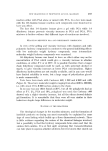
NEW REACTIONS OF PROPYLENE GLYCOL ALGINATE 457 propylene glycol alginate complex does not seem to be broken down in the stomach. (Simply from looking at in vitro experiments, using commercial pepsin in stomach conditions.) It is, however, broken down by pancreatin so there is the possibility that it could be used in a capsule which has to pass through the stomach and be effective lower down. Me. M. G. DE NAVARRE: Since the alginate which you are describing is made by a reaction between propylene oxide and the alginic acid, do you not get some ether formations between propylene oxide and the hydroxyl groups? Could not these, in fact, be somewhat responsible for the erratic results that you seem to be getting under certain conditions, as you are referring here to hydrolysis? THE LEc•ruRI•R: It is possible. Very little is known about that as it is rather difficult to demonstrate it analytically. Nobody has been able to show the presence of ether groups, although they may be there. However, the conditions for reacting alginic acid with propylene oxide are generally not those conducive to ether formation. On the question of the reaction, we did speculate at one time that possibly propylene oxide could be an intermediary but we tested that by putting propylene oxide in the mixture in alkaline conditions and we did not get any effect at all, either way.

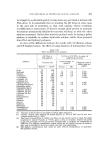
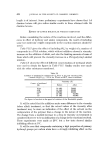
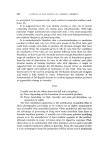
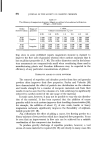
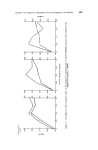
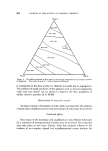
J. Soc. Cosmet. Chem. 21 459-470 (1970) ¸ 197o Society of Cosmetic Chemists of Great Britain Synthetic dentifrices hydrocolloids and C. A. WATSON* Presented at the Symposium on "Gums and Thickeners", organised by the Society of Cosmetic Chemists of Great Britain, at Oxford, on lSth October 1969. Synopsis--Most SYNTHETIC HYDROCOLLOIDS used in conventional TOOTHPASTES are derivatives of CELLULOSE Their behaviour in three typical dentifrice formulations is described and discussed, giving a basis for selection from the many types available. A few synthetic THICKENING agents which are not cellulosic in origin have been evaluated and the difficulties of using materials of this type are described. THE TOOTHPASTE SYSTEM The toothpaste system is one of the most complex products with which we have to deal in cosmetic chemistry. It usually consists of a polishing agent, or very often a blend of polishing agents, suspended in an aqueous glycerine, sorbitol or propylene glycol liquid phase by means of a hydrocolloid. The polishing agent normally has a specific gravity of about 2.7 and the aqueous phase is usually about 1.1 Complicating factors are the presence of electrolytes, adsorbed ions on the polishing agent, macro and micro emulsions of the flavour oil/foaming agent/aqueous glycerine, and the interactions and their products which occur during storage. The hydrocolloid plays a key role in preserving product stability and obtaining optimum attributes to the consumer. Synthetic and natural or processed plant extracts are extensively used. Both have their advantages and disadvantages. *Unilever Research Laboratory, Isleworth, Middlesex. 459
Purchased for the exclusive use of nofirst nolast (unknown)
From: SCC Media Library & Resource Center (library.scconline.org)