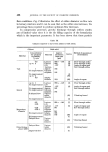
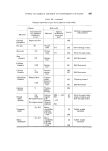
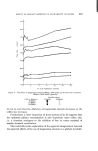
SYNTHETIC HYDROCOLLOIDS AND DENTIFRICES 4(37 Hydroxy ethyl cellulose The behaviour of hydroxy ethyl cellulose in toothpaste is somewhat of an extrapolation of the behaviour of SCMCs with very high D.S. values except, of course, that being non-ionic in character it has good com- patibility with electrolytes. Products are usually smooth, relatively non-thixotropic and disperse less rapidly in the mouth. Dispersion is important in terms of speed of foam and flavour production in the mouth and the sensation communicated to the user. Hydroxy ethyl cellulose toothpastes do not thin when treated with cellulase. This is due to the uniformity of distribution of the substituted groups. Hydroxy ethyl cellulose is used mainly in fluoride toothpastes, and its general use is probably somewhat restricted by its relatively slow dispersibility. Carboxymethyl hydroxyethyl cellulose (CMHEC) A possible application for this material in dentifrices, is as a more dispersible replacement for hydroxyethyl cellulose in toothpastes with high electrolyte content. The stannous fluoride product was initially promising, but severe hardening on storage occurred at 37øC. The CMHEC is presumably sufficiently anionic in character to be liable to ionic interactions. Hydroxy pro•pyl cellulose ttydroxy propyl methyl cellulose The introduction of the more hydrophobic propyl group, is sufficient to prevent the hydrocolloid from retaining water in the presence of the glycerine. These hydrocolloids are unsuitable for use in most dentifrices. Colloidal microcrystalline cellulose The gels formed by this material are very thin and have little thickening power. It is doubtful whether it has any particular value in the kind of formulations being considered.

468 JOURNAL OF THE SOCIETY OF COSMETIC CHEMISTS NON-CELLULOSICS Carboxyl vinyl polymers Dentifrices can certainly be made using this material, but they have no particular advantages and several disadvantages. The flavour of the material is unpleasant and obtrusive. Manufacture is complicated by the need to neutralise the polymer after dissolving in the aqueous phase of the product. This leads to difficulties in maintaining even, batch to batch consistency. Polyethylene oxide resin There is no difficulty in incorporating polyethylene oxide resins into dentifrices, but the finished products have unusual characteristics in use. The extruded ribbon is smooth and shiny in appearance, but in the mouth the product has a very slimy, cloying feel which many people find un- pleasant. Dispersion in the mouth is very slow indeed. Propylene glycol ester of alginic acid Sodium alginate because of its reactivity with metal ions, is little used in toothpastes. The propylene glycol ester should be more compatible and may well be a posssibility for certain types of toothpastes. Some experiments were made with Stannous Fluoride toothpaste. The dentifrices were initially of good quality, and there seemed to be hope of a more dispersible replacement for HEC. The product separated badly, however, after storage at temperatures 28øC and above. CONCLUSIONS At the present time, sodium carboxymethyl cellulose and hydroxy ethyl cellulose are the synthetic hydrocolloids coming nearest to the ideal. SCMC has advantages in terms of consumer attributes, and of cost, but disadvantages of chemical reactivity, and enzymatic degradability. Hy- droxyethyl cellulose confers high physical and chemical stability but may be somewhat less acceptable in terms of consumer properties. There is still scope for improvement in the properties of synthetic hydrocolloids. (Received: 28th August 1969)
Purchased for the exclusive use of nofirst nolast (unknown)
From: SCC Media Library & Resource Center (library.scconline.org)