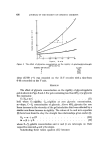
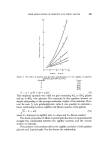
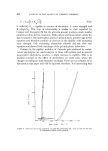
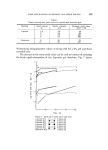
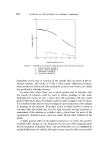
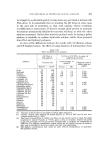
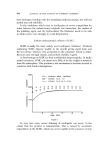
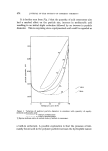
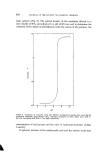
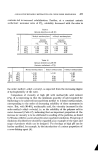
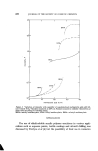
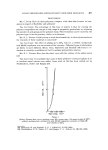
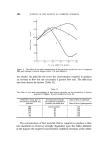
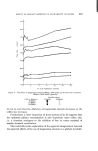
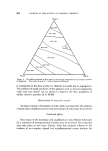
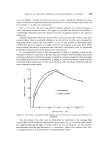
EFFECT OF GLIDANT ADDITION ON FLOWABILITY OF SOLIDS 499 acts as a glidant I would not advocate its use as such. I think the addition of these types of material to pharmaceutical formulations is to be discouraged when they can be avoided, i.e. if they are unnecessary. MR. G. DUNCALF: One practical effect of glidant addition is a marked change in case of aeration of some mixtures. The degree of aeration and therefore flowability is considerably dependent upon the degree and type of agitation given to the mixture before use. Equally important is the rate of deaeration. Practical tests have shown that with some mixtures there are marked differences in rate of flow (in this case measured by dispersing from a pack with 4-8 orifices, of say, 6 mm diameter) depending upon whether the tests are carried out within minutes of mixing or some time later. With some mixtures the rate of deaeration and reduction of flowability may be significant in less than 15 min and in other cases not for many hours. Is it possible that some of the discrepancies in effect of glidants noted in the literature could have been due to the fact that this aeration and flowability factor had not been considered, and that the degree of agitation and time elapsed between mixing and testing had not been standardised? Judging by comments already made, similar variations in flow behaviour are often encountered under practical conditions and the same com•nents might apply. 40C 0.1 0.2 03 0.4 0'5 Particle size, mm Figure 6 The effect of change in bulk density on the flow rate of various size fractions of magnesia. T•E LEcxu•: The effect can be illustrated by referring to the changes that occur in flow rate for different initial states of packing (Fig. •). These are some results for magnesia flowing through a circular orifice 7.4 mm in diameter. As the particle size decreases the flow rate increases to a maximum. Below this particle size, flow is impaired because of the influence of interparticulate forces.

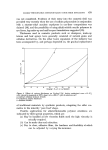
ß •00 JOURNAL OF THE SOCIETY OF COSMETIC CHEMISTS The two sets of points indicate that for non-cohesive material the effect of the initial state of packing is not very significant, perhaps because the flow limiting con- dition is bed dilation to a characteristic bulk density at the orifice region. Once inter- particulate forces become relevant, the initial state of packing seems to be quite important because the bed is trying to dilate before it flows. A MF•MUF•R OF T•F• AUX)IF•NCF•: We have also found a discrepancy between results, and having done some work in this I would agree that one can very easily be misled by making the mix in the morning and leaving the sample, doing it later in the day and getting a quite different set of results, i.e. until one realised that there had been a dramatic change in bulk density and therefore a move away from flowability. THF• LF•CTURE•: I wonder whether a lot of the problems here may be environ- mental changes. You may get surface adsorption of moisture and capillary adhesion, electrostatic changes, etc. A MF•MBF• OF ZHF• AUX)IF•NCF•: I wonder if one can get back to the original set of conditions? If this dramatic change is not appreciated, you might well get conflicting results. T•u LECZU•F•R: In my experience with those materials not subject to any inter- particulate forces their flow rate is not considerably affected by bulk density (Fig. •). A change in bulk density in the hopper has not made much difference in the eventual rate of flow from that hopper.
Purchased for the exclusive use of nofirst nolast (unknown)
From: SCC Media Library & Resource Center (library.scconline.org)