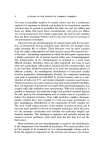
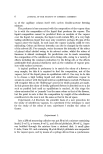
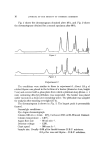
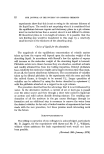
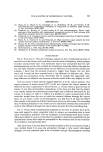
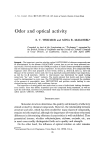
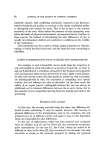
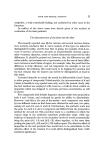
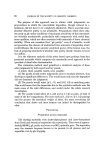
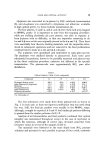
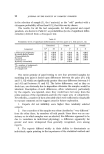
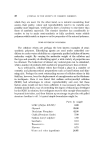
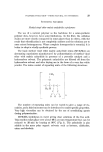
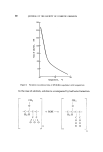
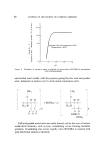
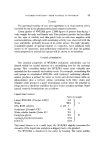
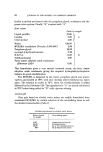
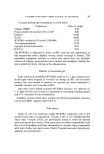
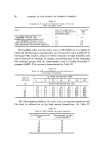
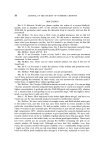
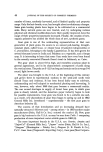
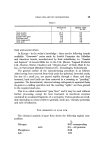
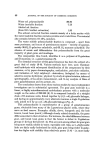
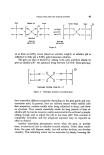
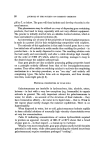
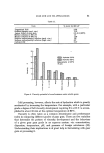
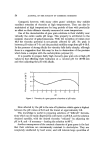
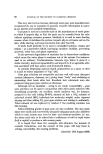
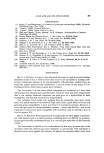
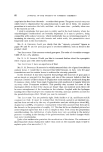
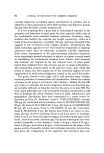
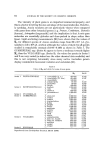
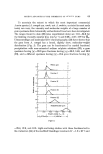
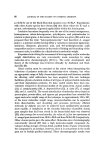
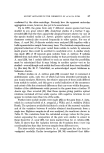
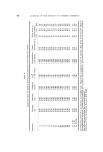
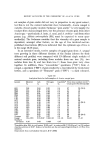
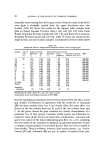
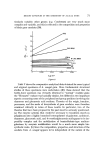
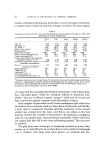
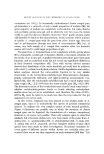
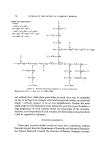
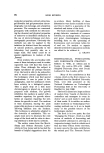
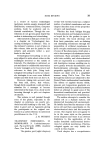
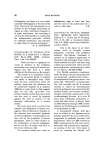
10 JOURNAL OF THE SOCIETY OF COSMETIC CHEMISTS Fig. I shows the chromatogram obtained after 18 h, and Fig. • shows the chromatogram obtained for a second specimen after 68 h. Figure 1 Figure l Experiment 7. The conditions were similar to those in experiment 6. About 1.8 g of rubbed thyme was placed in the bottom of a beaker (diameter 4 cm, height 7 cm) and covered with a glass plate from which a platinum loop (6 mm X 1 ram) containing dibutyl phthalate was suspended. The beaker was placed under vacuum in a desiccator containing water. The phthalate was sampled for analysis after standing overnight (17 h). The chromatogram is shown in Fig. $. The largest peak is presumably thymol. General glc conditions:-- Pye Argon chromatograph Column 120 cm X 4 mm 20% Carbowax •OM on 60-85 mesh Embacd. Column temperature - 140øC. Argon flow rate - 60 ml min-1. Detector voltage - 1250. Chart speed - 380 mm h-1. Sample size. Usually 0.08 gl for linalol-ionone-D.B.P. mixtures. 0.5 i•1 for rose and thyme - D.B.P. solutions.

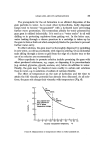
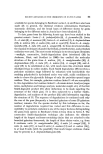
THE ANALYSIS OF ODORIFEROUS VAPOURS 11 Fiõur• $ DISCUSSION Some of the experimental results are unexpected although not contrary to estal•lished theoretical principles. In the procedure described there are three stages in the transport of odoriferous vapour from the source to the absorbing liquid:- (1) The release of vapour from the source. If the source of the odour is a liquid, as in experiments 1-•l, then the rate of release is a function of the vapour pressure of the components of the liquid, the rate at which they diffuse to the surface, and the temperature. In the case of a living flower there will probably be a continuous change in the rate of generation of the odoriferous components and the technique described will give an average composition. (2) After the molecules of the odoriferous components have left the sur- face, they must diffuse through the air space. The driving force of the diffusion is a concentration gradient and transport will continue until this becomes zero. The rate of diffusion depends also upon the molecular weight of the molecules and their mean free path between collisions. The rate of diffusion of gases and yapours into gases was studied by Clerk Maxwell (6) who derived an equation for the diffusion coefficient, D, in terms of the total pressure, molecular weights of the two gases, and the sum of the radii of the two diffusion molecules. The diffusion co- efficients in air for many yapours, including safrole and eugenol, have been measured {7). The most important result from the present view- point is that the rate of diffusion is inversely proportional to the pressure. (3) The final stage in the transport is the absorption of the vapour on to the dibutyl phthalate. One would expect this to be a slow step, but
Purchased for the exclusive use of nofirst nolast (unknown)
From: SCC Media Library & Resource Center (library.scconline.org)