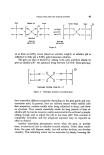
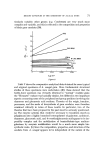
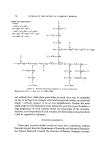
56 JOURNAL OF THE SOCIETY OF COSMETIC CHEMISTS will act as dispersant for organic systems, especially those with functional hydroxyl groups, and as a coagulant for inorganic ones, in particular for those with "clay" characteristics. This property - together with its relative- ly low yield value - means that caution must be exercised when using guar gum solution for pigment suspension. There are, however, available anionic grades of guar, well suited for that purpose {15). In extremely small quantities guar gum tends to act as a flocculant for both inorganic and organic systems, and this property has been utilized in some industries (e.g. mining) where guar gum is employed as a flocculant, settling agent, and filtration aid. The hydrogen bonding phenomena explain, among others, the excellent compatibility of guar gum solutions with other hydrocolloids, like agar, alginates, gum arabic, British gum, locust bean gum, carrageenan, cellulose derivatives, gums karaya and tragacanth, pectin, starches, gelatin, and other water soluble proteins. It is not only a question of compatibility - there is evidence that in many instances there is a distinctly synergistic action. Co-solutions of several of those hydrocolloids (e.g. starches) with guar, exhibit much higher viscosities, and stabilities than either ingredient alone. Combination of guar with agar or carrageen promotes formation of a structural gel. Hydrogen bonding also explains why guar gum is such an excellent beater additive in the processing of paper pulp. A small amount of guar gum solution added breaks up agglomerated cellulose pulp fibres and disperses them uniformly in the pulp slurry. Solutions of most guar gum grades can be dried to form flexible films which resist most organic solvents, but which readily redissolve in water or aqueous solutions. Textile sizings, for instance, use such temporary films for protection of fibres during the weaving process. Some derivatives produce water resistant films, guar triacetate being the most prominent example. Guar solutions have slightly acidic reaction (pH 5.5-6.1), and if sterile are perfectly stable in storage. They are, however, as are the other natural hydrocolloids, subject to microbiological deterioration, which results in a loss of viscosity as the first tangible manifestation and in a lowering of the pH value. If unpreserved, guar gum solution should be used within 24 h. Should its use be delayed preservatives must be employed. In the food industry sodium benzoate and sorbic and benzoic acids are most commonly used for that purpose. Other industries may successfully

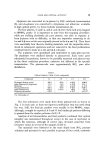
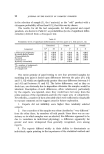
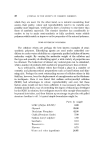
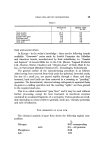
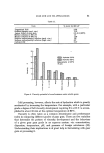
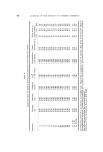
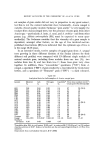
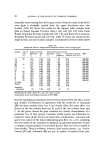
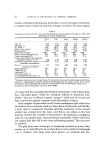
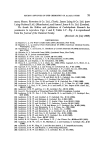
GUAR GUM AND ITS APPLICATIONS 57 use formaldehyde, substituted phenols, lauryl sarcosinate, and phenyl ruercurie acetate. USES OF GUAR GUM Table I shows that guar gum is used in massive proportions in industry. Indeed, due to its unique combination of properties it has proved to be a valuable aid in a multitude of industrial applications, as diverse as already mentioned, mining and food, paper and textile. In the paper industry it is further used- apart from as a dispersant and suspending agent - also for sizing and coating. In the textile industry it also serves as a pigment dispersing aid, and above all as a thickening agent for colour printing pastes for which use it is unsurpassed. The ceramic industry also uses sizeable quantities of guar gum as a binder, thickener and fixing agent for enamels, porcelain, etc. In the food industry it is widely used in salad dressings, ice creams, lollipops and sherbets, in bakery products and confections, meats and sausages, cheese spreads, and many other applications. In the pharmaceutical industry, dry guar gum is used as a disintegrant and in solution as a binder in compressed tablets manufacture (14). It is also used in liquid dietetic preparations as a low calorie thickener to improve their mouth feel, body and pour characteristics. On account of its hydro- philic property and the ability to form bulky, jelly-like masses, it is used in appetite depressants as a bulking agent in laxatives, and in gastric ulcer treatment. It has also such miscellaneous uses as a thickener for battery electro- lytes, printing inks, and as an ingredient in paints, adhesives and polishes. GUAR GUM IN THE COSMETIC INDUSTRY It would appear that a raw material endowed with such a variety of useful properties, a formidable viscosity builder with an unusual, excellent cold solubility, a solvent resistant film former, protective colloid, with a wide range of compatibilities, untroubled by pH changes and the presence of salts, stable, nontoxic, safe and cheap, would be immediately accepted by the cosmetic industry. This is, however, not the case. The industry tends to be shy of materials not created specifically for its use, and slow to translate to its benefit the experience of other industries.
Purchased for the exclusive use of nofirst nolast (unknown)
From: SCC Media Library & Resource Center (library.scconline.org)