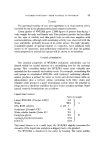
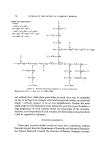
POLYMER EVOLUTION--FROM NATURAL TO SYNTHETIC 33 Toxicity The potential toxicity of any new ingredient is of vital interest if it is intended for use in the pharmaceutical and cosmetic industries. Linear grades of MVE/MA gave LD50 figures of greater than 4g kg-1 body weight for male and female rats. Fine polymer powder had no effect on the eyes of rabbits, and skin patch tests on rats were negative with neutral solutions, although mild sensitising activity was observed with the pure anhydride, probably because of its acidic nature. The high viscosity, crosslinked grades of special interest in cosmetics, have similarly been shown to be innocuous, and preliminary indications are that the partial esters proposed for aerosol hair sprays will be shown to be harmless. Cosmetic formulations The solution properties of MVE/MA polymeric anhydrides can be altered widely by careful selection of a neutralising base for the carboxyl groups This versatility makes the MVE/MA resins most valuable raw materials for the cosmetic and toiletry trade. For example, neutralising the acid groups in crosslinked MVE/MA with hydroxyl containing alkanol- amines produces a gellant for water or water and alcohol mixes while an alkanolamine plus a tertiary amine containing both fatty chain and ethylene oxide groups is a good neutralising system when the polymer is being used as a thickener stabiliser for oil in water emulsion systems. Some typical cosmetic formulations are as follows: Liquid hand cleanser Linear MVE/MA (Viscofas L100) 2 Water 10% KOH solution Surfactant (Lissapol NX) 3 Water soluble lanolin (Solan E)4 Propylene glycol n-propyl-p-hydroxybenzoate E.D.T.A. to pH Parts by weight 0.5 } 90.0 A 7 2.5 2.5 B 0.01 0.01 This hand cleaner is of a mild type the MVE/MA slightly increases the viscosity of the liquid mix and gives a slippery feel to the product. The MVE/MA is dissolved in the water by heating. The water soluble

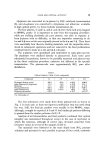
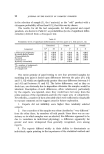
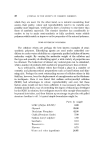
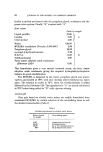
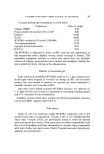
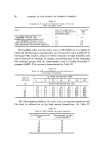
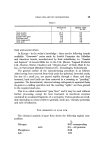
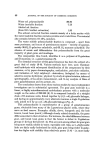
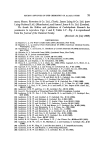
34 JOURNAL OF THE SOCIETY OF COSMETIC CHEMISTS lanolin is melted and mixed with the propylene glycol, surfactant and the preservative system. Finally "B" is mixed with "A". Hair cream _Parts Liquid paraffin 10.00 Lanolin 2.00 Cetyl alcohol 4.00 Water 139.00 MVE/MA crosslinked (Viscofas XlO0 000)2 2.00 Propylene glycol 42.00 n-propyl-p-hydroxybenzoate 0.20 E.D.T.A. 0.02 Triethanolamine 2.00 Fatty amine ethylene oxide condensate (Ethomeen Coe•) s 0.60 by weight This formulation gives a very smooth textured cream, the fatty amine ethylene oxide condensate giving the required hydrophilic/hydrophobic balance for good emulsification. The MVE/MA is dispersed in the water, propylene glycol and preser- vatives and heated at 90øC with slow stirring until hydrolysis has taken place. The solution is cooled to 75øC, when the triethanolamine is added followed by the Ethomeen Coe•. The ingredients in "A" are mixed and heated to 75øC before being added to "B" with vigorous stirring. Alcohol gels Clear gels based on alcohol water mixes are readily formulated from crosslinked MVE/MA by careful selection of the neutralising bases to suit the alcohol concentration (Table I). Table I Suitable neutralisers for alcohol water mixes Ethyl alcohol •o weight 0-85 85-45 45-80 80+ Neutralising agent Ammonium hydroxide Triethanolamine Di or tri-isopropanolamine Di (2-ethylhexyl) amine
Purchased for the exclusive use of nofirst nolast (unknown)
From: SCC Media Library & Resource Center (library.scconline.org)