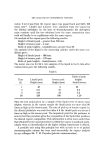
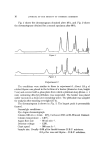
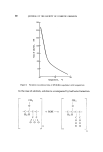
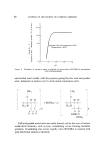
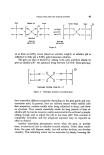
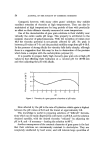
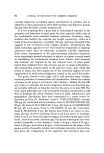
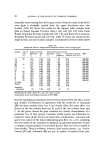
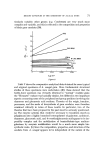
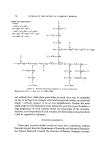
POLYMER EVOLUTION--FROM NATURAL TO SYNTHETIC 31 Aqueous solutions of the polymers have a pH of 2-3 and when this is raised to 4-6 by neutralisation with alkali hydroxide or an alkanolamine, a large increase in viscosity results further neutralisation produces a drop in viscosity followed by an increase to a second maximum in the case of the linear grades (Figs. 2 and 3). Figure 2 ß 500 4-- 5000 - •000 I000 - •00 I oo 50 I0-- 4 0 Viscofas - L IO0 Vi$cofas - L$O ß Vis/:ofas- L5 coo.. I , I I I I I 2 4 6 8 I0 12 pH Variation in viscosity of solutions of different grades of MVE/MA on addition of sodium hydroxide solution The viscosity peaks correspond approximately to neutralisation of one and two carboxyl groups. The presence of the anhydride ring in the polymer chain makes the MVE/MA resins extremely reactive, and as previously mentioned, water

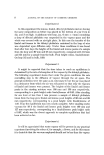
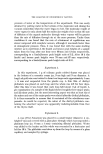
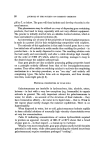
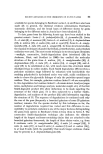
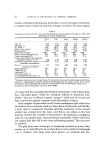
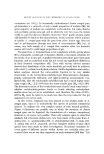
32 JOURNAL OF 1'HE SOCIETY OF COSMETIC CHEMISTS Figure E • 2000 • IOOO r- '• 500 .-- 1oo 2 ' ' ' I00 000 concentration 0.5 % / Ternp eratLlre - 2• OC I, I I I 4 6 8 10 pH Variation in viscosity when a solution of cross-linked MVE/MA is neutralised with triethanolamine and alcohol react readily with the polymer giving the free acid and partial ester. Ammonia or amines react to form amide ammonium salts. CH 3 I o -C--C-C--C -- H2H I I c c I1\/\\ ooo n -½2RNH 2----- CH 3 I o -C--C- C -C- I I - C --C- O 0 RNH 0 RNH 3 Full and partial metal salts are easily formed and in the case of certain multivalent elements, such as iron, crosslinking occurs forming insoluble products. Crosslinking also occurs rapidly when MVE/MA is reacted with poly-functional amines or alcohols.
Purchased for the exclusive use of nofirst nolast (unknown)
From: SCC Media Library & Resource Center (library.scconline.org)