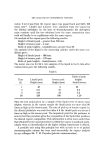
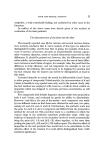
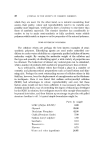
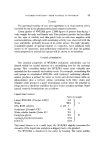
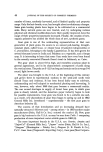
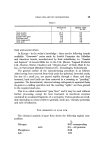
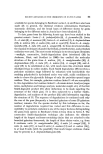
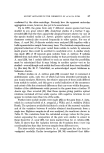
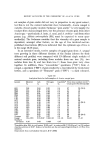
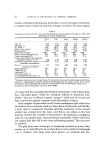
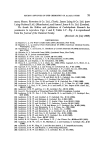
POLYMER EVOLUTION--FROM NATURAL TO SYNTHETIC 37 hardness measurements have been noted for Viscofas LNE5 films of varying AMP contents spread on glass. Typical aerosol formulations are given below. These sprays give good hair hold, are non sticky, non flaking and can be removed readily with shampoo. Ambrettozone Extra, an odour corrigent, has been added to the butyl ester formulation to counteract any residual odour due to the very small quantity of isopropanol present. Hair spray formulations Ingredient Modified partial ethyl ester MVE/MA in IMS (ViscofasLNES)2 { Resin Methylated spirits Partial butyl ester MVE/MA in IPA (Viscofas LBS)2 { Resin isoPropanol AMP isoPropyl myristate Silicone fluid (ICI DP171i) Perfume (A erofior Bouquet 221)9 Odour corrigent (Ambrettozone Extra)1 o IMS 74 o.p. Dichlorodifluoromethane/trichlorofluoromethane 50:50 (Arcton 17/11) Parts by weight 1.958 2.940 0.142 0.10 0.05 0.20 Up to 30.0 70.0 1.945 2.920 0.155 0.05 0.20 0.05 Up to 30.0 70.0 GLOSSARY Edifas BX100 Viscofas Lissapol NX Solan E Ethomeen Cologne Provol 10 Cyasorb A erofior Bouquet 221 Ambrettozone Extra Arcton 17/11 I.C.I. Ltd. I.C.I. Ltd. I.C.I. Ltd. Croda Ltd. Armour Hess Ltd. Bush Boake Allen Ltd. Croda Ltd. American Cynamid Co. ( has. Zimmermann Ltd. Haarman -• Reimer Ltd. I.C.I. Ltd. (Received: 8th July 1969)

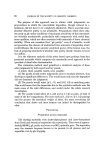
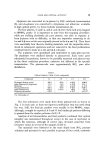
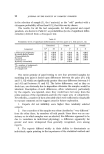
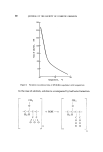
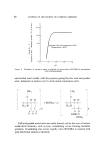
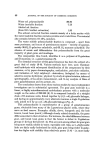
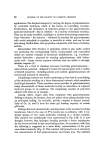
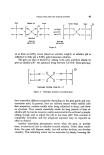
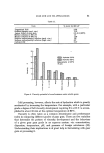
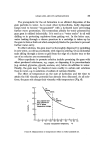
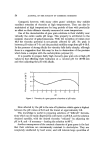
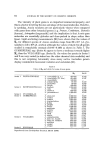
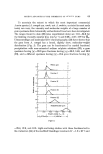
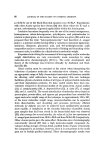
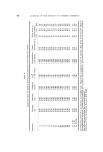
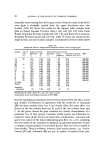
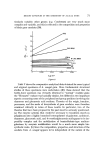
38 JOURNAL OF THE SOCIETY OF COSMETIC CHEMISTS DISCUSSION MR. G. D. BREACH: X¾ould you please explain the action of a coconut dialkylo- lamide, such as Ernpilan ½DE, on the already neutralised gel system of Viscofas X100 000. In particular what causes the dramatic drop in viscosity, and can this be prevented? MR. McKEE: We have done a little work on gelled shampoos, but we did not notice this drop in viscosity during our work, •Ve did notice a tendency for incom- patibility, and to prevent this we had to be very careful when formulating I do not know what your shampoo was like, but if it tended to go cloudy it may be that the resin was being forced out of solution thus producing a drop in viscosity. MR. M. G. DE NAVARRE: I gather from Fig. 2 that for maximum viscosity these copolymers should not be neutralised beyond pH 5.5 approx. Is that correct? Me. MCKEE: About pH 5.5 - 6.5. MR. M. G. DE NAVARRE: I take it from Table I that you cannot get maximum viscosity and compatibility with 80% alcohol unless you go to the particular amine mentioned. Is that correct? MR. MCKEE: Yes. There may be other suitable amines, but that is the one we found best. MR. M. G. DE NAVARRE: I notice the absence of the sodium and potassium salts, for example. Do these give poor viscosity? MR. MCKEE: X¾ith high alcohol content you get precipitation. MR. M. G. DE NAVARRE: Can you take, let us say, an 80% alcohol solution with one of these polymers and using your recommended amine, can you get a thickening without gelling the solution? In other words, can you increase the viscosity until it barely flows, or slightly flows without getting a gel? MR. MCKEE: The Viscofas X100 000 solutions do tend to be gels. You can get high viscosity pourable solutions using the linear grades, but of course you require a much higher concentration. A good gel with the X100 000 grade only requires 0.5% whereas for a solution that is just getting to the non-pourable stage, with the highest linear grade, you may have to add up to 10%. MRs. C. M. BOND: How long does it take before light affects the gel, and have you found any use for the insoluble products formed by multivalent cartons? MR. MCKEE: We have only looked at straight water and 50:50 alcohol-water gels in the initial work, and this work has only been started in recent months on this particular cross-linked product. We had an earlier version of a cross-linked polymer which we found to give unstable gels. We found that it just did not stand up to the high temperature, 50øC, which we understand is required by cosmetic chemists and we have completely reformulated our product to give good heat stability. We have only recently started work on the uv stability of gelled solution from this new grade. From what we have seen in the initial tests, we can obtain good light stability. These tests have been carried out by actually placing the bottles containing the gels on an outside window sill facing west. Although we have had fair stability over four weeks, the cosmetic market will require stability over a considerably longer period. I might say that even with our old cross-linked product we have made alcohol gels which are still in good condition after storage in a showcase, subjected to room day-
Purchased for the exclusive use of nofirst nolast (unknown)
From: SCC Media Library & Resource Center (library.scconline.org)