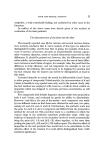
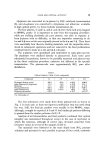
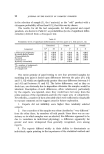
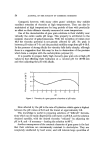
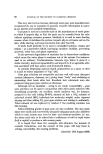
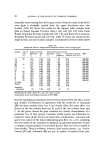
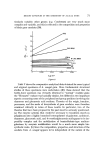
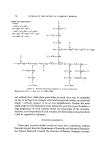
54 JOURNAL OF THE SOCIETY OF COSMETIC CHEMISTS Compared, however, with many other gums' solutions they exhibit excellent retention of viscosity at high temperatures. They can also be maintained at high temperatures for long periods of time with practically no effect on their ultimate viscosity measured at room temperature. One of the characteristics of guar gum solutions is their stability over virtually the entire usable pH range. This property is attributed to the nonionic character of galactomannans. With the exception of values over 10.5 the viscosity potential is not greatly affected by pH. Its peak is between pH values of 7-9, and the practical stability range from pH 4-10.5. In the presence of strong alkalis the viscosity falls fairly sharply, although there is a suggestion that this may be due to destruction of the proteins which form a complex with the carbohydrate polymer (1). It is possible to prepare fairly high viscosity guar gum sols at high pH values by first effecting their hydration at a neutral pH for 30-60 min and then adjusting the pH with alkalis. 3.0 c• 2.? u 2.4 o u 2 $ 4 'õ 6 7 8 9 I0 I1 pH Figure 7. Viscosity of a guar gum as a function of pH value. More affected by the pH is the rate of hydration which again is highest between the pH values of 6-9 and the lowest at approximately 3.5. This knowledge is useful in preparing solutions of "difficult" formula- tions which can be easily dispersed in cold water at pH 3.5, and the solution obtained speedily, with the desired viscosity "released" by adjusting the pH to 8, and - if necessary - heating the solution to 80øC. Another consequence of the nonionic character of guar gums is the fact that their solutions are uncommonly resistant to electrolytes. They are completely unaffected by hard water, and will tolerate large quantities of

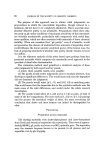
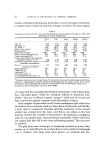
GUAR GUM AND ITS APPLICATIONS 55 electrolytes that will "salt out" most of the other gums. It must be borne in mind, however, that there is no single rule as there exist several manners of interaction between the gum and the dissolved substance. Complexing with boron, aluminium, copper, chromium and other salts have already been discussed. Although nonionic in nature, the gum particles may acquire an ionic charge by absorbing other ions from solution. This in turn may affect their properties e.g. rate of hydration and ultimate viscosity. It has already been mentioned that sodium and calcium chloride solution speed up guar gum hydration without affecting viscosity. Sodium benzoate, however, not only accelerates the rate of hydration, but also considerably increases viscosity of the resulting solution. On the other hand, salts like sodium sulphate inhibit hydration of the gum, depress viscosity, and in large quantities may cause its precipitation. The explanation of the latter phenomenon seems to lie in the fact that the gum, and the dissolved substance, are competing for water. The stronger the affinity of the salt for water - as in salts forming hydrates - the stronger the inhibiting effect. This also explains incompatibility of the gum with water miscible solvents like alcohol, acetone or glycerine, that rapidly deprive the gum of water causing the former's precipitation. The under- standing of these facts also supplies a rationale for empirically evolved methods of dispersing the gum using dry mixing techniques with, say, sugar, or wetting out with alcohol, acetone or glycerine. Apart from mechanically separating the particles, when in contact with water, the inhibitors preferentially take it up, slowing hydration of the gum and allowing it to become thoroughly wetted, and dispersed. This effect is then negated by dilution upon which the gum's hydration proceeds normally (13). Another important property of guar gum explaining a great deal of its behaviour is its hydrogen bonding activity. This is generally attributed to the presence and behaviour of numerous hydroxyl groups. The basic straight chain structure of the galactomannan molecule, along with the regularity of the single membered galactose branches, result in a product that exhibits an unusual effect on other hydrated colloidal systems through hydrogen bonding. Because guar gum will hydrogen bond to both - hydra- ted mineral and organic surfaces, there are few systems which will be unaffected by its action. The addition of even extremely small quantities of guar gum can markedly alter the electrokinetic properties of the system treated. • As a broad rule, it can be said that guar gum in appreciable quantities
Purchased for the exclusive use of nofirst nolast (unknown)
From: SCC Media Library & Resource Center (library.scconline.org)