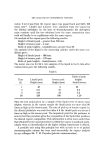
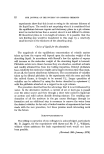
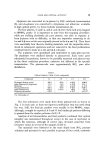
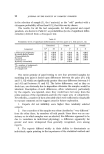
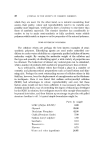
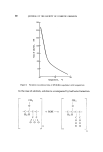
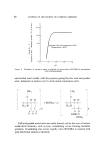
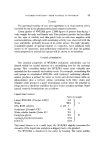
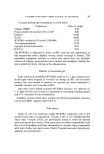
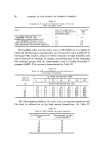
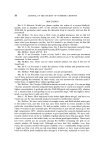
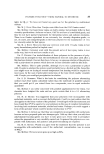
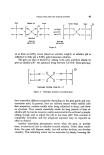
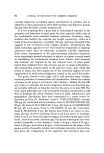
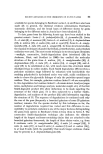
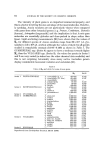
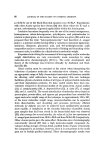
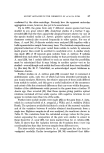
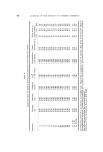
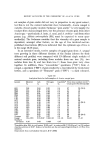
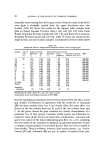
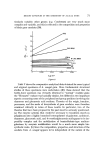
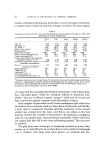
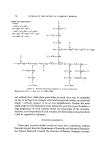
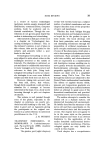
ODOR AND OPTICAL ACTIVITY 19 /-[l-pinene was converted to/-a-pinene by Pd/C catalysed isomerization (6), and d-a-pinene was converted to d-[l-pinene, not otherwise available in high optical purity, by boron hydride isomerization (4). The four pinenes, d- and l-a, and d- and 1-• were then each prep-trapped to 98-99% purity. It is important to note that this trapping procedure, while not yielding absolutely glc pure pinenes, was able to separate a- from [I-pinene with no difficulty, so that any impurities remaining in the 1-a and d-• were not the ones originally present in the d-a and 1-•. Thus there were essentially four discrete starting materials, and the impurities intro- duced in subsequent operations and not removed in the final purifications would all tend to make (d-l,/-1) and (d-2, l-2) pairs. The a-pinenes were epoxidized and isomerized to trans-pino-carveol. The [I-pinenes were oxidized directly to pinocarveol. Each route gave substantial by-products, known to be partially myrtenal and pinocarvone in the direct oxidation procedure, unknown but different in the epoxide isomerization. The pinocarveols were approximately 90% pure after distillation. Compound Myrtenal diethyl acetal Table I. Optical rotation (laid) of test compounds -39.3 -37.0 -14.3 trans-Pinocarvyl propionate -14.0 Myrtenal -11.1 i -15.2 Pinoacetaldehyde -40.6 -44.6 trans-Pinocarveol , +72.2 +71.2 Hydroxy citronellal [ --10.8 d-1 +36.5 +12.9 +12.5 +43.4 -69.4 +10.7 d-2 +38.5 +14.1 + 5.8 +37.7 -71.0 +11.9' *ex Citronella oil The test substances were made from these pinocarveols as shown in Fig. 1. In each case, at least one rigorous purification step was used along the way. Still, the final glc purifies were usually in the 98-99% range, although, as might be expected, d- 1 and l- 1 had similar glc patterns differing in general from the similar patterns of d-2, 1-2. Analysis of all intermediates and final products confirmed that optical integrity was maintained throughout except in the case of myrtenal, in which the rotations, although of correct sign, deviated somewhat from literature values in several of the samples (Table 1). The materials were blottered to the same depth from 50ø/0 penfane solutions and presented to each panelist in groups of four coded, randomly

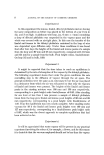
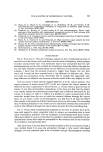
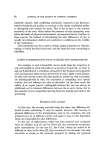
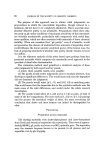
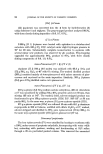
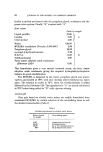
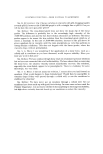
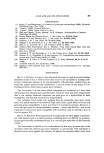
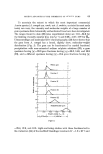
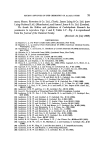
20 JOURNAL OF THE SOCIETY OF COSMETIC CHEMISTS Figure 1 Preparation of test compounds (key in page 21) arranged isomers, representing in each case the d-alpha, d-beta, 1-alpha, 1-beta derived compounds. The panelist was asked to pair the four blotters according to quality, and then to repeat his classification without being told what result he had obtained. Each selection was weighted equally. In a supplementary test, in which the final evaluation was a triangle test, three samples of "hydroxy citronellal" (2, 6-dimethyl-octan-2-ol-8-al) were presented with the panelist being instructed to select the "odd" sample.
Purchased for the exclusive use of nofirst nolast (unknown)
From: SCC Media Library & Resource Center (library.scconline.org)