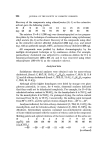
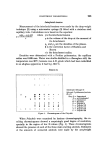
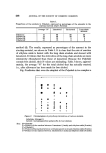
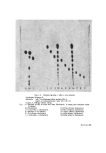
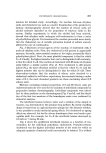
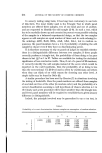
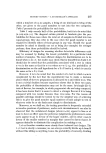
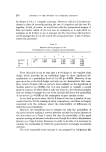
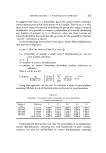
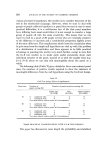
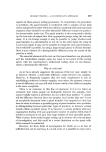
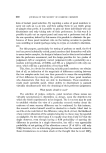
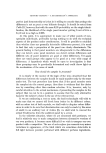
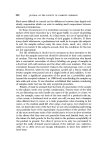
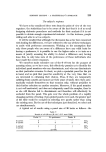
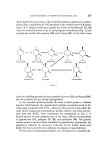
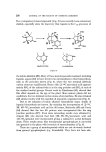
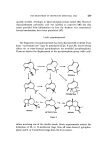
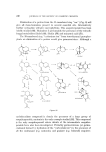
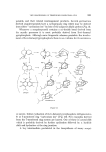
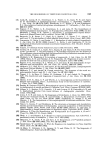
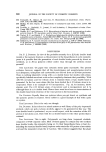
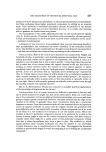
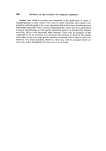
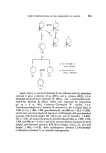
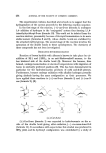
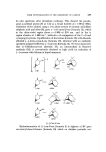
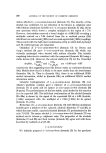
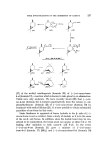
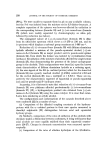
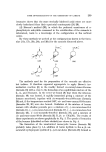
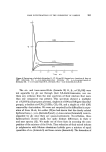
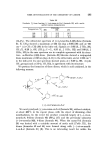
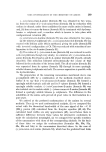
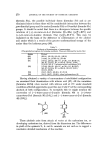
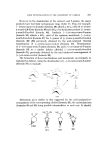
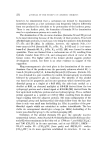
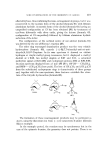
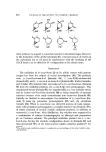
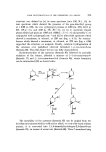
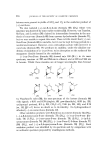
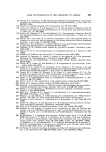
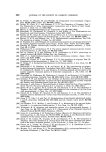
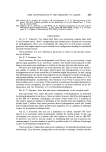
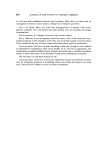
Figure 4. Chromatogram of polyethoxy cholesterols Substrate: Silicagel G Solvent: Acetone/benzene/water (60+40+3): three elutions Loads: M, 200 gg others, 10 gg Key: M=Product of the reaction between: Cholesterol (1 mole) and ethylene oxide (25 moles) N=Nona-ethoxy cholesterol D=Dodeca-ethoxy cholesterol P= Pentadeca-ethoxy cholesterol Facing page 207

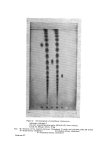
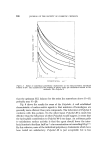
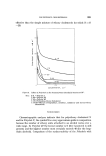
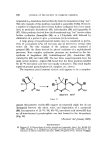
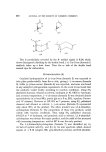
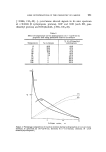
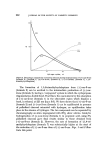
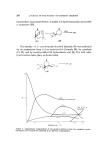
POLYETHOXY CHOLESTEROLS 2O7 mixture for detailed study. Accordingly, the reaction between ethylene oxide and cholesterol was used as a model. Examination of the products by laminar chromatography showed that the number of ethoxy units per alcohol molecule depended on the proportion of ethylene oxide in the system. Similar experiments, in which the alcohol had been omitted, showed that ethylene oxide undergoes self-condensation 'to form a series of polyethylene glycols. For lanostenol the reaction proceeded more slowly than for cholesterol use of metallic potassium instead of sodium scarcely affected the rate of condensation. Fig. $ illustrates several aspects of the reaction of cholesterol with 5 moles of ethylene oxide. First, free cholesterol is still present in appreciable amounts. Secondly, some material remains at the origin presumably this is polyethylene glycol. Next, the most plentiful component is that for which N =3. Finally, the highest member that can be distinguished with certainty, is that for which N =9. The reaction of cholesterol with 25 moles of ethylene oxide follows a similar pattern (Fig. 4). Free cholesterol is still present (about 2%), the most abundant member is that for which N = 11 and the highest member that can be distinguished is that for which N =23. These observations indicate that the number of ethoxy units attached to a cholesteryl radical is well below expectation for reactants having a molar ratio of N:I, the most abundant products are those containing about N/2 ethoxy units. Mixtures containing nominal proportions of 5 and 25 ethoxy units per cholesterol molecule were used for the isolation of individual compounds by preparative laminar chromatography. Individual compounds were identi- fied by their positions on the chromatogram (Fig. $ and 4), and the identi- ties of the first two members of the homologous series were confirmed by elemental analyses. The interfacial tension between water and a solution of the sample in benzene, was determined by the pendant drop method. By slowly expelling drops of water from an Agla micrometer syringe into the benzene solution, it was possible to study interfacial ageing effects. For cholesterol no ageing effect was observed, but for the ethoxy homologues there was barely a per- ceptible drift. For example, for N=3 the interfacial tension decreased by 0.3 mN m-1 during 30 min. Fig. 5 shows the equilibrium interfacial tensions as a function of con- centration for the individual polyethoxy cholesterols. Pentadeca-ethoxy cholesterol was the highest individual member of the series for which an adequate quantity of materiM could conveniently be isolated. It is evident
Purchased for the exclusive use of nofirst nolast (unknown)
From: SCC Media Library & Resource Center (library.scconline.org)