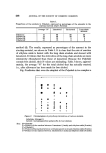
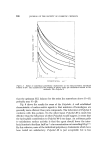
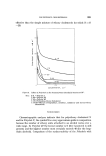
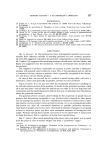
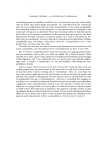
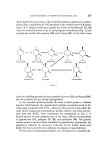
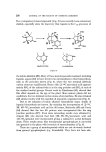
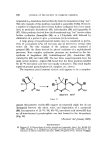
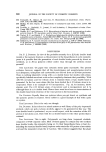
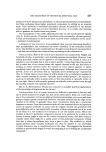
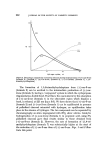
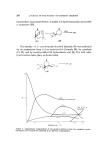
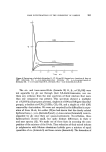
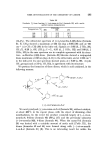
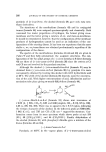
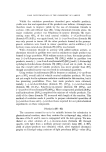
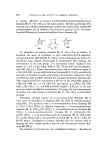
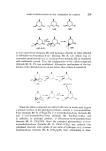
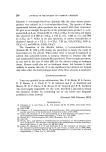
2O8 JOURNAL OF THE SOCIETY OF COSMETIC CHEMISTS ¾ E 30 20 I0 0 3O Concentration, g l -I 6O Figure 5. Effect of individual polyethoxy cholesterols on the benzene/water interfacial tension at 20 ø. The numbers are the number of ethoxy units per cholesterol radical in the molecule. P5----'Polychol I that the optimum H/L balance for the series res somewhere above N = 15, probably near N----20. Fig. 6 shows the results for some of the Polychols. A well established characteristic of surface-active agents is that mixtures of homologues are generally more efficient than pure compounds. The behaviour of Polychol 5 conforms with this pattern. On the other hand, Polychol •lO is much less effective than the behaviour of other Polychols would suggest it seems that the hydrophilic contribution to Polychol 40 is too large. An arbitrary guide to satisfactory surface activity is that the agent should lower the inter- facial tension to less than lmN m- • at a concentration not exceeding 0.5 g 1- •. By this criterion, none of the individual polyethoxy cholesterols which have been tested are satisfactory. Polychol 40 is just acceptable but is less

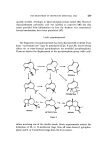
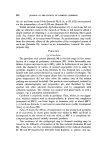
POLYETHOXY CHOLESTEROLS 209 effective than the simple mixture of ethoxy cholesterols for which N----17 --20. 2O 0'3 O' 6 Concentration, g L -t Figure 6. Effect of Polychols on the benzene/water interfacial tension •t 20 ø, Key: P5 =Polychol& P 20=Polychol 20 P 40=Polychol 40 C l$ ---- Pentadeca-ethoxy cholesterol C 17-20•-Mixture of heptadeca-, octadeca-, nonadeca- and eicosa-ethoxy cholesterols. CONCLUSION Chromatographic analyses indicate that for polyethoxy cholesterol N and for Polychol N, the symbol N is a very approximate guide to composition because the number of ethoxy units attached to an alcohol varies over a wide range. In Polychol 40 the lowest number is 0 (free lanosterol is still present) and the highest number most certainly exceeds 40 (for the long- chain alcohols). Comparison of the surface-activity of the Polychols with
Purchased for the exclusive use of nofirst nolast (unknown)
From: SCC Media Library & Resource Center (library.scconline.org)