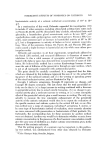
HAIR PRODUCT EVALUATION 563 measurements and consumer response. There are, however, several other fac- tors that contribute to the fall in sensitivity as one moves from instrumental evaluation through salon or clinical testing to the consumer trial. These are sometimes called "halo effects" and are associated with nonfunctional or peri- pheral attributes which influence consumer perception of other functions. It is, of course, very well known that perfume and color strongly affect the per- ception of functional attributes and the consumer finds it very difficult, for example, to separate an attribute such as lather in a shampoo from its cleans- ing properties. IDENTIFYING CONSUMER NEEDS AND UNDERSTANDING THE USE OF WORDS An important step in the development of evaluation methods is the trans- lation of words used by the consumer into physical and measurable terms (6). Some words like "comb ability" have an obvious physical correlate others like "body" and "condition" are extremely complex as they are made up of many interactive components, the weighting of which varies from consumer to con- sumer (7,8). Several techniques are available to help in interpreting consumer words. Group Discussions and Depth Interviews to Probe Word Association In these experiments highly illustrative examples or models can be used to show a range of physical effects and the people participating in the test are asked to group and classify similar and dissimilar effects. Subsequently, a com- plex battery of descriptions can be reduced to a few independent words and, by using Principal Components Analysis (PCA), numerical weightings can be assigned which help to unravel the importance of various associations (9'). For example, a large number of descriptive words used by the consumer can be reduced statistically to a very small number of independent words by re- jecting synonyms. This is carried out by using component analysis on a corre- lation matrix for all tim descriptors so that an agreed limit of accumulated variance is accounted for (say 90%). This gives the number of components or independent words, usually about 3-5. Then, for each component, the correlation coefficients for each original descriptor are listed and, by inspec- tion, the highest correlating descriptor is the component-this is repeated for the remaining components. Also, by inspection clustering of descriptors may be deduced from the closeness of correlation coefficients under any one com- ponent. Psycho-physical Correlations The physical meaning of words used by consumers ean sometimes be under- stood and verified by testing the degree of concordance between human per- ception magnitude and the corresponding instrumental magnitude for a given range of samples.

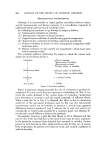
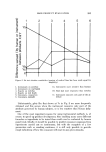
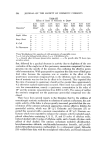
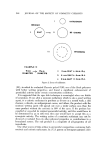
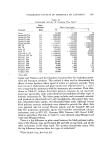
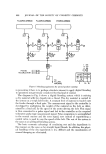
564 JOURNAL OF THE SOCIETY OF COSMETIC CHEMISTS DISCRIMINATION AND SENSITIVITY Although it is unreasonable to expect perfect correlation between instru- mental measurements and human response, it is nevertheless important to understand where and how loss of sensitivity arises. In evaluating hair products we go through six stages as follows: (a) Instrumental evaluation on switches. ( b ) Instrumental evaluation on heads (in vivo). (e) Expert human evaluation of switches using paired comparisons. (d) Expert human evaluation of switches ear fled out monadieally. (e) Human evaluation on heads (in vivo) using paired comparisons (half- head salon tests). (f) Human evaluaton in vivo earfled out monadieally (whole-head salon tests or consumer trials). The evaluation pathway illustrating the stages at which the various teeh- niques are used is shown in Fig. 1. Laboratory - (Word meaning .)Instruments on switches i •Instruments on heads [Expert iudges on switches Hairdressing salon --rExpert iudges on half-heads T (Expert judges on whole heads Consumer - Untrained panels Test market -- Public Figure 1. Evaluation pathway Figure 2 represents diagrammatically the role of evaluation in product de- velopment. It is only rarely that one experiences relationship Ya (Fig. 2) be- tween the results obtained at the various stages of evaluation (progressing from laboratory to consumer) and the sensed magnitude of different effects. When a plot like Ya in Fig. 2 is obtained, the effect is due to decreasing sensitlvity in the assessment technique used. In this case the instrumental measurement carried out on switches, in situation 1, reveals large apparent differences between product X and Y whereas the in vivo test carried out monadically on whole heads, possibly by a consumer panel (see situation 6), reveals only a small difference between the products. Occasionally, however, a plot like that shown in Yb is obtained and this may be due to the fact that hair on the head in vivo may be more responsive to the particular treatment than detached hair mounted in switches. Factors present in vivo, but not in vitro, which could account for this are, of course, body temperature, the presence of sebum or sweat, and variable conditions of ambient humidity.
Purchased for the exclusive use of nofirst nolast (unknown)
From: SCC Media Library & Resource Center (library.scconline.org)