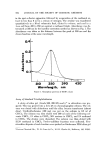
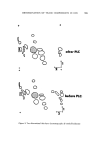
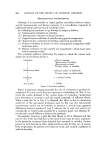
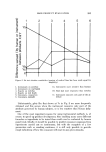
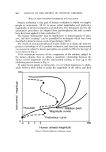
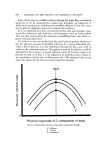
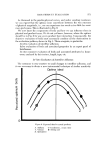
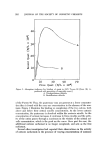
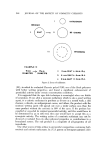
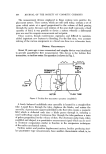
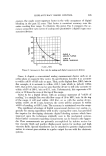
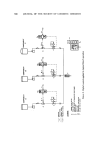
HAIR PRODUCT EVALUATION 571 As discussed in the psycho-physieal curves, and under combing rcsistanee, we can expect that the optima occur somewhere between the two extremes of physical magnitude, i.e., one can experience too much or too little for maxi- mum preference. This is illustrated in Fig. 6. We now know the components of body and how we can influence them in physical and product terms. We do not yet know, however, where the optima should be in Fig. 6 for any given product/hair interaction. Consequently, the objective evaluation of body must necessarily combine all the observations in the evaluation pathway shown in Fig. 1. These comprise, in particular: In vitro evaluation of interfiber adhesion. Salon evaluation of body and associated properties by an expert panel of hairdressers. In vivo consumer evaluation of body and associated attributes by home- users, analyzed by hair texture, length, type, etc. In Vitro Evaluation o[ Interfiber Adhesion The consumer is very sensitive to small changes in interfiber adhesion, and it was necessary to devise a new instrumental technique of similar sensitivity Optima ideal o E E o x Y z , Figure 6. Expected data for actual products X. Stiffness 0 Conditioner, cream rinse Y. Volume ß Setting aid Z. Springiness

572 JOUi•NAL OF THE SOCIETY OF COSMETIC CHEMISTS for in vitro product screening. The consumer's sensitivity is aided by detection of changes in combability, changes in stress within the scalp via follicular stress, and changes in the control or feel of the hair. The technique to measure interfiber adhesion allows measurement to be made on switches before and after combing and the results are markedly af- fected by "welds" betxveen the hair surfaces. Numerical values are assigned between 0 and 100, where 0 represents clean hair with no polymer deposit and 100 represents the effect of a typical high-holding hairspray, after draxving a comb through the hair three times, in a standardized manner. Salon Evaluation ol t Products to Conlter Body The salon is a vital intermediate evaluation stage where important proper- ties are assessed for their magnitude according to well defined standard pro- cedures. Typically, this is situation 5 shown in Fig. 2 where products are applied by an expert panel of hah'dressers who comprise the human instrument. The panel size and number of hairdressers are chosen according to the number of products to be compared and the magnitude of the effects expected. Most tests are preceded by a stabilization period during which the panelists are sham- pooed with a known product, this being an important factor since some de- tergents cause marked physical changes in the friction of hair followed by build-up effects. The panelists are selected with regard to their previous hair treatments and, where this is uncertain, their hair may be characterized by scanning electron microscopy or other techniques, and panels are usually balanced for style of hair, texture, greasiness, etc. The hairdressers' judgments of the magnitudes of effects are entered onto standard forms and the results are calculated by computer and expressed in jnd units. In general, salon evaluations are used to guide research in product formulation and to help elucidate mechanisms of action rather than to predict consumer response. In Vivo Evaluation o[ Bodying Effects by Consumer Panels In this test situation, products are used under normal home conditions and a variety of unknown circumstances can influence the results. At this stage, the evaluation is entirely subjective and, apart from the disciplines of com- pleting a questionnaire, the members of the panel are comparatively uncon- trolled. In the case of a product to confer body, relevant attribute statements ap- pear on the questionnaire, and the data are processed statistically to reveal any significant differences in the response to the Control or Test products, and to examine relationships with panelists' individual characteristics such as hair texture, style, greasiness, etc.
Purchased for the exclusive use of nofirst nolast (unknown)
From: SCC Media Library & Resource Center (library.scconline.org)