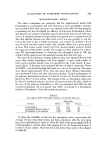
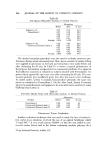
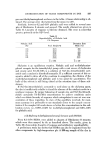
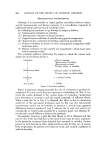
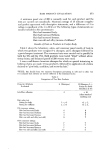
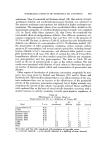
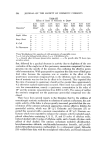
ttAIR PRODUCT EVALUATION 573 A minimum panel size of 200 is normally used for each product and the tests are carried out monadieally. Maximum ratings of 15 indicate complete and perfect agreement with descriptive statements, and a difference of i in ratings is significant at the 1 in 20 level. The following types of statements are usually included in the questionnaire: Hair had increased body. Hair had increased fullness. Hair had increased bounce. Hair was soft and silky (inverse of stiffness).* Results of Tests on Products to Confer Body Table I shows the laboratory, salon, and consumer panel results of tests in which two products were compared-a shampoo, and a shampoo followed by a post-shampoo treatment. The consumer tests were carried out in parallel in both the UK and the USA. Both products were tested "blind" without adver- tising claims, and balanced panels of 200 women were used. L was a well-known American shampoo for which no special texturizing or bodying claims are made. O was product L followed by application of a lotion claimed to "give body, condition, and set to the hair." *Strictly, this should form two separate descriptors pertaining to soft and to silky but it is assumed that softness (or inverse stiffness) is the dominant factor. Table I Comparison of Two Hair Products Property/Attribute L (Shampoo) Evaluated 0 (Shampoo L d- Lotion for Body Condition & Set Interfiber adhesion 0 Hair salon test Rating for body Bating for stiffness UK consumer ratings Hair had increased body Hair had increased fullness Hair had increased bounce Hair was soft and silky (not stiff) USA consumer ratings Hair had increased body Hair had increased fullness Hair had increased bounce Hair was soft and silky (not stiff) LO LO 7 7 7 10 -1- lO (after standard combing out) OL OL

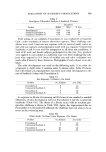
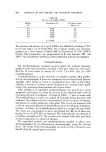
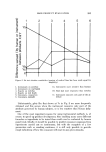
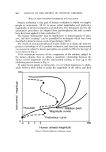
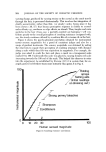
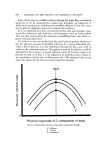
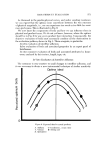
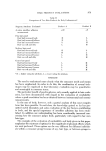
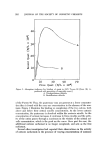
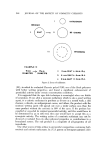
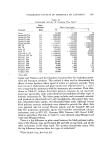
574 JOURNAL OF THE SOCIETY OF COSMETIC CHEMISTS Table I shows that shampoo L did not influence interfiber .adhesion but shampoo L followed by use of the post-shampoo treatment increased inter- fiber adhesion by 10 units. Product 0 (shampoo L followed by the post-sham- poo treatment) was rated significantly different from L for both body and stiffness. In the UK consumer trial the post-shampoo treatment scored significantly higher than the shampoo for "hair had increased body," "hair had increased fullness," and scored significantly lower than the shampoo for "hair was soft and silky." The rating for "hair had increased bounce" was not significantly different. Results of the USA consumer trial were, however, surprisingly different from those obtained in the UK in that the post-shampoo treatment was not rated higher than the shampoo for "body" or "fullness" and it was rated sig- nificantly lower for "hair had increased bounce." It was, however, as in the UK trial, rated lower than shampoo L for "hair was soft and silky." Products claiming to confer body and bounce have been available on the USA market for many years, but are only just reaching any volume in the UK. The greater experience of use of these products by the American panel may account for the panelists having been more aware of the deficiencies in bounce, softness, and silkiness than the British group. As mentioned earlier, the word association analysis showed that the com- ponents of body are springiness, voltune, and stiffness. The results of the con- sumer trials shown in Table I indicate that where the consumer rates a prod- uct highly for "body" (as in the UK trial) higher scores are also associated with the volume and stiffness descriptors. The USA consumer panel rated product O very low for "hair had increased bounce" and this may account for their not rating product O highly for "hair had increased body." The optima of the three components of body as illustrated in Fig. 5 thus may not have been coincident for optimum body in this product. Table II shows the laboratory, salon, and consumer panel test results for a further trial in which products A and B, designed to enhance body, were com- pared. The test design was similar to the previous product comparison trial. Trends observed for Products A and B, as shown in Table II, include the following: (a) The panel associate certain factors, discussed previously, with body: e.g., fullness, springiness, and stiffness (or inverse softness). (b) Product A is the more functional in increasing interfiber adhesion in vitro and stiffness in vivo. (c) Product A is more appreciated than B for its effect on giving body by the medium and fine-haired panelists. (d) All groups of panelists observed a decrease in springiness indicating that improvements could be made to optimize this component (Fig. 5). (e) The in vitro evaluation of interfiber adhesion is reflected through •all in vivo tests in terms of stiffness Or reciprocal softness.
Purchased for the exclusive use of nofirst nolast (unknown)
From: SCC Media Library & Resource Center (library.scconline.org)