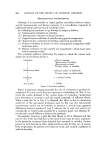
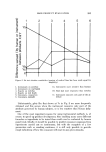
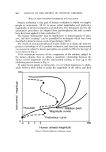
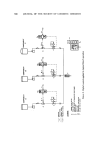
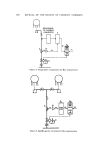
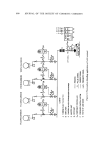
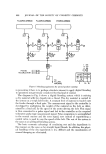
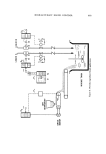
HIGH-ACCURACY BLEND CONTROL 599 is proportional to the instantaneous temperature of the component. The sig- nal is used to modulate the turbin • flow transmitter output to produce a tem- perature compensated measurement signal. The inherent accuracy of the digi- tal signal is maintained throughout. Figure 5 shows a specific gravity correction unit (E•) on which the actual specific gravity of a component is set manually when the base stock composi- tion is changed. This feature allows metering components with entirely differ- ent specific gravities through the same turbine meter. JUSTIFICATION OF DIGITAL BLEND CONTROL In order to iustify the commitment to any new process control system, there must be certain benefits, primarily economic, for the user. Obviously, then, with the wide acceptance of digital in-line blending systems in the various process industries, there are significant economic justifications for installing them. Digital blending combines extremely accurate flow measurements with error-free digital electronics to providc exact ratio control of blend compo- nents. It is this extreme accuracy on which the economic justification of digital blending is based. The ability to blend accurately and continuously on specification, using the very important pacing feature of digital blending systems, allows savings on capital expenditure for new installations. Expensive mixing tanks are not re- quired because mixing takes place in-line during the actual blending opera- tion. Reduced blending time has been found to reduce the amount of finished product storage required by a factor of approximately one-third. Less finished product storage is required also because the increased speed and flexibility provided in making up blends allows blending products "on demand." This is especially beneficial for low-volume, specialty-type products which, never- theless, must be available for customer requirements. Decreased storage requirements and greater blend flexibility result in other plant savings, including reduced piping and plant space. This, too, can mean significant reductions in capital expenditure. For existing facilities, replace- ment of older batching systems with digital in-line blending systems also creates tankage savings by allowing existing tankage to be switched from fin- ished product storage to base stock storage. Reduced operating costs may also be realized through the greater accuracy of digital blending systems. Time savings of up to 50% or more are easily achieved by blending components simultaneously. Constant on-spec product reduces or eliminates the time required for final blend composition analysis. Product flexibility and reduced manpower are two other categories in which savings can be realized. Changing blend formulations quickly and precisely from the front of panel increases the variety of products which can be blended without increasing storage requirements. One operator only is re-

600 JOUBNAL OF THE SOCIETY OF COSMETIC CHEMISTS o o c• o tu z k- • z
Purchased for the exclusive use of nofirst nolast (unknown)
From: SCC Media Library & Resource Center (library.scconline.org)