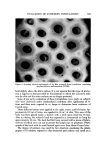
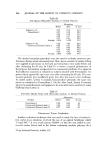
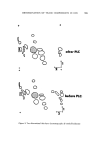
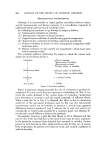
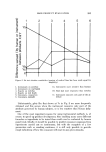
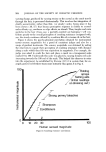
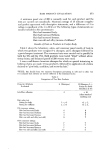
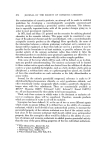
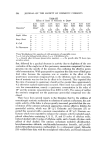
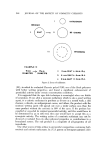
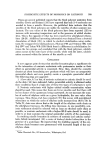
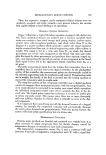
EVALUATION OF SUNSCREEN FORMULATIONS 547 dark room in the presence of ultraviolet light this fluoresces and serves as a tracer to establish how much lotion is present on a given area of the body. Then by using a Polaroid camera equipped with a uv filter it is possible to take photographs of the fluorescent areas and thus record the distribution and retention of suntan lotion. One thing learned during these tracer tests was that there is considerable variation in how much suntan lotion individuals apply to their skin. Also, .they do not always apply it evenly. During comparisons of suntan lotions the fluorescent tracer evaluation can show up gross differences. In Fig. 3 is seen a subject whose photograph was taken under uv light after sunning and turning every 20 min for a period of 3 hours. On her right side she had applied Formulation 1 and on her left side Figure $. Removal of suntan formulations by abrasion fluorescent areas show presence of sunscreen. Le•t side, Lotion A right side, Formulation 1.

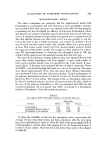
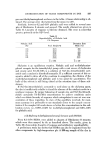
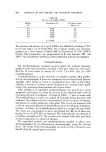
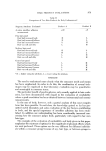
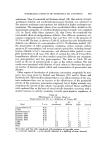
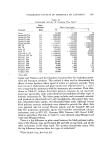
548 JOUBNAL OF THE SOCIETY OF COSMETIC CHEMISTS she had applied Commercial Lotion A. The commercial lotion has been re- moved by perspiration and abrasion whereas the polymer lotion system ap- pears intact. Field Evaluations of Suntan Formulations There are many variables involving use by different consumers: different complexion types, different tendencies in amounts applied, variations in even- ness and completeness of application, etc. To study the performance of poly- mer formulations under field conditions a group of 49 Miami housewives was recruited for several days of controlled tests. They participated in different phases of the study: (a) normal usage patterns, (b) fresh water challenge, ( c ) salt water challenge, and (d) tanning with and without abrasion. Some of the evaluation tests which were described previously were found valuable in assessing the performance of the suntan products under field con- ditions. The alcohol extraction test was used to determine retention of sun- screens under the above type of challenge and also to gauge how much and where a normal consumer applies lotion. Additional information pertaining to usage patterns and retention was obtained by the fluorescent tracer evalua- tion technique. Following initial application, all subjects were checked in the dark room to ascertain spreadability and uniformity of application with each product, and to insure that all subjects were adequately protected prior to sun exposure. The polymer formulation performed well when compared with Commercial Lot!on A. Its improved resistance to water challenge was established and cer- tain aesthetic advantages were seen including reduced greasiness, ease of ap- plication, and no sand pick-up. It was observed that consumers tended to ap- ply discontinuous coats of lotion with both Formulation 1 and Commercial Lotion A. Subjects sometimes failed to protect large areas of the body such as entire arms or legs, as revealed by visual inspection of coverage under ultravi- olet light. There was abrasion of suntan lotions observed for all products upon con- tact with terrydoth towels and beach mats. There were indications that the polymer formulation was more resistant to abrasion. Sunblock Formulation Formulation i was designed as a suntan formulation. An increase in sun- screen level produced a very effective sunblock type of product (Formulation 2). Again HMS and amyl-p-dimethylaminobenzoate were the sunscreen agents. Screening tests demonstrated that it was retained much better than two leading commercial sunblock products as shown in Table V. Our standard 20-rain arm spray test was used to obtain these data. Sunblock A contained isoamyl-p-dimethylaminobenzoate and Sunblock B contained 2-hydroxy-4- methoxy-benzophenone-5-sulfonic acid.
Purchased for the exclusive use of nofirst nolast (unknown)
From: SCC Media Library & Resource Center (library.scconline.org)