FRACTOGRAPHY OF HUMAN HAIR 467 ACKNOWLEDGEMENTS We wish to acknowledge several helpful discussions with Dr. Hans-Dietrich Weig- mann of Textile Research Institute. We also thank Avon Products, Inc., for encourag- ing this research. REFERENCES (1) (2) (3) (4) (5) (6) (7) (8) (9) (10) (11) (12) (13) (14) (15) (16) (17) (18) (19) R. Caputo and B. Ceccarelli, Study of normal hair and of some malformation with a scanning electron microscope,Arch. Klin. Exp. Derm., 234,242 (1969). A. Tosti, S. Villardita, M. L. Fazzini and R. Scalici, Contribution to the knowledge of dermatophytic in- vasion of hair, J. Invest. Dermatol., 55,123 (1970). E. Wyatt, E. Bottoms and S. Comaish, Abnormal hair shafts in psoriasis on scanning electron mi- croscopy, Brit. J. Dermatol., 87,368 (1972). E. Bottoms, E. Wyatt and S. Comaish, Progressive changes in cuticular pattern along the shafts of human hair as seen by scanning electron microscopy, Brit. J. Dermatol., 86, 379 (1972). R. P. Ayer and J. A. Thompson, Scanning electron microscopy and other new approaches to hair spray evaluation, J. Soc. Cosmet. Chem., 23,617 (1972). S. P. DiBianca, Innovative scanning electron microscopic techniques for evaluating hair care products, J. Soc. Cosmet. Chem., 24, 609 (1973). A. C. Brown and J. A. Swift, Hair breakage: the scanning electron microscope as a diagnostic tool, J. Soc. Cosmet. Chem., 26, 289 (1975). E. Bernstein, Dynamic Experiments on Hair in the Scanning Electron Microscope, in "The First Human Hair Symposium," A. C. Brown, Medcom Press, New York, New York, 1974, pp 317-331. N. A. Lange, "Handbook of Chemistry," 10th ed, McGraw-Hill Publishing Company, New York, New York, 1956, pp 1420-1421. J. W. S. Hearle and S.C. Simmens, Electron microscope studies of textile fibres and materials, Polymer, 14,273(1973). J. W. S. Hearle andJ. T. Sparrow, The fractography of cotton fibers, Text. Res. J., 41,736 (1971). E. Lehmann, Mikroskopische dntersuchungen •iber chemische und physikalische vorg•inge an Pelztierhaaren, Melliand Textilber., 22, 145 (1941). J. H. Bradbury and G. V. Chapman, An investigation by light microscopy of the swelling of wool fibers, Text. Res. J., 33,666 (1963). M. E. Chernosky, Acquired Trichorrhexis nodosa, in "The First Human Hair Symposium," A. C. Brown, Medcom Press, New York, New York, 1974, pp 36-49. J. A. Swift and B. Bews, The chemistry of human hair cuticle-I: a new method for the physical isolation ofcuticle,J. Soc. Cosmet. Chem., 25, 13 (1974). Encyclopedia of Polymer Science & Technology, Wiley, New York, New York, 8 (1968), p 22. Ibid., p 30. Ibid., p 28. Ibid., p 37.

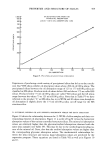
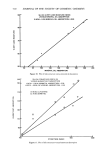
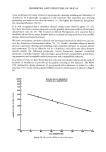
J. Soc. Cosmet. Chem., 29, 469-485 (August 1978) Stiffness of human hair fibers G. V. SCOTT and C. R. ROBBINS Colgate-Palmolive Research Center, 909 River Road, Piscataway, NJ 08854. Received November 3, 1977. Presented at Annual Scientific Meeting, Society of Cosmetic Chemists, December 1977, New York, New York. Synopsis The STIFFNESS of COMPONENT FIBERS is known to be important to the behavior of a fiber mass, but measurements are lacking in the cosmetic literature probably because of experimental difficulties with published methods. Recognizing this, we devised a simple method to compare fibers for stiffness. A fiber with a small weight on each end is draped over a wire and the distance ("D") between the vertical legs is measured. Fibers with a wide range of thicknesses clearly showed that values of"D" relate linearly to cross- sectional areas, as expected of "stiffness." This prompted a theoretical study which yielded equations in terms of"D" for calculating, e.g., elastic bending moduli and shapes of hanging fibers. Empirical and theoretical guides are given for selection of wire diameter and fiber weights. The average elastic modulus for bending fibers, assumed round in cross section, is approximately equal to that for stretch- ing the same fibers. Fiber stiffness is affected by humidity and chemical treatments but is relatively unaf- fected by shampoos. INTRODUCTION The stiffness or resistance to bending of individual fibers unquestionably plays an im- portant role in determining the behavior of any assembly of fibers. Textile literature (1-7) recognizes this importance in attempts to relate fiber stiffness to such fabric properties as flexibility, drape, handle, crease resistance and wear. Although changes in fiber stiffness must likewise affect manageability, body, combing, wave retention and handle of human hair (8, 9), the few hair measurements reported are mainly found in wool research literature (4, 10, 11). Several reasons may account for the lack of hair re- search in this area. Measurement of fiber stiffness has been an experimentally difficult task. Our need for measurements arose during a• investigation of effects on hair produced by polymeriza- tion within the fibers. Appreciable tensile increases were achieved, but we wished to directly measure changes in fiber stiffness. Sophisticated methods, each with appro- priate theory, were reviewed in the textile literature. Many articles depended on deflection of very short fiber segments treated as cantilever beams, either end-loaded (3-5, 7, 12, 13) or center-loaded (2, 6). We tried the end-loading approach with only partial success. A "loop deformation" method (1, 6, 12) was rejected because fiber 469
Purchased for the exclusive use of nofirst nolast (unknown)
From: SCC Media Library & Resource Center (library.scconline.org)