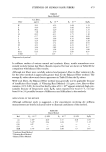
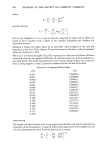
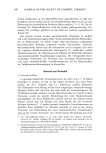
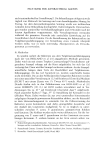
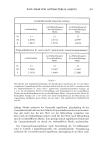
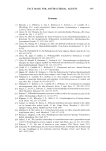
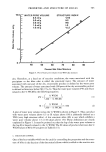
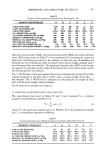
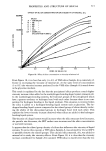
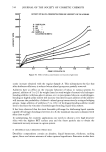
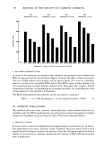
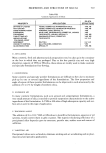
PROPERTIES AND STRUCTURE OF SILICAS 507 Table IV Properties of Precipitated Controlled Structure Silica Samples (A-F) PROPERTl ES/PRODUCT A B C D E F STRUCTURE CODE VHS HS MS MS LS VLS % WET CAKE MOISTURE 86 84 80 75 60 55 STRUCTURE INDEX 614.3 525.0 400.0 300.0 150.0 122.0 OIL ABSORPTION, ml/100g 210 196 177 153 92 72 GLYCERINE ABSORPTION, ml/100g 163 140 136 119 113 72 SORBITOL ABSORPTION, ml/100g 196 189 158 148 120 75 MINERAL OIL ABSORPTION, ml/100g 205 199 175 161 99 90 BET SURFACE AREA, m2/g 200 140 125 85 65 50 AVG. PARTICLE DIAMETER,/•rn 3.0 3.2 4.2 6.4 8.0 9.6 MERCURY INTRUSION POROSITY, ccHg/g 6.32 5.39 4.66 3.94 1.84 1.58 Glycerine demand index (GDI), mineral oil demand index (MDI) and sorbitol demand index (SDI) values (listed in Table V) were determined by converting the respective liquid into free-flowing powders by the addition of silica for ease of handling and blending into dry formulations. Silica was mixed with a known weight of liquid until a free-flowing powder was obtained. The humectant demand index (HDI) or the drying- up capacity was calculated as the weight of the liquid dried up by 100 g of silica until a free-flowing powder was obtained. The % WCM values of the precipitated silicas were determined by drying 100 g of the washed precipitate or the filter cake at 150øC until a constant weight of dry silica was obtained. The % WCM value is obtained by subtracting the dry weight of silica from 100 (the gross weight of the precipitate). The SI values were calculated by using eq 2. B. CORRELATION OF PROPERTIES VERSUS SILICA STRUCTURE The experimental data listed in Tables IV and V were evaluated by a computer program using multilinear regression eq 4 x/= • ai•i +b (4) i=l -- where Y is the dependent variable such as % WCM or SI, • the independent variable and "a" is a multilinear regression coefficient. Table V Humectant Demand Index (Drying-up Capacity) Versus Precipitated Silica Structure PROPERTY/PRODUCT A B C D E F % WET CAKE MOISTURE 86 84 80 75 60 55 STRUCTURE INDEX 614.3 525.0 400.0 300.0 150.0 122.0 STRUCTURE CODE VHS HS MS MS LS VLS GLYCERINE DEMAND INDEX, g/100g 265.0 242.5 233.3 212.5 100.0 92.1 MINERAL OIL DEMAND INDEX, g/100g 233.3 203.0 194.1 150.0 81.8 73.3 SORBITOL DEMAND INDEX, g/100g 257.1 244.8 233.3 185.7 98.0 88.7

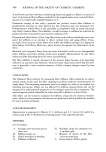
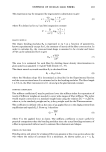
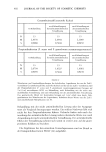
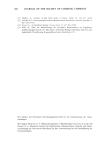
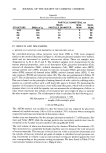
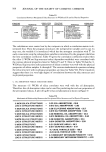
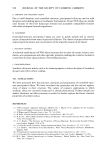
508 JOURNAL OF THE SOCIETY OF COSMETIC CHEMISTS Table VI Correlations Between Precipitated Silica Structure (% WCM and SI) and its Physical Properties STRUCTURE CORRELATION STRUCTURE CORRELATION PARAMETER PROPERTIES COEFFICIENT PARAMETER PROPERTIES COEFFICIENT % WCM 0.998 GLYCERINE ABSORPTION 0.920 SORBITOL ABSORPTION 0.967 MINERAL OIL ABSORPTION 0.996 BET SUR FACE AREA 0.895 AVG.
OIL PARTICLE DIAMETER 0.961 MERCURY INTRUSION POROSITY 0.985 GLYCERINE DEMAND INDEX 0.991 MINERAL OIL DEMAND INDEX 0.986 SORBITOL DEMAND INDEX 0,993 OIL ABSORPTION 0.999 GLYCERINE ABSORPTION 0.925 SORBITOL ABSORPTION 0.970 MINERAL OIL ABSORPTION 0.997 LOG STRUCTURE BET SURFACE AREA 0.926 INDEX AVG.
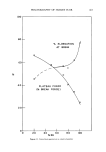
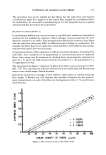
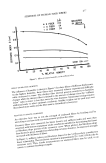
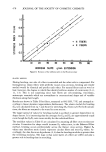
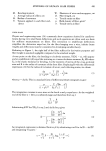
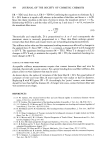
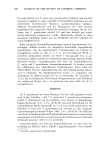
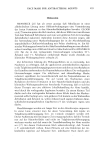
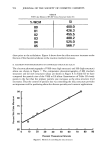
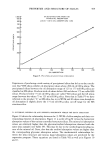
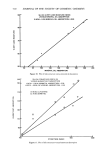
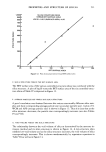
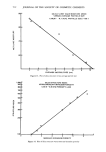
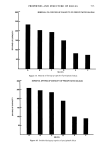
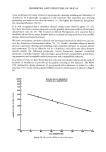
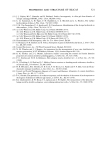
ABSORPTION PARTICLE DIAMETER 0.966 MERCURY INTRUSION POROSITY 0.995 GLYCERINE DEMAND INDEX 0.984 MINERAL OIL DEMAND INDEX 0,993 SORBITOL DEMAND INDEX 0.992 The calculations were carried out by the computer in which a correlation matrix is de- termined first. Then the program introduces the independent variable one by one. In -- step one, the variable • is introduced which has the strongest correlation with Y. At each consecutive step the independent variable is introduced by the program which has the best correlation coefficient. Table VI gives the correlation coefficient results when 'the silica % WCM and log structure index (dependent variables) were correlated with the various physical properties listed in Tables IV and V. Note in Table VI that the % WCM and log structure index parameters of silicas correlate very well with the physical properties of silicas samples A through F. The various mathematical equations relating the silica structure with its physical properties are listed in Table VII. These equations suggest that there is a very high degree of correlations between the silica structure and its physical properties. C. OIL ABSORPTION VERSUS STRUCTURE INDEX The structure (% WCM) of silica correlates very well with the oil absorption. Therefore the oil absorption value can be used for predicting the end-use properties of the precipitated silicas. A plot of log SI versus oil absorption is shown in Figure 9. Table VII Mathematical Relationship Between the Precipitated Silica Structure and Its Physical Properties % WCM LOG SI % WCM LOG SI % WCM LOG SI % WCM LOG SI % WCM LOG SI % WCM LOG SI % WCM LOG SI (SILICA STRUCTURE} (STRUCTURE INDEX} (Sl LICA STRUCTURE} (STRUCTURE INDEX) (SILICA STRUCTURE} (STRUCTURE INDEX) (Sl LICA STRUCTURE} (STRUCTURE INDEX) (STRUCTURE) (STRUCTURE INDEX) (STRUCTURE) (STRUCTURE INDEX) (STRUCTURE) (STRUCTURE INDEX) = 0.23 {OIL ABSORPTION) + 39.0 = 0.012 {OIL ABSORPTION) + 3.93 = 0.38 {GLYCERINE ABSORPTION) + 25.7 = 0.019 {GLYCERINE ABSORPTION) + 3.24 0.26 (MINERAL OIL ABSORPTION) + 33.0 = 0.013 (MINERAL OIL ABSORPTION) + 3.63 = 0.28 (SORBITOL ABSORPTION) + 32.4 = 0.014 {SORBITOL ABSORPTION) + 3.59 = 0.21 {SURFACE AREA) + 50.3 = 0.011 (SURFACE AREA) +4.47 = -4.7 {AVG. PARTICLE SIZE) + 100.1 = -0.24 {AVG. PARTICLE SIZE) + 7.08 = 6.7 {MERCURY INTRUSION POROSITY) + 47.0 = 0.34 {MERCURY INTRUSION POROSITY) + 4.33
Purchased for the exclusive use of nofirst nolast (unknown)
From: SCC Media Library & Resource Center (library.scconline.org)