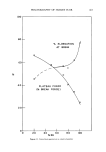
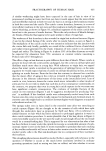
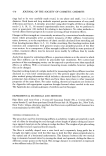
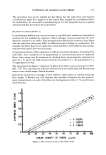
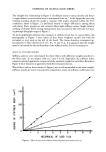
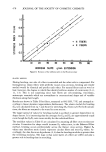
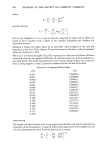
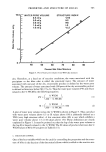
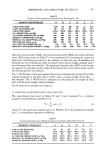
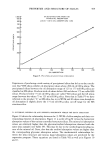
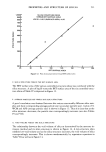
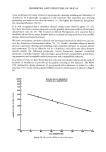
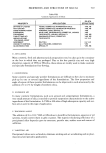
PROPERTIES AND STRUCTURE OF SILICAS 517 been undertaken by many workers concerning the cleaning, polishing and abrasivity of dentifrices. It is generally recognized in the literature that abrasivity and cleaning properties are more or less directly related, i.e., the higher the abrasivity, the greater the cleaning efficiency (20, 21). It is well recognized that a dentifrice should contain some abrasive agent (21-23), but there has been concern expressed over the possible deleterious effects of excessive abrasiveness (20, 24, 25). The Council on Dental Therapeutics (24) cautions that a dentifrice should be no more abrasive than is necessary to keep teeth free of accessible plaque, debris and superficial stain. We have undertaken extensive research and developed methods by which we can con- trol the abrasivity of precipitated silicas (14, 15). Ideally, dentifrice abrasive should provide maximum cleaning and polishing with minimum abrasion to enamel, dentin and cementum. To do an effective job in a dentifrice, we believe the silica abrasive should exhibit the following properties: lowest humectant demand, controlled abrasivity, controlled particle size and shape, good fluoride compatibility, good clean- ing properties and acceptable surface properties and compatibility behavior. In a series of tests, we have found that low-structure precipitated silicas can be used ef- fectively in dentifrices to provide an acceptable cleaning at low abrasion. The RDA (26) (radioactive dentin abrasion) of precipitated silica abrasives is related to silica structure (15). A plot of silica abrasive RDA versus its oil absorption is shown in Figure 20. 1,000 900 800 700 600 500 400 300 - 200 - 100 6O RDA OF SILICA ABRASIVE VERSUS OIL ABSORPTION I i I i I i 70 80 90 100 110 120 OIL ABSORPTION Figure 20. Plot of silica RDA versus oil absorption I 130

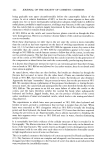
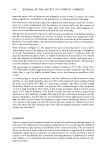
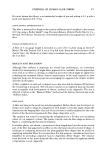
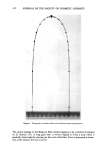
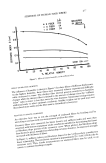
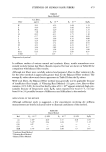
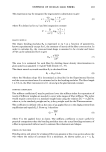
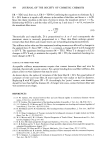
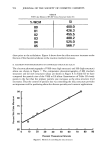
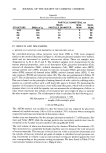
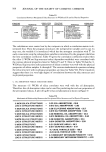
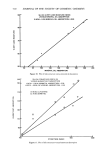
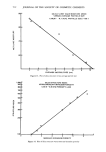
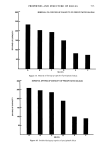
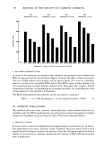
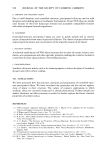
518 JOURNAL OF THE SOCIETY OF COSMETIC CHEMISTS 500 400 300 200 15% 20% 25% 30% ABRASIVE LEVEL ABRASIVE LEVEL ABRASIVE LEVEL ABRASIVE LEVEL AB-1 AB-2 AB-3 AB-4 AB-1 AB-2 AB-3 AB-4 AB-1 AB-2 AB-3 AB-4 AB-1 AB-2 AB-3 AB-4 Figure 21. Effect of silica concentration on RDA C. RDA VERSUS ABRASIVE LEVEL A series of low-structure precipitated silica abrasives was prepared and evaluated for RDA at various levels of concentration. Figure 21 shows the effect of silica concentra- tion on its RDA values silica abrasive can be used at about 25% level in a dentifrice matrix to produce the acceptable RDA values. The RDA values of silica abrasives do not proportionately increase with the abrasive level. This gives the cosmetic chemist tremendous flexibility in formulating an acceptable dentifrice by controlling the level of silica abrasive in the dentifrice formulation. The RDA of precipitated silica abrasive can be calculated by using eq 5 RDA = -4.17 (Oil Absorption) + 5.3 (% Abrasive Level) + 640.8 (5) VI. COSMETIC APPLICATIONS The synthetic silicas are inert, nontoxic, chemically pure, white powders which are ac- ceptable under the FDA regulations for use in food and cosmetic formulations. Typical properties of synthetic silicas are listed in Table VIII and are discussed below. A. DRYING-UP LIQUIDS For many food, cosmetic and pharmaceutical applications it is essential to dry up the ac- tive ingredients on an inert, nontoxic carrier. Synthetic silicas are widely used in such applications for drying up liquids into powders. Since the drying-up capacity of silica is related to its structure, a cosmetic chemist should choose a VHS or HS silica for this type of application.
Purchased for the exclusive use of nofirst nolast (unknown)
From: SCC Media Library & Resource Center (library.scconline.org)