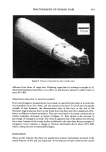
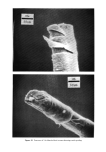
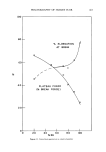
J. Soc. Cosmet. Chem., 29, 497-521 (August 1978) Cosmetic properties and structure of fine-particle synthetic precipitated silicas S. K. WASON J. M. Huber Corporation, Chemicals Division, P.O. Box 310,Havre de Grace, MD 21078. Received September 3 O, 1977. Presented at Annual Scientific Meeting, Society of Cosmetic Chemists, December 1977, New York, New York. Synopsis Submicron-fine particle, synthetic silicas are of three types: fumed silicas, silica gels and precipitated silicas. Recent research has led to the synthesis of a wide variety of new controlled-structure, functional-precipitated silicas which exhibit unique cosmetic and dentifrice properties. The end-use api•lications of the precipitated silicas can be controlled by controlling their structure. It is now possible to make predictions regarding the thickening, viscosity building, humectant demand index, dentifrice abrasive and polishing characteristics of the new class of synthetic, precipitated products. The methods of preparation, the chemistry, the structure and the new cosmetic applications of the precipitated products are discussed. I. INTRODUCTION Fine-particle, synthetic silicas are amorphous, submicron size, white powders. In the literature, these products have often been referred to interchangeably as silicas, hydrated silicas, silicon dioxide, silicic acid, fillers, silica pigments, xerogels, aerogels, amorphous silicas, etc. The discussions which will be presented here will hopefully clarify and distinguish between the various types of silicas. Silicas can be categorized into two major classes: natural silicas and synthetic silicas. Since the natural silicas are mined from the ground and are quite different in structure, properties and functions than the synthetic silicas, we have excluded these products from our discussion here. Synthetic silicas are of three types: fumed silicas, silica gels and precipitated silicas-- and are prepared either by a vapor phase process or by a liquid phase process. Products which are synthesized by the vapor process are called fumed silicas. The products which are derived from the liquid process or wet process are further categorized as silica gels or precipitated silicas. In the CTFA (Cosmetic, Toiletry and Fragrance Association) cosmetic ingredient dictionary (1) the adopted name for the precipitated silicas and silica gels is hydrated silica the fumed silicas are referred to as silicas. For the present discussion we will first review the key properties of the three types of silicas. Then we will discuss the results of our recent research investigation in which we 497

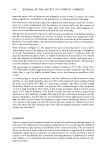
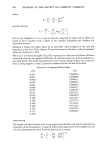
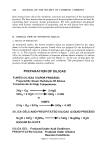
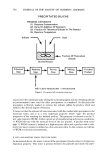
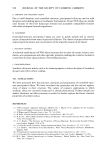
498 JOURNAL OF THE SOCIETY OF COSMETIC CHEMISTS 1iave learned more about the chemistry, structure and properties of the precipitated products. We have learned that the properties of the precipitated silicas can be fixed by controlling their structure during precipitation. We have synthesized precipitated silicas with diverse combinations of properties, and we will discuss how their silica structure can be correlated to key properties and functional performance. II. OVERALL VIEW OF SYNTHETIC SILICAS A. METHOD OF PREPARATION As mentioned earlier, the known synthetic silicas are prepared either by the vapor phase or by the liquid phase process. Fumed silicas are prepared by the hydrolysis of silicon tetrachloride vapor in a flame of hydrogen and oxygen at an elevated tempera- ture (2, 3). The reaction conditions are shown in Figure 1. Silica gels and precipitated silicas are prepared by the acidulation of aqueous sodium silicate solution (4) with an acidification agent, such as sulfuric acid (see Figure 1). In the case of silica gels, the reaction is generally conducted under acid conditions. The precipitated silicas are produced under alkaline reaction conditions. PREPARATION OF SILICAS FUMED SILICAS (VAPOR PROCESS) Prepared By Steam Hydrolysis Of Silicon Tetrachloride At High Temperatures. 2H 2 + 02 • 2H20 SiCI4 + 2 H20 r SiO 2 + 4 HCI or 2 H 2 + 02 + SiCI4 - 1000øC •,• SiO2 + 4 HCI SILICA GELS AND PRECIPITATED SILICAS (LIQUID PROCESS) Na20 x SiO2 + H2SO4 SODIUM SILICATE • x SiO 2 + Na2SO4 + H20 SILICA GEL: Produced Under Acid Conditions. PRECIPITATED SILICA: Produced Under Alkaline Reaction Conditions. Figure 1. Preparation of silicas
Purchased for the exclusive use of nofirst nolast (unknown)
From: SCC Media Library & Resource Center (library.scconline.org)