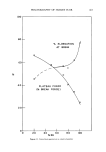
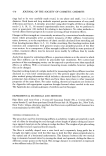
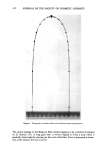
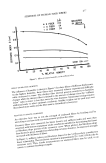
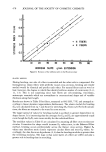
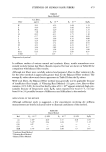
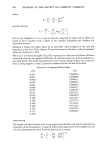
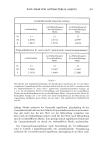
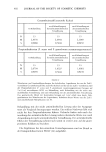
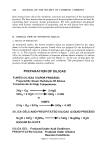
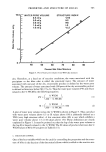
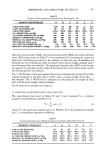
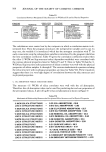
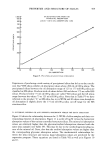
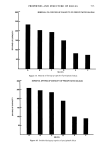
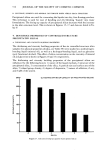
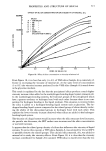
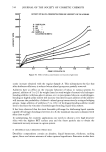
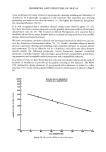
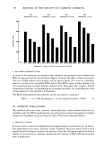
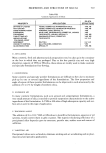
514 JOURNAL OF THE SOCIETY OF COSMETIC CHEMISTS H. GLYCERINE, SORBITOL AND MINERAL OIL DEMAND INDEX VERSUS SILICA STRUCTURE Precipitated silicas are used for converting the liquids into dry, free-flowing powders. This technique is used for ease of handling and dry blending "liquids" into many formulations. The drying-up capacity of precipitated silicas increases with the increase in the silica structure level. This is shown in Figures 15-17 and data are listed in Ta- ble V. V. DENTIFRICE PROPERTIES OF CONTROLLED-STRUCTURE PRECIPITATED SILICAS A. THICKENING AND VISCOSITY BUILDING PROPERTIES The thickening and viscosity building properties of the six controlled-structure silica samples (for physical properties of silica, see Table IV) were studied in a nonhydrogen- bonding liquid (mineral oil), as well as a hydrogen-bonding liquid, such as glycerine (poly functional alcohol). The effect of silica concentration on the viscosity of mineral oil and glycerine is shown in Figures 18 and 19, respectively. The thickening and viscosity building properties of the precipitated silicas are influenced by the following factors: 1) nature of the liquid medium, 2) structure of the precipitated silica, 3) concentration of the silica, 4) particle size and surface area of the silica, 5) silanol group density, 6) degree of dispersion, 7) nature of additives, if any, and 8) pH of the system. ,00[ 250 GLYCERINE DRYING-UP CAPACITY OF PRECIPITATED SILICAS - 200 ,', 150 z c) lOO 50 B C D E SILICA Figure 17. Glycerine drying-up capacity of precipitated silicas

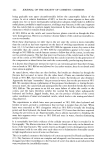
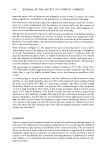
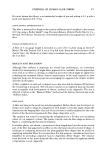
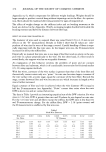
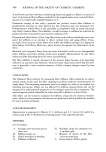
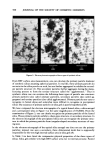
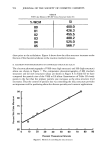
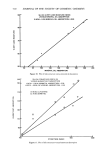
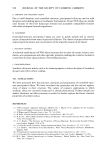
PROPERTIES AND STRUCTURE OF SILICAS 515 50,000 10,000 1,000 EFFECT OF SILICA CONCENTRATION ON VISCOSITY OF MINERAL OIL Sl LICA A = VHS SILICA B = HS " C = MS " D = MS " E = LS " F = VLS " AA = SAMPLE A CALClNATED @ (600øC) iAA ,D I I I I I 1.0 2.0 4.0 6.0 8.0 10 CONC. OF SILICA (%) Figure 18. Effect of silica concentration on viscosity of mineral oil From Figure 18, it is clear that only 3 to 6% of VHS silica (Sample A) is extremely ef- fective in increasing the viscosity of mineral oil. At the same level of concentration (3 to 6%) the viscosity increase produced by the VHS silica (Sample A) is much lower in the glycerine medium. This result is explained by the fact that the precipitated silicas produce a much higher viscosity increase when added to the nonhydrogen-bonding liquid system (mineral oil). In the nonhydrogen-bonding systems, the hydroxyl groups of the precipitated silicas have a greater tendency .to hydrogen bond with each other because there is no com- petition for hydrogen bonding in the liquid medium. This situation is reversed when the silica is added to a hydrogen-bonding liquid sLystem such as glycerine. The hy- drogen-bonding liquid system competes for the silanol group of silicas thereby reduc- ing the ability of the silica-silanol groups to hydrogen bond with each other. This , explains the lower viscosity increase observed when silicas are •ad.ded ,to the hydrogen- bonding liquid system. The viscosity of a liquid system xvould increase when the silica structure •level increases, the particle size decreases, the BET surface area increases and the silica concentration or use level increases. It appears that the sitanol group density of silicas also influences the viscosity of liquid systems. To prove this concept, a VHS silica, Sample A, was calcined for 2 hr at 600øC to partially remove the silanol groups. This calcined silica material, AA, was added to mineral oil t,o study the viscosity effects. From Figure 18, it is clear that ,rhe viscosity increase contributed by •Sample AA (calcined VHS silica) is much lower than the •vis-
Purchased for the exclusive use of nofirst nolast (unknown)
From: SCC Media Library & Resource Center (library.scconline.org)