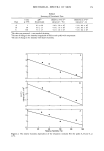
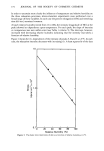
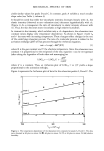
214 JOURNAL OF THE SOCIETY OF COSMETIC CHEMISTS It can be seen that there is a significant reduction in the work done during combing of between 33% and 73%, with the conditioner appearing more effective when there is minimal entanglement and when it is rinsed out of the hair first. As it is probable that a layer of the conditioner remains on the hair fibres after rinsing, then rinsing the hair should make no difference to the hair-hair and hair-comb friction forces generated. It is therefore likely that the smaller work reduction observed when the conditioner is left in the hair is due to the greater resistance to combing offered by the presence of the fairly viscous conditioners themselves. The results thus do indicate that conditioners are very effective in reducing the friction forces present in the hair during combing. Additional complications arise when the hair is deliberately tangled during shampoo- ing. This frequently gives rise to the formation of knots and, during combing on the Instron, © if these knots do not unravel fairly quickly they will often be broken off because the hair continues to be pulled through the comb at a constant speed. This means that it is the breaking strength of the hair fibres involved that is being tested rather than the friction forces and can lead to an artificially high work value. Although knots do form in practice this method of testing is not a good approximation of what occurs during combing in practice. Generally the knots will be gently worked out rather than the comb being dragged straight through and breaking off the hair. It was observed in the tress experiments that the presence of a conditioner did make this untangling process easier. It is obvious from the preceding discussion that the condition of the hair cuticle can be greatly improved by the use of correct grooming techniques. This is especially important to the overall appearance of the hair since the condition of the cuticle probably has a large influence on such factors as the shine, body, and manageability of the hair. Obviously, washing and drying the hair cannot be avoided, but by using a conditioner and combing rather than brushing out the knots much of the usual damage can be avoided. CONCLUSION These observations have again verified that the normal grooming processes to which hair is subjected can cause severe damage to the hair. This study has shown specifically that the processes of wet combing or wet brushing out of the knots introduced during shampooing and towel drying are a particularly serious source of this damage. It was shown that shampooing and towel drying alone can damage the cuticle but that the wet-combing or brushing out of knots greatly increases the damage. Although only one subject participated in the "on head" study the results indicate that brushing may be far more damaging than combing. This study found that the normal shampooing process, involving shampooing, towel drying, and wet combing out the knots, can abrade away the cuticle at a rate of I to 2.5 cuticles per 50 treatments. This means that when this grooming procedure is undertaken twice per week the 6 to 10 cuticle layers which are the normal range encountered in human hair can be removed in 14 to 60 months. Hence this grooming process can account totally for all the damage done to the cuticle, and this damage can be inflicted in a period of little over one year in some cases. This appears to be a much greater cuticle removal rate than the 5/am abrasion per 2000 dry comb strokes reported

EFFECT OF GROOMING ON HAIR CUTICLE 215 by Swift and Brown (7). It would appear that the process of shampooing, towel drying, and wet combing is the dominant factor in the deterioration of the cuticle, with dry combing and other forms of mechanical handling being of less consequence. The most damaging of these processes appears to be detangling of wet hair. While the hair is wet, with the hydrogen bonds broken, it has a much lower resistance to abrasion than when dry, and it is at this time that the hair is subjected to the very strong abrasive forces that are associated with combing or brushing out the knots. Hence quite severe damage can be inflicted during this relatively short stage of the grooming process. This study has verified that the damage inflicted can be reduced considerably by applying a conditioner to the hair before removing the knots, with a reduction in the rate of damage with grooming of up to 82% being observed. The conditioner acts by reducing the friction in the hair during combing and therefore reducing the abrasion forces to which the hair is subjected. In addition it was noted that as a consequence of preserving the cuticle in this way, the use of a conditioner also effectively reduced the subsequent degree of entanglement that occurred during shampooing, therefore further reducing the subsequent damage due to combing. Exposure to sunlight was not necessary for cuticle breakdown to occur. However, exposure to sunlight and chemical treatment weakens the hair and therefore probably makes it more susceptible to damage by grooming. ACKNOWLEDGEMENTS This project was funded by Reckitts Toiletries International, whose support is gratefully acknowledged. The authors also wish to thank Professor M. Feughelman for his helpful discussions. REFERENCES (1) R. A. Wall and L. D. Hunter, Normal adult hair--structure and properties, Cosmet. Perfum. 89, 31-36 (1974). (2) M. L. Garcia, J. A. Epps, R. S. Yare, and L. D. Hunter, Normal cuticle wear patterns in human hair,J. Soc. Cosmet. Chem. 29, 155-178 (1978). (3) A. C. Brown andJ. A. Swift, Hair breakage: the scanning electron microscope as a diagnostic tool,J. Soc. Cosmet. Chem. 26, 289-297 (1975). (4) V. N. E. Robinson, Split ends: a scientific study of hair, Cosmet. Perfum. 90, 25-30 (1975). (5) V. N. E. Robinson, A study of damaged hair,J. Soc. Cosmet. Chem. 27, 155-161 (1976). (6) T. Okumura, A. Ishida, T. Sasaki, and S. Hayashi, Hair and brushing, Int. Fed. Soc. Cosmet. Chem. 3, 727-749 (1976). (7) J. A. Swift and A. C. Brown, The critical determination of fine changes in the surface architecture of human hair due to cosmetic treatment,J. Soc. Cosmet. Chem. 23,695-702 (1972). (8) J. A. Swift, Scanning electron microscope study of Jane Austen's hair, Nature 238, 161-162 (1972). (9) M. M. Breuer, G. K. Gikas, and I. T. Smith, Physical chemistry of hair condition, Cosmet. Toiletdes 94, 29-34 (1979). (10) T. G. Schoenberg and A. A. Scafidi, Role of alkylamidoamine salts in the modern hair conditioner, Cosmet. Toiletties 94, 57-64 (1979). (11) V. N. E. Robinson, Backscattered electron imaging, in "Scanning Electron Microscopy 1975," IITRI, Chicago, pp 51-60.
Purchased for the exclusive use of nofirst nolast (unknown)
From: SCC Media Library & Resource Center (library.scconline.org)