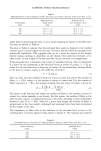
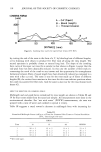
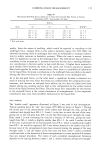
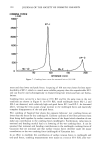
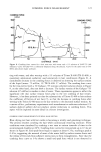
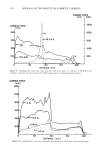
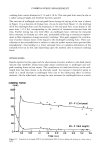
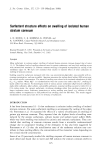
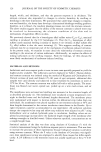
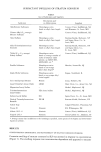
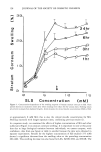
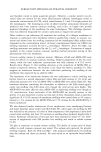
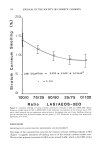
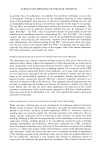
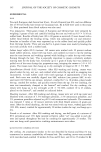
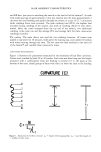
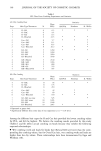
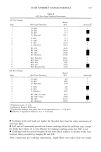
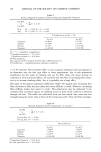
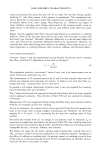
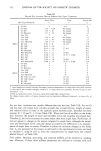
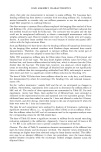
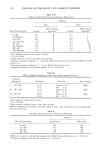
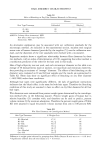
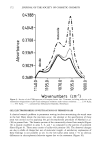
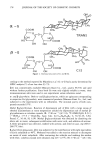
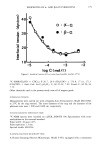
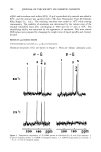
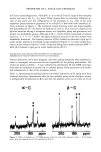
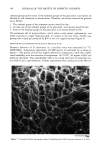
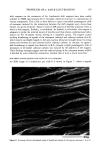
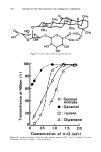
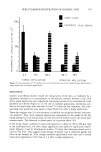
186 JOURNAL OF THE SOCIETY OF COSMETIC CHEMISTS O CH3 ( :a CH• HO I CH:] ø•c o .... HO • ]'!%., / O, /O•,,/! 'C CHa .o .... HO' • 'OH OH Figure 9. Cyclic model of •-G in aqueous solution. lOO • 80 E • 60 c 40 • 20 0 0 I / O: Geranyl acetate •: Geraniol El .' Ionone •: Dipentene I • ß 0.5 1.0 1.5 2.0 Concentration of c•-G (wt%) øc Figure 10. Solubilizing ability of(x-G for several perfume materials (30 , pH 4.5). Ethanol: 9.95 wt%. Solubilizate: 0.05 wt%. Water + (x-G: 90.00 wt%.

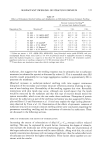
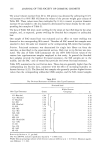
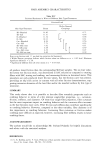
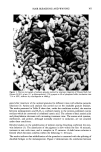
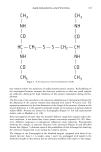
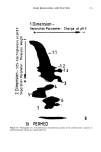
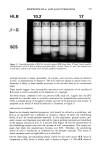
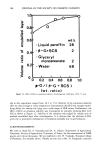
PROPERTIES OF o•- AND [3-GLYCYRRHIZINS 187 HLB SCS 10.2 17 Figure 11. Emulsifying ability of •-G for oils with various HLB values (after l0 days). Liquid paraffin, 2-Hexyldecanol: 30 wt%. I•-G or sodium cetylsulfate (SCS): 3.0 wt%. Water: 67 wt%. The number given to each bottle indicates the weight ratio of liquid paraffin/2-hexyldecanol. network structure is clearly discernable. In contrast, such structure cannot be observed in o•-G, as demonstrated in Figure 8. The c•-G molecule taking an almost linear con- formation is likely to form lamella structures in the miceliar state as do conventional soaps. These results suggest that intermicellar association and orientation of the micelies of [3-G seem to result eventually in the formation of a rigid gel. All these results, combined with our previous ESR study (9), suggest that the molecule in a miceIlar state is cyclically constructed by intramolecular interaction be- tween a carboxyl group of the aglycon moiety and one of the glucuronic acid moiety. A proposed cyclic model of the [3-G molecule is illustrated in Figure 9. APPLICATION TO COSMETICS Based on the already described properties, o•-G should be utilized as a solubilizer, and [3-G as an emulsifier and a stabilizer in cosmetics. Figure 10 shows the solubilizing ability of o•-G for several perfume materials. In this experiment, geranyl acetate, ger- aniol, ionone, and dipentene were selected for typical perfume materials and solubilized in the aqueous solution of o•-G. It is obvious from Figure 10 that the transmittance of the solubilizing system rises with the increase of o•-G concentration. This system ap- pears clear when the transmittance becomes over 80%. Therefore, the solubilizing ability of o•-G is satisfactory as evidenced for the perfume materials. This seems to ensure extensive practical applicability as a solubilizer. On the other hand, the emulsifying ability of [3-G for oils with various HLB values in comparison to SCS, which is widely used, is shown in Figure ! 1. The HLB values of
Purchased for the exclusive use of nofirst nolast (unknown)
From: SCC Media Library & Resource Center (library.scconline.org)