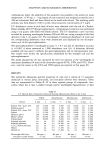
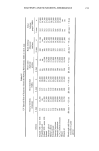
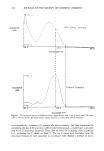
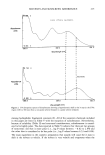
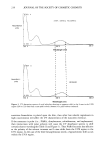
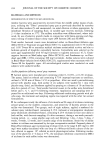
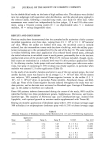
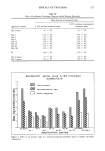
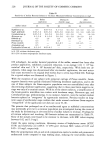
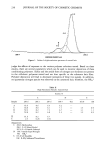
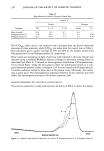
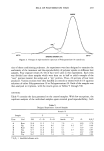
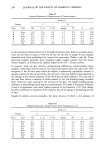
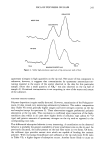
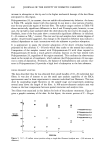
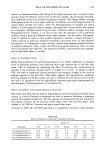
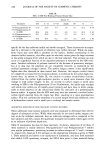
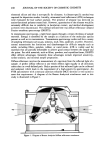
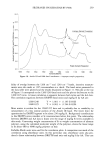
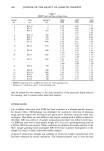
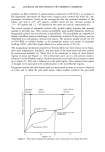
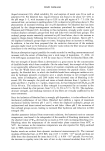
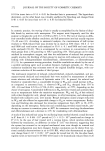
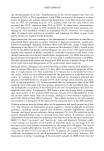
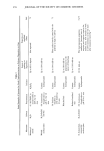
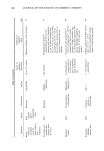
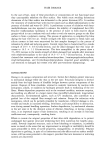
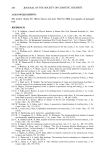
228 JOURNAL OF THE SOCIETY OF COSMETIC CHEMISTS Table IV Sensitivity of Axillae Bacterial Isolates to Triclosan: Minimum Inhibitory Concentrations in mg/1 Before During six After application months' usage discontinuation Axillae isolate (a) (b) (a) (b) (a) (b) Staphylococcus sp. 0.5 0.05-5.0 0.1-1.0 Staph, epidermidis 0.05-5.0 0.05-5.0 0.05-5.0 Corynebacterium sp. 0.05-5.0 2.0-5.0 2.0-5.0 Micrococcus sp. 0.1-5.0 0.1-5.0 2.0-5.0 Klebsiella sp. 0.5 1.0 0.5 Enterobacter sp. 0.5 -- 0.5 Proteus mirabills O. 5 -- O. 2-O. 5 Acinetobacter calc. O. 5 -- O. 5 Unidentified (Gram-ve) 0.2 - 0.5 0.05 - 0.5 -- 0.1-5.0 0.5-5.0 0.1-1.0 0.02-5.0 0.1-5.0 0.05-5.0 0.1-5.0 5.0 1.0-5.0 0.1-5.0 1.0-5.0 2.0 0.5 0.5 0.5 -- __ O.2-O.5 -- (a) 0.15% triclosan deodorant spray. (b) 0.25% triclosan antiperspirant deodorant spray. 630 ml/subject), the aerobic bacterial population of the axillae, assessed four hours after product application, exhibited a sustained reduction, to on average 1.04 X 10³ bac- teria/cm 2 skin and 3.74 x 10² bacteria/cm 2 skin, respectively. With both test de- odorants, when usage was discontinued after six months' application, the total micro- bial count recovered to its original level within four to seven days (Table III). Findings for a typical subject are illustrated in Figure 1. With the exception of one subject with persistent carriage of Proteus mirabilis, Gram- negative bacteria were quickly eliminated following deodorant application, and in the case of three subjects the Gram-negative population was not reestablished even after discontinuing deodorant application, suggesting that in these cases Gram-negative car- riage was only of a transient nature. With six of the sixteen subjects, a simplification of the Gram-positive microflora was evident with deodorant usage, Micrococcus spp. and Corynebacterium spp. predominating. In no instance, however, were the normal resident bacteria replaced or "overgrown" by opportunist transients. Previous studies on long- term usage of antibacterial soaps confirm that under normal conditions Gram-negative "overgrowth" of the application site does not occur (9, 10). The premise that prolonged use of an antibacterial agent at sublethal concentrations may potentially give rise to a resistant population was investigated during the course of the study by determining in vitro sensitivity of axillae isolates to triclosan. Findings for all sixteen subjects and involving 380 bacteria isolates are summarized in Table IV. None of the isolates were found to be resistant to triclosan, with MIC values ranging between 0.02 and 5.0 mg/l. Under the same testing conditions, laboratory strains of Staphylococcus aureus (ATCC 6538) and Escherichia coli (ATCC 11'299) gave triclosan MIC values of 0.05 and 0.05- 1.0 mg/l, respectively. Both the antiperspirant roll-on and stick compositions exerted a similar and pronounced antibacterial action compared to soap washing alone, reducing the total aerobic bacteria

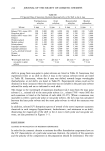
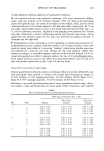
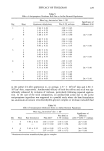
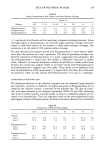
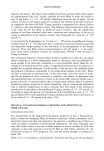
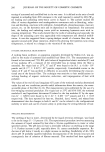
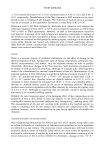
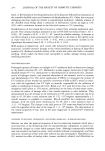
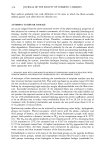
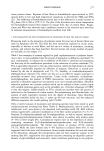
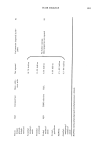
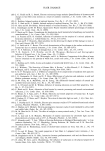
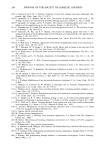
EFFICACY OF TRICLOSAN 229 Table V Effect of Antiperspirant Deodorant Roll-Ons on Axillae Bacterial Populations Day Mean log•o bacteria/cm 2 skin + SD Hour Aluminum chlorhydrate Plus 0.2% triclosan Significance of difference (8 h) 1 2.96 -+ 0.49 2.85 -+ 0.45 4 3.42 -+ 0.70 3.04 -+ 0.54 6 3.49 -+ 0.56 3.52 -+ 0.63 8 3.68 -+ 0.57 3.64 -+ 0.48 1 2.60 -+ 0.50 2.44 -+ 0.48 4 3.68 -+ 0.61 2.94 -+ 0.63 6 3.52 -+ 0.59 3.10 -+ 0.72 8 4.00 _+ 0.52 3.50 -+ 0.54 1 2.89 -+ 0.59 2.57 -+ 0.62 4 3.31 -+ 0.61 3.34 -+ 0.69 6 3.66 -+ 0.52 3.34 -+ 0.64 8 4.06 _+ 0.55 3.58 -+ 0.51 3.07 -+ 0.70 2.65 -+ 0.65 3.55 -+ 0.70 2.93 -+ 0.73 3.76 + 0.56 3.45 -+ 0.56 4.31 -+ 0.58 3.71 -+ 0.71 1 2.95 + 0.61 2.45 + 0.59 4 3.51 - 0.77 2.92 _ 0.80 6 3.87 - 0.53 3.23 - 0.49 8 4.26 _ 0.69 3.65 - 0.59 2or. 0.05 2or. 0.01 2c• 0.01 2or 0.01 2or 0.01 in the axillae 4 h after application to, on average, 2.57 X 10³/cm 2 skin and 4.90 X 10³/cm 2 skin, respectively. Antibacterial efficacy of both the roll-on and stick was sig- nificantly enhanced by inclusion of triclosan, particularly following repeated applica- tion. In the case of the stick composition, an antibacterial action due to the active antiperspirant ingredient was supported in a parallel study where the base formulation (no aluminum-zirconium tetrachlorohydrex-glycine complex or triclosan included) had Table VI Effect of Antiperspirant Deodorant Sticks on Axillae Bacterial Populations Mean log•o bacteria/cm 2 skin _+ SD Day Hour Base formulation Plus ZAG z Plus ZAG & 0.3% triclosan Significance of difference ZAG • ZAG + triclosan 1 4 5.49 _ 0.52 3.83 - 0.59 24 4.42 _ 0.60 4 4 5.36 -+ 0.32 3.49 -+ 0.49 24 -- 3.97 -+ 0.55 3.18 - 0.67 4.02 - 0.84 2.75 m 0.70 3.05 -+ 0.72 2or 0.01 2or 0.01 2or 0.01 2or 0.01 • Aluminum-zirconium tetrachlorohydrex-glycine complex.
Purchased for the exclusive use of nofirst nolast (unknown)
From: SCC Media Library & Resource Center (library.scconline.org)