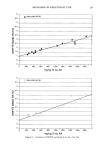
j. Soc. Cosmet. Chem., 38, 233-246 (July/August 1987) An ESCA study of the substantivity of conditioning polymers on hair substrates E. D. GODDARD and W. C. HARRIS, Union Carbide Corporation, Specialty Chemicals Division, Tarrytown, NY (E.D.G.), and Bound Brook, NJ (W.C.H.) Received March 2, 1987. Presented at the Annual Meeting of the Society of Cosmetic Chemists, New York, December 1986. Synopsis The viability of ESCA as a means to investigate the surface deposition onto hair of a number of cationic conditioning polymers is demonstrated. A well-known cationic cellulosic polymer is shown to have a high level of deposition which increases as one progresses from the root to the tip end of the fibers. More uniform and somewhat higher deposition is observed with a hydrophobically modified cationic cellulosic. The deposition of three noncellulosic cationic polymers which are based on vinyl chemistry is also examined. The level of deposition is somewhat lower than that observed with cellulosics. It is shown that much of the adsorbed cellulosic polymer can be removed by a wash in sodium dodecyl sulfate (SDS). This paper under- lines the great utility of ESCA as a surface analytical tool for studies of this type. INTRODUCTION A longstanding goal in the field of cosmetic science is to correlate the perceived benefi- cial effect of various hair care agents with the amount of the agent on the surface and the modification of the original hair substrate thus produced. The examination of hair sub- strates to determine adsorption and retention of small amounts of conditioning agents has traditionally relied on techniques such as radiocounting, which are not inherently surface-sensitive (1). Thus, while bulk deposition could be monitored, the true surface composition of treated samples was largely unknown. Even with the radiotracer tech- nique, in the mode generally employed, there is no differentiation between agent on the surface and that which may have penetrated into the fiber. Electron spectroscopy ø for chemical analysis (ESCA) is a technique which probes the outermost 25 to 50 A of a solid surface (2). Both elemental surface compositions and information on the chemical state of the various constituent elements within this depth regime are obtained. Recently the technique has been applied to studies of the hair surface (3,4). Due to its extreme surface sensitivity, ESCA is well suited to studies of the effects of various topical conditioning agents on hair fibers, since even submonolayer quantities of these polymers can be readily detected. 233

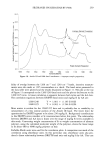
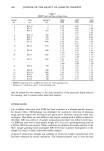
234 JOURNAL OF THE SOCIETY OF COSMETIC CHEMISTS EXPERIMENTAL MATERIALS The cationic cellulosic polymers used were UCARE © Polymer JR 400 (CTFA designa- tion Polyquaternium-10) and QUATRISOFT • LM-200 (CTFA designation Polyqua- ternium-24), both products of Union Carbide Corporation. Three additional cationic polymers were also examined, Hercules RETEN 220 (Polyquaternium-5), MERQUAT 550 (Polyquaternium-7) from Merck, and GAFQUAT 755 (Polyquaternium-11) from GAF. PREPARATION OF SAMPLES Virgin brown hair tresses, obtained from DeMeo Brothers, were given a simulated shampooing with TERGITOL © nonionic surfactant 15-S-9, thoroughly rinsed, and air dried. Polymer treatments were performed by immersing the tresses in an aqueous solution of the cationic polymer (0.1-0.01% by weight polymer) for 30 minutes with intermittent stirring. They were then washed with three 30-second distilled water rinses and air dried. In cases where a post-treatment with sodium dodecyl sulfate (SDS) was performed, the polymer-treated hair was immersed for 5 minutes in a 1 weight % SDS solution, again with intermittent stirring, and rinsed as above. ESCA ANALYSIS Hair fibers were analyzed using a Surface Science Laboratories Inc. SSX-100 ESCA spectrometer. Samples were mounted by suspending a V2-inch-long bundle containing 10-20 hair filaments across the 7 X 3-mm open area of a 10 X 13-mm Au-plated mask using double-sided adhesive tape. The masks were then suspended several milli- meters above a computer-controlled rotation platter. This effectively defocused the platter from the photoelectron acceptance optics, and therefore the void areas within the mask contributed no signal. The instrument is regularly calibrated to give the Au4f'7/2 photoelectron peak at 83.93 eV and the Cu2p3/2 peak at 932.47 eV. Since hair is nonconductive, all samples showed considerable charge buildup under x-ray irradiation. Analyses were therefore performed using an electron flood gun to provide charge com- pensation, and all measured binding energies were charge corrected to the principal C Is photoelectron line at 284.6 eV. Quantitation was performed using software and sensi- tivity factors supplied by the manufacturer. RESULTS AND DISCUSSION Because of its extreme surface sensitivity, ESCA would seem to be an excellent tool for studying the deposition of polymers on the hair substrate. A key consideration in this application, however, was the measurement reproducibility since this ultimately deter- mines the utility of quantitative analysis. Hair, being a natural product, was expected to be quite heterogeneous, and thus the measurement precision might also be expected to be rather poor, particularly given the small sample size used in these analyses. There- fore, a set of six samples of control hair (no polymer treatment) was initially analyzed in order to define the statistical variation inherent in the analysis. These control samples
Purchased for the exclusive use of nofirst nolast (unknown)
From: SCC Media Library & Resource Center (library.scconline.org)