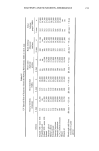
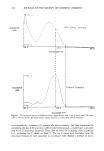
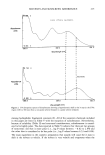
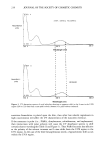
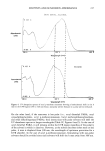
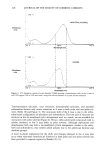
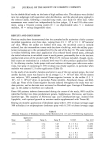
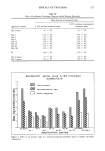
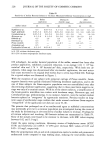
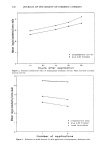
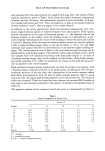
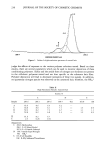
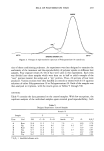
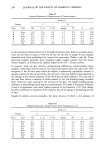
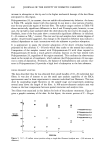
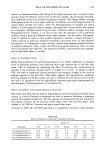
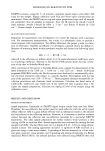
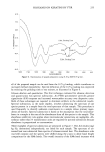
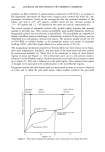
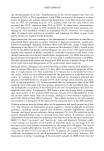
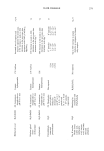
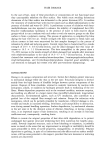
ESCA OF POLYMERS ON HAIR 243 carbon, as determined from curve fitting of the high-resolution data, is plotted versus position along the filament axis for each of the four samples. (As previously described, this component serves as an indicator of polymer retention.) The higher surface coverage of Polyquaternium-24 is once again indicated. In addition, the two Polyquaternium-24 treated fibers provide less scatter, while the Polyquaternium-10 samples are clearly different in their apparent surface coverage, indicating that, at least within this limited set of samples, Polyquaternium-24 gives more consistent surface coverages than does Polyquaternium-10. Finally, it can also be seen that the treatment is not completely uniform along a particular filament with either polymer. On the whole, Polyquater- nium-24 appears to lead to more uniform deposition however, a larger data base is clearly required to make any definitive statements concerning intra- or inter-filament homogeneity. It is important to note, however, that all areas examined showed evidence of polymer adsorption. Thus, within the 300-micron spatial resolution limit, no areas devoid of polymer were observed. The sensitivity of ESCA, which allows such examina- tion of individual fibers, is notable. EFFECT OF TREATMENT LEVEL While Polyquaternium-24 and Polyquaternium-10 do exhibit differences in absolute levels of deposited polymer, both materials show high substantivity to the hair sub- strate. This is reinforced by examining the effect of reducing the concentration of polymer in the treatment solution from 0.1 weight % to 0.01%. As shown in Table VIII, the order of magnitude dilution produced only marginal changes in the levels of polymer uptake on the hair fiber. This result suggests that the partition coefficient between polymer on the hair surface and and in solution lies very much in favor of the hair and is in agreement with the high-affinity isotherms previously demonstrated for the adsorption of Polyquaternium-10 on keratins (8). EFFECT OF WASHING WITH SODIUM DODECYLSULFATE (SDS) The results described thus far indicate high polymer retention following distilled water rinsing. It is also of interest to determine the level of retention following a surfactant rinse of the polymer-treated hair. For this purpose, the shampooed hair was exposed to the polymer solution for 30 minutes, rinsed three times with distilled water, then washed in 1% SDS for 5 minutes and again rinsed three times. As shown in Table IX, the SDS wash results in a significant increase in those elements Table VIii Effect of Polymer Concentration in Treatment Solution Atomic % Treatment CH C - O C = O Amide N + O S ß 1% Polyquaternium- 10 .01% Polyquaternium- 10 .1% Polyquaternium-24 ß 01% Polyquaternium-24 51.6 22.6 5.4 1.9 0.68 16.2 0.8 49.1 21.5 5.4 3.6 0.56 17.0 1.3 39.0 29.8 4.3 1.1 0.6 23.8 1.0 33.6 32.2 6.0 1.4 0.7 24.8 0.8

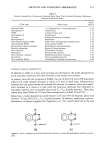
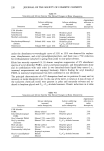
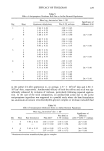
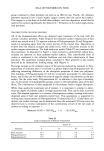
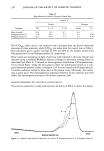
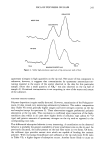
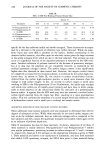
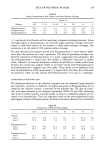
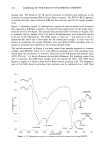
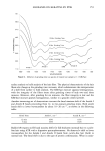
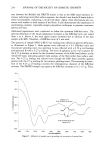
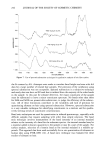
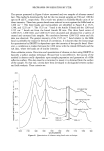
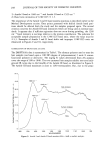
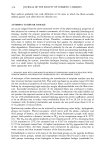
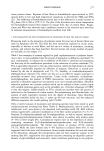
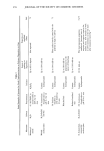
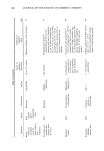
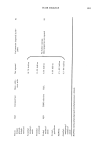
244 JOURNAL OF THE SOCIETY OF COSMETIC CHEMISTS Table IX Effect of SDS Post-Washing Polymer-Treated Hair Atomic % Treatment CH C - O C = O Amide N + O S .1% Polyquaternium- 10 51.6 22.6 5.4 1.9 0.7 16.2 0.79 .1% Polyquaternium- 10 + 1% SDS 48.4 14.4 6.1 6.8 0.3 18.3 3.20 ß 1% Polyquaternium-24 42.7 26.9 3.4 2.2 0.6 21.1 1.30 ß 1% Polyquaternium-24 q- 1% SDS 44.0 18.4 6.2 6.4 0.3 20.3 2.40 specific for the hair substrate (sulfur and amide nitrogen). These increases are accompa- nied by a decrease in the amount of cellulosic-type carbon detected. While the possi- bility exists that some SDS is adsorbed on the surface, thereby contributing to the observed sulfur intensity, this effect must be relatively minor given the large increases in the amide nitrogen levels which are due to the hair substrate. This increase can only occur if a significant fraction of the deposited polymers is removed by the SDS treat- ment. Another indication of polymer removal is the decrease of quaternary nitrogen, but it is clear that the polymers are not completely removed, as evidenced by the residual quaternary nitrogen content. The surface oxygen content is also significantly higher than that observed on clean control hair. However, this oxygen content cannot be completely accounted for by retained polymer, as evidenced by the carbon high-reso- lution data. As shown in Table IX, the decline in surface alcohol/ether content, derived from the carbon high-resolution spectra, is much more dramatic than the change in total surface oxygen. In fact, an increase in surface oxygen is noted upon washing in SDS in the Polyquaternium-10 set! Furthermore, the amide-type nitrogen and amide-type carbon are of roughly equal intensity and have risen to levels compa- rable to those observed on the control hair (Table II), indicative of a predominantly keratin surface. It appears that the SDS wash may have also removed a residual hydro- carbon (lipid) material from the virgin hair fiber, resulting in a more proteinaceous surface. This was confirmed by treatment of a control sample which also exhibited a loss of hydrocarbon content with a small rise in carbonyl and amide content. ADSORPTION BEHAVIOR OF NON-CELLULOSIC CATIONIC POLYMERS Three additional vinyl cationic polymers were also examined to determine their relative degrees of adsorption on hair. While these materials do not enrich surface oxygen con- tent as do the cellulosic materials, they are relatively nitrogen-rich as compared to the hair substrate and they contain the quaternary nitrogen functionality which again serves as an indicator of polymer deposition. Table X summarizes the data for these materials. As shown, deposition of all three of these materials is readily detected. Polyquaternium-5 and Polyquaternium-7 exhibit very similar performance, producing increases in surface nitrogen of 1.7 and 1.4 atomic %, respectively, based on 6.4% nitrogen on the original hair substrate as given in Table I. These materials are known to be copolymers of acrylamide, and since both materials also exhibit 0.8% quaternary nitrogen, the ESCA data point to these materials being
Purchased for the exclusive use of nofirst nolast (unknown)
From: SCC Media Library & Resource Center (library.scconline.org)