HAIR DAMAGE 265 region to the matrix. The ratios of the moduli of the linear portions of the three regions are approximately 100:1:10. Young's modulus for wool fibers in water was found to vary in the limits 1.7-2.0' 109 pascals, depending upon the rate of strain. As the content of water in the keratin structure is reduced, the stiffness of the fiber increases. In completely dry fibers (0% RH), Young's modulus is augmented by a factor of about 2.7 relative to the same modulus in water. The reference crossectional area in both cases is the value for the wet fibers. It should be noted, however, that the equilibrium stiffness of the fibers (obtained under static conditions and independent of the rate of strain) is independent of the moisture content and corresponds to a value of 1.4 ß 109 pascals (7). It was reported by Feughelman et al. (2) that 6-7 ß 108 pascals of equilibrium Young's modulus value of 1.4 ß 109 pascals are due to coulombic interactions between positively and negatively charged groups in the side-chains of the polypeptides in the keratin structure. Thus, hair fibers tested in aqueous media in the pH range 1-3, the condi- tions under which carboxylic residues are undissociated, showed a 40% decrease in Young's modulus. The mechanical behavior of keratin fibers is often considered in terms of a two-phase model consisting of a water-impenetrable phase of cylindrical rods (microfibrils) ori- ented parallel to the fiber axis, embedded in a water-penetrable matrix phase (8). Ac- cording to the predictions of this model, in longitudinal extension the two phases act in parallel and are equally deformed. In other words, in the wet state, the crystalline phase (microfibrils) contributes considerably to the longitudinal stiffness of the fiber. When the fiber is subjected to torsional stress, on the other hand, and if the matrix is weak- ened by the presence of water, distortion is confined to the matrix. In agreement with the experimental data, the presence of water in the keratin fiber structure should cause a greater reduction in torsional rigidity than in longitudinal stiffness. Based on dynamic mechanical analysis carried out at various humidities, and on conventional mechanical tests at different temperatures in water, estimates have been made of the mechanical contribution of each phase to the equilibrium Young's modulus of 1.4 ß 109 pascals (2). According to these calculations, the contribution of the microfibrils is close to 1.2 ß 109 pascals (about 85% of the equilibrium Young's modulus) and the matrix contribution is of the order of 0.2 ß 109 pascals (only about 15%). PHYSICAL AND PHYSICOCHEMICAL METHODS FOR DETECTION OF FIBER DAMAGE STRESS-STRAIN RELATIONS The measurement of the longitudinal mechanical properties of hair is frequently ap- plied to assess the damaging effects of chemical treatments. Several parameters calcu- lated from stress-strain data were reported to be sensitive to modifications of fibers as a result of cosmetic treatments or environmental degradation. The most commonly used were 20% index, which is the ratio of work required to stretch the fiber by 20% after treatment to the work required to stretch the fiber by 20% before treatment (9), the yield point (stress) at 15% elongation (10), and the tensile strength or extension to break (10). Deem et al. (11) introduced a new parameter, hysteresis ratio (H2o), for the mechanical

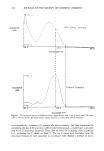
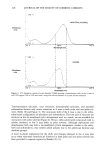
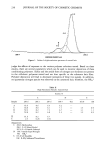
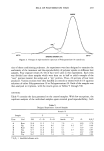
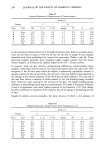
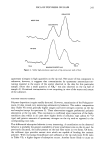
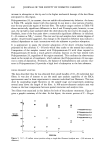
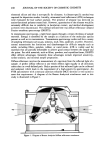
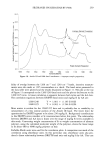
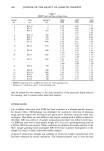
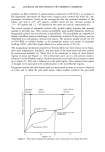
266 JOURNAL OF THE SOCIETY OF COSMETIC CHEMISTS testing of untreated and modified hair in the wet state. It is defined as the ratio of work regained in unloading from 20% extension to the work required to extend by 20% (W20 see loading and unloading stress-strain curves in Figure 1). The authors studied the effect of various degradative and nondegradative treatments such as bleaching, reduc- tion and blocking, reactions with ninhydrin, formaldehyde, phenylisocyanate, mercuric acetate, etc. on the hysteresis ratio and its dependence on temperature. For untreated hair, the loading and unloading curves yield an increasing hysteresis ratio with in- creasing temperature. This study showed that the work of unloading and especially the shape of the unloading curve vary appreciably with temperature and chemical modifi- cation. It was also suggested from a spring-dashpot model of a keratin fiber that the apparent second-order phase transition, observed by plotting the hysteresis ratio versus temperature, is related to a change in the viscosity of the matrix. DYNAMIC MECHANICAL MEASUREMENTS A rocking beam oscillator, an apparatus originally developed by Tokita (12), was ap- plied to the study of untreated and modified hair fibers (13). The measurements per- formed at low strain and 75% RH yield values of longitudinal elastic modulus (E') and of loss modulus (E"), a measure of the irreversible loss in energy when the fiber is extended. For virgin hair at 25øC, E' and E" were found to be (4.1 ___ 0.66) ß 10 • pascals and (0. 177 --- 0.027)' 10 • pascals, respectively. Considerable scatter in the values of E' and E" was ascribed to difficulty in accurately determining the cross-sec- tional area of the keratin fiber. The technique was sensitive to hair modifications in- volving binding of organic molecules, reduction, and impregnation of hair with polymer. The values of the real (G) and imaginary (G') parts of the torsional modulus determined under dry and wet conditions provide useful information about the matrix, the water- accessible phase of the fiber (6,14). The measurements were performed by the use of a free-swinging torsional pendulum. For virgin hair at 25øC and 65% RH, the torsional modulus G and logarithmic decrement 8 (related to the loss modulus G' by the equa- tion G' = GS/w) were found to be (1.02 --- 0.09)' 10 • pascals and 0.4 ___ 0.05 respectively. The data reported for heat-set, bleached, dyed, waved, and relaxed hair demonstrated that the changes in both G and G' can be related to the configurational stability in water and can be of some utility in predicting the setting behavior of hair. SWELLING MEASUREMENTS The swelling of hair in water, determined by the liquid retention technique, was found to be in the range 31-33 percent (15). The experimental procedure involves measuring the amount of liquid retained by hair after a 30-min equilibration in water or other specified solvent. The pH does not have a detectable influence on swelling in the range 2-9. Further increase in pH, especially above 10, causes considerable expansion. Re- duction of pH below 2 results in a slight increase in swelling. Swellability of 40-50% above pH 10 probably signifies hydrolytic decomposition of the keratin structure and consequently loss of cohesion of fibrous material. This method had been applied to
Purchased for the exclusive use of nofirst nolast (unknown)
From: SCC Media Library & Resource Center (library.scconline.org)