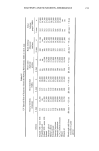
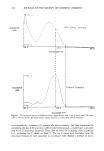
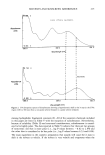
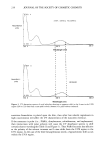
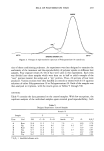
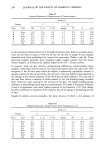
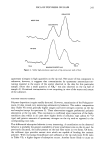
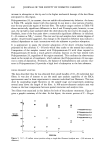
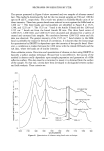
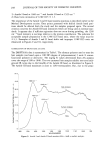
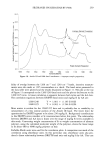
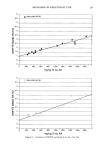
HAIR DAMAGE 267 determine the extent of loss in crosslinking density in wool keratin from reduction, bleaching, dyeing etc. FRICTION AND COMBABILITY MEASUREMENTS Inter-hair friction measurements, performed by the twist method of Lindberg and Gralen (16), provided useful information about the degree of cuticle damage and the response of hair fibers to physical handling (17). Static and kinetic coefficients of fric- tion for root-to-tip and tip-to-root directions were calculated and used to interpret chlorine-hair interactions. Combing work or force determination can also be a good indication of the degree of surface modification or damage. The details of experimental techniques, which consist of suspending a hair swatch from a force-measuring device, inserting a comb close to the root end of the swatch, setting the comb in a straight-combing motion through the swatch at a constant speed, and continuously recording the forces that resist its motion during transit from the point of insertion till it clears the tip end of the swatch, were described in a few papers (18, 19). The experiments can be performed on dry hair at constant relative humidity or on wet samples, and should be referenced to a control swatch of untreated hair. This method is sensitive to the presence of surface deposits which can either decrease (lubricants such as cationic surfactants or silicon oils) or in- crease (dye or polymer deposits) the frictional coefficients and, consequently, combing forces (20). THERMOMECHANICAL ANALYSIS (TMA), DIFFERENTIAL THERMAL ANALYSIS (DTA), AND THERMOGRAVIMETRIC ANALYSIS (TGA) TMA, DTA, and TGA were utilized to assess thermally-induced viscoelastic and di- mensional transitions in untreated and modified keratin fibers in the temperature range -50 to 325øC (21). In the TMA experiment, penetration and extension thermograms showed two transitions, at 59-72øC, corresponding to side-chain motions of the pro- teins, and at 242øC, resulting from melting of the or-helix. The low-temperature TMA transitions were covered under the broad DTA endotherm and are not distinguishable in the TGA analysis except for about 10% weight loss, presumably related to water evaporation. The high-temperature TMA transitions are also evident as an inflection in the TGA and two sharp endotherms in DTA traces. ELECTRON SPECTROSCOPY FOR CHEMICAL ANALYSIS (ESCA) This ø technique provides valuable information about the hair surface to a depth of 20 to 30 A (22). It involves irradiation of a fiber with X-rays of known energy, which causes core electrons to be ejected from the sample. Their binding energy is related to specific atoms and functional groups, thus unraveling the chemical composition of the fiber surface. In the case of human hair, this technique was found useful to study the oxida- tion of disulfide sulfur during bleaching, removal of lipid from hair, and weathering by UV radiation (22).

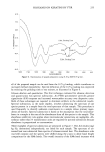
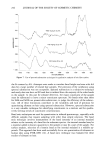
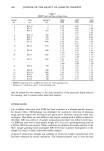
268 JOURNAL OF THE SOCIETY OF COSMETIC CHEMISTS SCANNING ELECTRON MICROSCOPY (SEM) AND TRANSMISSION ELECTRON MICROSCOPY (TEM) Scanning electron microscopy, because of its high resolution, wide range of magnifica- tions, and high depth of focus, has been widely used to examine the architecture of the hair surface (cuticle), geometrical dimensions of fiber crossections (determination of major and minor axis length), and characterization of fiber fractures (23-28). It is a valuable tool to study the alterations in fiber morphology due to cosmetic treatments. Gould et al. (28) used TEM in conjunction with image analysis to quantitate the effect of weathering or shampooing on the number and geometrical dimensions of voids in the cuticle and in the cortex. Brown and Swift (26) obtained SEM stereo-pair micrographs to facilitate the interpretation of the three-dimensional surface morphology of the fibers. FOURIER TRANSFORM INFRARED SPECTROSCOPY (FTIR) Infrared spectroscopy has been applied to evaluate keratin oxidation by a number of investigators (29-32). Recently, a high-pressure diamond anvil cell and FTIR instru- ment were used to quantify the extent of transformation of various specific functional groups in the hairs' structure (32). The following bands were referenced against peptide bands (1650 cm- •, corresponding to amide I band 1230 cm- • corresponding to amide III band and 1076 cm-•) and were used to determine the Bunte salt content and the effect of bleaching and weathering on hair: the symmetric and asymmetric sulphonate S = O stretching vibrations at 1040 cm-• and 1188 cm-•, the bands at 1219 cm-• and 740 cm-• assigned to cysteic acid moiety, the bands at 1196 cm-•, 1022 cm-•, 633 cm- •, and 522 cm- • assigned to the assymetric S = O stretch, S = O symmetric stretch, S = O symmetric deformation, and the S = O asymmetric deformation vibra- tions of thiosulphate ions (Bunte salt). SORPTION MEASUREMENTS Copper and polymer uptake by hair was reported to be related to the extent of damage caused by oxidizing and reducing agents (9,33,34). For copper ions, Cu +2, the equilib- rium uptake was found to be dependent on the concentration of the treatment solution, temperature, or pH, and varied in the range 40-60 mg Cu/g hair (9). Equilibrium cationic polymer uptake of untreated hair was found to be in the range 2-3 mg/g, depending on the pH of the treatment solution. The cationic polymer uptake increased significantly to up to 10 mg/g for bleached fibers (34). ALKALI SOLUBILITY The alkali solubility test was proposed by Overbeke et al. (35) to evaluate oxidative damage in wool fibers. It consists of treating the fibers with 0.1 N NaOH at 60øC for 1 hour and measuring the weight loss. This test has also been used to assess the extent of structure alteration in bleached hair (9).
Purchased for the exclusive use of nofirst nolast (unknown)
From: SCC Media Library & Resource Center (library.scconline.org)