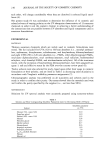
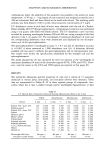
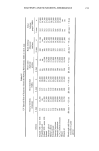
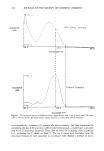
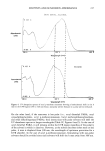
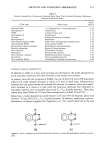
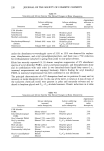
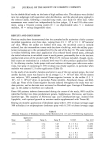
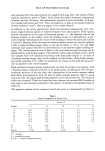
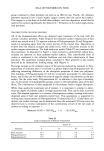
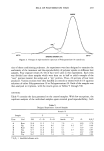
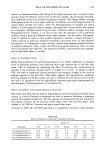
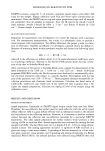
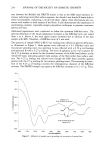
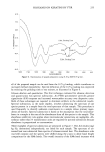
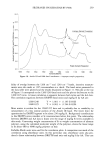
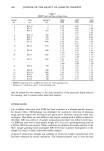
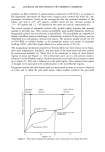
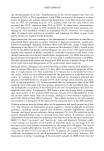
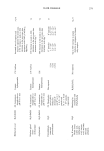
ESCA OF POLYMERS ON HAIR 239 AMIDE N R4 + / • • • I IIII 407.0 397.0 BINDING ENERGY (eV) Figure 3. Nitrogen ls high-resolution spectrum of Polyquaternium-10 treated hair. tion of these conditioning polymers. An experiment was then designed to examine the uniformity of the treatment and the reproducibility of polymer uptake on different hair samples. Four separate tresses (A-D) of hair were used in this experiment. Each tress was divided into three samples which were then cut in half to yield a sample of the "root" portion (nearest the scalp) and a "tip" portion. Thus, 24 sections of hair were produced. Various sections were then handled as controls or treated with 0.1% aqueous solutions of either Polyquaternium-10 or Polyquaternium-24. Each of the samples was then analyzed in triplicate, with the results given in Tables V through VII. CONTROLS Table V contains the data generated on the control samples. With few exceptions, the triplicate analyses of the individual samples again revealed good reproducibility, both Table V Designed Experiment: Control Samples Atomic % Sample C N Tress End CH C - O C = O Amide N + O S•/S2' A Root 55.0 11.5 7.4 7.0 14.0 2.70 A Tip 57.6 10.4 6.6 5.6 0.3 13.7 0.46 B Root 58.1 11.0 9.1 6.1 -- 11.9 1.51 B Tip 57.7 13.0 6.6 5.1 0.7 14.0 0.97 D Root 54.2 13.6 8.8 6.6 12.2 2.00 D Tip 55.7 12.3 7.4 7.0 -- 14.5 1.03 :• Sl/S 2 = disulfide/sulfonate ratio.

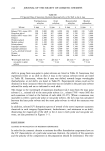
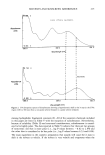
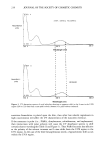
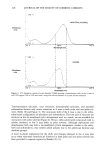
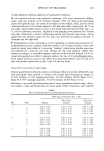
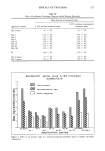
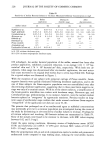
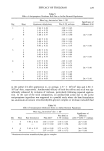
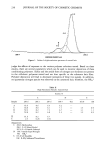
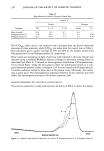
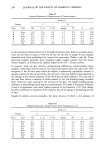
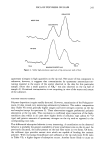
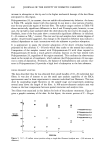
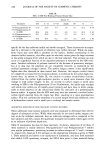
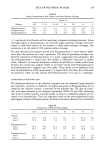
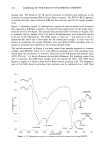
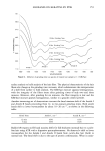
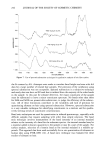
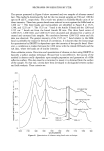
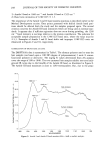
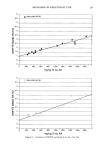
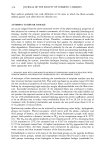
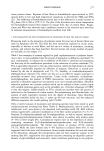
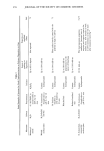
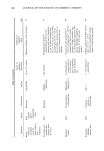
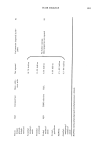
240 JOURNAL OF THE SOCIETY OF COSMETIC CHEMISTS Table VI Designed Experiment: Polyquaternium-10 Treated Samples Atomic % Sample C N Tress End CH C - O C = O Amide N + O S•/S2 B Root 53.8 15.6 6.4 4.4 0.4 16.2 1.89 B Tip 49.5 21.8 4.6 3.1 0.8 17.4 0.85 B Root 53.2 15.8 8.5 4.4 0.5 14.3 2.02 B Tip 50.9 18.1 7.2 3.3 0.8 17.1 0.77 C Root 53.5 15.6 7.1 3.4 0.6 16.4 1.36 C Tip 50.9 18.3 6.8 3.7 0.9 15.4 0.86 in the elemental compositions and in the high-resolution data. Relative standard devia- tions are less than or equal to 10% for all but the tip end of sample B and compare favorably with those established for control hair previously (Tables I and II). These particular samples generally show somewhat higher oxygen content than the initial control samples, as evidenced by slightly higher levels of C- O-type carbon. In general, there are few distinct compositional differences noted between these samples, either from tress-to-tress or root-versus-tip regions from the same tress. (The exception is the D tress pairs which do exhibit a statistically significant increase in oxygen content for the tip end versus the root end.) The one definite trend observed is the change in the relative amounts of the two forms of sulfur detected. The root end of the hair fiber shows a majority of sulfur present as the low-binding-energy disulfide form. However, upon moving to the tip ends of the hair, the higher-binding-energy sulfonate or thiosulfonate form begins to predominate. This shift is illustrated in Figure 4 and is in agreement with other studies reported in the literature (3,4). This change has been attributed to oxidation of the sulfur as part of the aging or weathering process in hair. Sample B exhibits several anomalies, the most obvious of which is the presence of Table VII Designed Experiment: Samples Treated With Polyquaternium-24 Atomic % Sample C N Tress End CH C - O C = O Amide N + O S•/S2 A Root 34.1 27.5 3.2 2.4 0.6 28.8 1.44 A Tip 49.4 23.3 4.1 1.6 0.5 19.1 0.53 C Root 35.7 30.4 6.1 1.6 0.7 24.0 0.90 C Tip 36.2 33.4 3.7 1.4 0.7 23.3 0.43 D Root 40.1 24.5 8.5 2.7 0.4 20.5 2.02 D Tip 44.4 24.7 4.4 2.0 0.5 21.4 0.69 D Root 53.2 20.2 5.4 2.4 0.3 15.7 1.19 D Tip 48.3 21.0 5.3 3.4 0.4 19.1 0.95
Purchased for the exclusive use of nofirst nolast (unknown)
From: SCC Media Library & Resource Center (library.scconline.org)