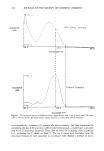
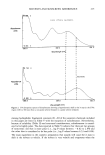
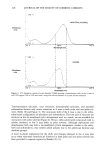
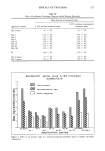
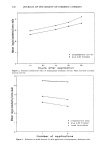
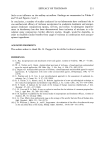
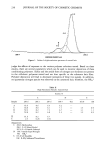
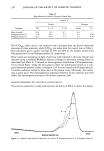
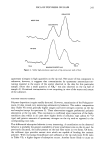
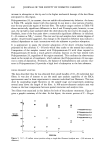
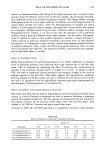
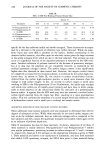
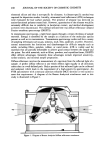
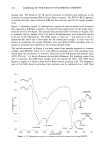
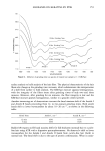
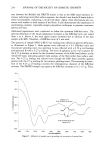
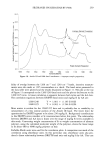
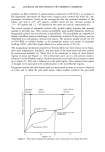
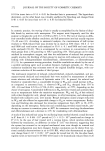
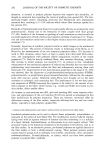
230 JOURNAL OF THE SOCIETY OF COSMETIC CHEMISTS ß ontiperspiront roll--on ß plus 0.2•. tricloson O I I I I I 1 h 2h 4h 6h 8h Hours affer applicafion Figure 2. Sustained antibacterial effect of antiperspirant deodorant roll-ons. Mean recoveries of axillae bacteria over 8 h. ß ontiperspiront stick ß plus o.• triclosan ß base formulation Number of applicafions Figure 3. Reduction in axillae bacteria 4 h after application of antiperspirant deodorant sticks.

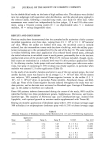
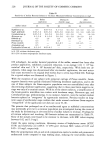
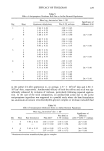
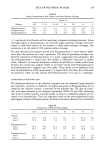
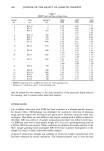
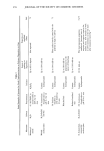
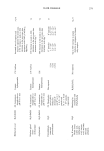
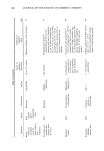
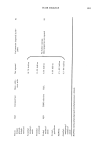
EFFICACY OF TRICLOSAN 231 little or no influence on the axillary micro flora. Findings are summarized in Tables V and VI and Figures 2 and 3. In conclusion, a number of studies conducted in our laboratories have confirmed the in vivo antibacterial efficacy of triclosan incorporated in underarm deodorant and antiper- spirant deodorant compositions (sprays, roll-ons, and sticks). A subsequent improve- ment in deodorancy has also been demonstrated from inclusion of triclosan in a de- odorant spray composition further olfactory studies, though, would be desirable, in order to establish similar benefits from usage of triclosan in combination with antiper- spirant ingredients. ACKNOWLEDGEMENTS The author wishes to thank Mr. B. Pregger for his skilled technical assistance. REFERENCES (1) C. Fox. Antiperspirants and deodorants review and update. Cosmetics & Toiletries, 100, 27-41 (Dec. 1985). (2) W. A. Vischer and J. Reg6s. Antimicrobial spectrum of triclosan, a broad-spectrum antimicrobial agent for topical application. Zbl. Bakt. Hyg., I. Abt. Orig. A. 226, 376-389 (1974). (3) J. Reg6s et al. Antimicrobial spectrum of triclosan, a broad-spectrum antimicrobial agent for topical application. II. Comparison with some other antimicrobial agents, Dermatologica, 158, 72-79 (1979). (4) C. Fearnley and A. R. Cox. A new microbiological approach to the assessment of underarm de- odorants, Int. J. Cosmet. Sci., 5, 97-109 (1983). (5) R. F. Theiler, C. L. Schmit, and J. R. Roheim. Application of a new microbiological technique to the study of antiperspirant and deodorant soap efficacy, J. Soc. Cosmet. Chem., 34, 351-359 (1983). (6) R. F. Smith. A medium for the study of the ecology of human cutaneous diphtheroids, J. Gen. Microbiol., 57, 411-417 (1969). (7) J. H. Cove and E. A. Eady. A note on a selective medium for the isolation of cutaneous propionibac- teria, J. Appl. Bact., 53, 289-292 (1982). (8) F. B. Carabello. Guidelines for the clinical study of antiperspirant and deodorant efficacy, Cosmetics & Toiletries, 95, 33-40 (July 1980). (9) J. G. Voss. Effects of an antibacterial soap on the ecology of the aerobic bacterial flora of human skin, Appl. Microbiol., 30(4), 551-556 (1975). (10) J. B. Williams, J. Brown, Jr., and E. Jungermann. An evaluation of the effect ofantibacterial soaps on the microbial flora of the hands, Develop. Indust. Microbial., 17(19) 185-191 (1976).
Purchased for the exclusive use of nofirst nolast (unknown)
From: SCC Media Library & Resource Center (library.scconline.org)