j. Soc. Cosmet. Chem., 38, 263-286 (July/August 1987) Hair damage and attempts to its repair j. JACHOWICZ, Clairol, Inc., 2 Blachley Road, Stamford, CT 06922. Received February I0, I987. INTRODUCTION The changes to the physical properties of hair fibers incurred as a result of weather, handling, and cosmetic treatments such as bleaching, waving, dyeing, or relaxing can be significant. In many instances they may lead to premature fracture of the hair, longitudinal fibrillation or separation of the hair cortex, loss of gloss, or increased absorption of moisture. The present paper is concerned with the identification of phys- ical and physicochemical alterations in fiber structure and properties caused by a variety of degradative processes, reviewing the methods used to assess the extent of damage and identifying the treatments capable of stabilizing or enhancing the properties of hair fibers. CRITICAL ELEMENTS OF FIBER STRUCTURE AND THE PHYSICAL PROPERTIES OF UNDAMAGED HAIR Hair fibers have two major morphological components, the cuticle and the cortex. The cuticle covers the whole fiber and is composed of layers of overlapping scales each about half a micron thick (1). In a newly formed fiber there may be as many as ten overlap- ping scales in a crossection. The outermost layer of a cuticle cell is made up of a very thin membrane (3 nm) called the epicuticle. The next layer, exocuticle, consists of cystine-rich, highly crosslinked protein and represents about two-thirds of the cuticle structure (1,2). Beneath this, there is an endocuticle which has a low cysteine content and is mechanically the weakest part of the cuticle (2). Lastly, there is a thin layer of cell membrane complex. Both X-ray analysis and optical birefringence measurements have demonstrated the lack of molecular orientation in the cuticle (3,4). Some data exist which point to solvent-induced ordering during swelling (5). The main function of the cuticle is to provide mechanical protection for the cortex. The role of the cuticle seems to be minor (2) in terms of contribution to the bulk longitu- dinal mechanical properties of the fiber as a whole. On the other hand, the cuticle has been shown to be an important factor in torsional mechanical properties of hair (6). While both the torsional modulus and logarithmic decrement exhibit no apparent de- 263

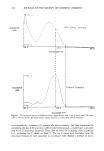
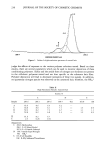
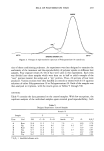
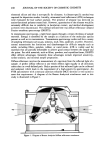
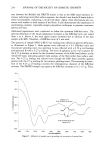
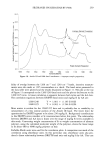
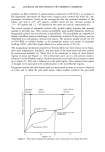
264 JOURNAL OF THE SOCIETY OF COSMETIC CHEMISTS pendence on fiber diameter (in measurements conducted at 65% R.H.), an increase in the logarithmic decrement for fibers with a larger cuticle content was noted (6). Ap- proximate calculation, based on the assumption that the torsional modulus of the whole, wet hair is 1.8' 10 •ø pascals, yielded values for wet torsional moduli of 2.4 ß 10 •ø pascals and 1.2 ß 109 pascals for the cortex and cuticle, respectively (6). The cortex consists of elongated cortical cells, packed tightly together and oriented parallel to the fiber axis. They contain microfibrils, long uniform filaments which are hexagonally packed into units known as macrofibrils. The microfibrils are composed of highly crystalline material exhibiting a characteristic or-helical X-ray pattern, and are embedded in an amorphous, cysteine-rich matrix. The moisture uptake of hair (14.5% at 65% RH) is confined mainly to the amorphous matrix and results in diametral swelling (16%), with fiber length affected to a minor extent (1.2%) (2). The longitudinal mechanical properties of keratin fibers have been shown to be depen- dent upon temperature, humidity, and time-scale of the experiment and were studied by stress-strain methods (2). These have to be considered in terms of three distinct regions of strain (see Figure 1.). The stress-strain curve up to a few percent strain is referred to as the Hookean region. Further extension occurs with little increase in stress up to about 25-30% and is referred to as the yield region. This constant-stress region is thought to be associated with transformation in the microfibrillar regions. Elongation beyond the yield region leads to a more rapid increase in stress as a function of strain and is called the post-yield region. Many workers attribute the post-yield HOOKEAN YIELD REGION REGION I LOADING CURVE J .......... /////! / /'/•UNLOADING CURVE , o lO STRAIN (%) POST-YIELD REGION I ,, J YIELD POINT AT 20% EXTENS ION ! 20 30 Figure 1. Stress-strain loading and unloading curves characteristic for human hair fibers.
Purchased for the exclusive use of nofirst nolast (unknown)
From: SCC Media Library & Resource Center (library.scconline.org)