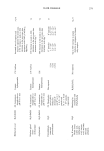
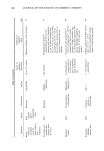
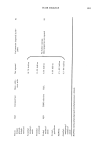
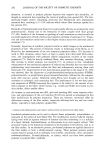
282 JOURNAL OF THE SOCIETY OF COSMETIC CHEMISTS densation, is claimed to produce polymer deposits that improve hair settability, al- though no numerical data regarding the extent of grafting were quoted (82). The low- molecular-weight system comprising resorcinol and heximinium salts impregnates untreated hair, resulting in 5-15% add-ons which reduce fiber moisture uptake by a few percent (81). Peroxides or hydroperoxides were found to be particularly effective as initiators for vinyl polymerization, mainly due to the formation of redox couples with thiol groups (72-80). Analysis of the literature on grafting of vinyl monomers on wool reveals the successful application of both chemical and radiation methods of initiation (71). Transi- tion and non-transition metal ions in their higher valence states have also been used as initiators (71). Generally, deposition of synthetic polymers results in small changes in the mechanical properties of hair. The process of reduction results in weakening of the fibers, as re- flected by the measurements of the wet extension properties (about 15% decrease in work to 20% extension, elastic limit, or force to elastic limit after mild TGA reduc- tion), and impregnation with polymers affords insignificant recovery of the tensile properties (75). Only for heavily weakened fibers, after extensive bleaching, consider- able increase in tensile modulus was reported (77). In contrast to this, remarkable enhancement of the mechanical properties of reduced and bleached hair was noted after polymerizing vinyl monomers within the fiber and subsequently reacting them with metal salts (75). Improvement of wet-load extension properties in the range of 16-48% was observed after the deposition of poly(dimethylaminoethylmethacrylate) (PDEM), polyacrylonitrile, or poly(ethylene glycol monomethacrylate), followed by the complex- ation with mercuric acetate. Relatively small effects were brought out by the same treatment to carboxylic acid-containing hair. The amelioration in the wet-load exten- sion properties of PDEM-containing hair appears to be related to the amount of syn- thetic polymer in the fibers. Other metals, e.g., Cu(II) and Ni(II) were found to pro- duce similar, albeit smaller effects. An increase in cross-sectional area (80), split-end mending (80), water sorption reduc- tion, and improvement of the curl retention (81,82) are quoted as advantages for hair fiber modification by polymer deposition. These are, however, sometimes offset by deleterious coating of the fiber surface, negatively affecting both dry and wet comb- ability, especially at high polymer uptakes (80). 3. SURFACE POLYMERIZATION AND DIRECT APPLICATION OF SURFACE POLYMER FILMS Interfacial polymerization can be used to deposit linear polyamides, polyurethanes, or polyureas on the surface of wool fibers (84). The modification protocol calls for impreg- nating wool with an aqueous solution of diamine and then immersing it in a solution of a diacyl chloride, bischloroformate, or diisocyanate in an inert organic solvent. This procedure results in the formation of polymer at the boundary of the solvents, that is, at the fiber surface. In an alternative process, pre-formed polymers are applied directly to the fiber surface to form a shrink-resistant coating. These polymer systems usually contain reactive groups such as carboxylic acid chloride, azetidinium, thiol, isocyanate, carbamoylsulfonate, N-methylolamide, or silanol, which can form both polymer- polymer or polymer-fiber crosslinks.

HAIR DAMAGE 283 In the case of hair, most of these procedures or compositions are not functional since they unacceptably refashion the fiber surface. One viable route avoiding deleterious alterations of the fiber surface was delineated in the patent literature (85). It involves the treatment of weakened hair with reactive silanes such as alkyltrialkoxysilanes in the presence of alcohol and water (0-20%). A preliminary account of silylation with hexa- methyldisilazane was also reported to enhance the stability of straightened hair (86). Reactive trialkoxysilane hydrolyzes in the presence of water to form reactive silanol groups which in turn condense with each other or with the reactive groups on the fiber surface to form a polymeric coating. The process of application is completed by blow drying the hair with hot air. Tensile strength (the force required to break hair) and silicon content in hair were ascertained for hair samples damaged in the process of relaxation by alkali and reducing agents. Control virgin hair is characterized by a tensile strength of 29.5 --- 0.6 G/cross-section, and for alkali-damaged hair this value de- creases to 14.5 + 1.1 G/cross-section. The data exemplified in the patent show a 15-20% increase in the tensile strength of alkali-damaged hair samples after treatment with ethyltriethoxysilane to the value of 14.5-17 --- 0.7 G/cross-section. It was also claimed that treatment with octadecyltrimethoxysilane, 3-aminopropyltriethoxysilane, vinyltriethoxysilane, and N-(triethoxysilylpropyl)urea imparted good settability and curl retention to damaged hair tresses even after post-treatment shampooings. CONCLUSIONS Owing to its unique composition and structure, human hair displays greater resistance to mechanical damage while dry than in the wet state. Structural integrity is derived mainly from the high density of disulfide bridges between cystine components of the protein. Rupture of these crosslinks, attained in cosmetic treatments by reaction with mercaptans, alkalis, or oxidation by hydrogen peroxide leads to weakening of the wet fibers. Matrix-dependent properties such as the torsional modulus, moisture sorption, and swelling are affected to a larger extent than microfibril-determined, longitudinal characteristics. Environmental agents, such as UV irradiation, also contribute to a gradual loss of the original fiber strength and cohesion. Except for reduction with mercaptans, which can be partially remedied by reoxidation, inflicted damage is irre- versible and results in increased swelling, brittleness, and susceptibility to destruction, even during normal handling operations. Surface despoliation, by mechanical abrasion in the wet state or by the chemical action of chlorine, bleaching, or dyeing composi- tions, is an important aspect of hair destruction, resulting in an increase in frictional coefficients and, consequently, combing forces. Efforts to restore the original properties of hair after mild degradation or to protect undamaged hair against structural weakening have been numerous but largely unsuc- cessful. Severely impaired structure, such as from bleaching or relaxation, is probably easier to mend in the sense that any improvement in strength or swellability should be more perceptible in terms of tactile properties, manageability, or settability. Polymer deposition or grafting, in spite of its limitations and side effects such as surface modifi- cation, still has some potential in this respect, provided that new monomer or initiating systems are discovered.
Purchased for the exclusive use of nofirst nolast (unknown)
From: SCC Media Library & Resource Center (library.scconline.org)