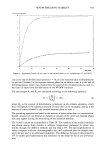
340 JOURNAL OF THE SOCIETY OF COSMETIC CHEMISTS RESULTS AND DISCUSSION CHOICE OF DIHYDRALAZINE SULFATE AS A TRACER We decided to choose an active substance since the use of W/O/W emulsion is of primary interest for the cosmetic and pharmaceutic industries and will grow in the future. Several general requirements accounted for the choice of the tracer. As it was used to quantify the emulsion breakdown, this compound should not diffuse through the oil barrier. It should present the lowest oil/water diffusion coefficient possible. Its stability must be established under various conditions of pH and temperature. It should be easily detected at small levels within the emulsion. The determination of these parameters was decisive for performing rigorous breakdown studies. Among the possible candidates usable as tracer, dihydralazine was selected for potential properties concerning oil/water diffusion and UV-visible detection as well as for its stability. This vasodilatator drug remains stable below pH = 12 and between 0 and 180øC. Since none of the processing steps of the W/O/W emulsion formulation involved temperature above 70øC, it can be considered that the tracer remains stable during the fabrication. The molecular extinction coefficient (e3o9.5), calculated at pH = 4.4 was 5150 mol- •.1. In order to determine the pH that ensures the absence of diffusional transport through the oil layer, the pKa of dihydralazine were measured by potentiometric titration in aqueous solution this compound exhibits two pK a at 6.4 and 10.5, corresponding to the two amine functions. The partitioning coefficient of dihydralazine was then determined at pH = 4.4, en- suring a full ionization of the two amine functions. The composition of the liquid media was chosen to meet the W•/O/W2 emulsion with relative phase volumes of W• (inner aqueous phase) and O (oil layer) of 1:4 and identical concentration of lipophilic surfac- tants. The yield of extraction was calculated after spectrophotometric measurements of dihydralazine concentrations' aqueous phase at 309.5 nm, according to the following equation: 1 x00:(,aO o where A o is the absorbance of the aqueous phase prior to the addition of the oil solution, Ar is the absorbance of the aqueous phase after the partition equilibrium is completed, e is the extinction coefficient of dihydralazine at 309.5 nm, and V^Q is the aqueous phase volume (in ml). The R average value of 0.41% allows us to consider that dihydralazine will remain in the inner aqueous phase of the W/O/W emulsion. Three samples were analyzed in triplicate for the partitioning coefficient determination. Hence, dihydralazine appears to be a suitable marker molecule to evaluate the emulsion instability.

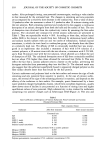
W/O/W EMULSION STABILITY 341 SAMPLE TREATMENT Spectrophotometric methods. Our criteria for the method development were non-turbidity of the final solution, recovery, and feasibility. Non-turbidity was of particular importance to ensure the accuracy and precision of spectrophotometric measurements. Various treatments based on previous reports (13) were investigated with sodium chlo- ride solution and are detailed in Table I. The sodium chloride (4.32 g/l) solution is used to maintain the osmotic gradient. The main problem was to remove the oil residues from the aqueous sample. ß One-step procedures (A,B,C): The experiments carried out by one-step procedures were not feasible: filtration using 0.45-ptm cellulosic membranes was found unprac- tical due to clogging problems (method A). Methods B and C did not completely remove the oil residues. The centrifugation at 1000 rpm (Method C) was not suffi- cient to ensure the removal of the oil residues, while higher speeds were likely to provoke a disruption of the oil drops. ß Two-step procedures (D,E,F,G): Clarification was investigated with tetrahydrofuran and acetone (Method D). The best results were obtained with tetrahydrofuran (two volumes for one volume of diluted emulsion), according to other authors (13). Re- moval of the oil drops by extraction using chloroform or ether (Method E) led to a poor elimination of the oil phase. The solution remained turbid after this process. ß Three-step procedures (H,I): Methods H and I led to a limpid solution, but were lengthy and difficult. The best results (non-turbidity of the final solution, recovery, feasibility) was obtained with Method D. The experiments were continued with this method. Detailed conditions are described in the experimental section. HPLC method. The only sample treatment consists of a dilution of the multiple emulsion (1/1) (w/w) with the sodium chloride solution to reduce the sample viscosity and ensure reproducible injections (15). Table I Sample Treatments Methods Conditions Results A Filtration on 0.45-}xm cellulosic filter Obstruction of filter B Decantation: 1 hr Cloudy solution C Centrifugation: 1000 rpm for 30 min Cloudy solution D Decantation (1 hr) and clarification acetone 1:2 Cloudy solution tetrahydrofuran 2:3 Limpid solution Decantation (1 hr) and extraction chloroform 1:2 Cloudy solution ether 1:2 Cloudy solution Centrifugation (1000 rpm for 30 min) and filtration on Cloudy solution 0.45-}xm cellulosic filter Centrifugation (1000 rpm for 30 min) and clarification Cloudy solution (tetrahydrofuran 2:3) Decantation (1 hr), centrifugation (1000 rpm for 30 min), Limpid solution and clarification (tetrahydrofuran 2:3) Decantation (1 hr), filtration on 0.45-}xm cellulosic filter, Limpid solution and clarification (tetrahydrofuran 2:3). F G H I
Purchased for the exclusive use of nofirst nolast (unknown)
From: SCC Media Library & Resource Center (library.scconline.org)