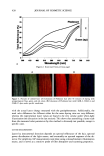
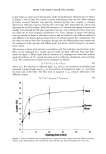
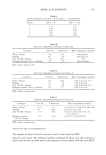
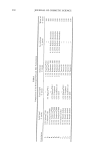
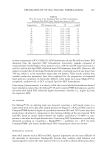
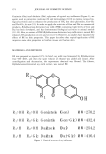
424 JOURNAL OF COSMETIC SCIENCE significantly more melanin than light hair. Hair coloring with semipermanent hair colors is nowadays widely used not only to cover gray hair but also to highlight and brighten the color of one's own naturally colored hair, a practice that is especially popular among younger people. Semipermanent colors generally consist of large number of dyes with various hues in order to achieve a desired shade. The presence of multiple dyes with different concen- trations, molecular structures, and sizes results in different affinities and penetration depths into the hair fiber, which in turn affect the absorptive and scattering processes. The interest of this work is in instrumental evaluation of the luster of hair dyed with different colors and depths of shade, to demonstrate the effect of artificial color on luster. Also, an attempt has been made to study the effect of hair color on the subjective evaluation of luster. EXPERIMENTAL Naturally unpigmented Piedmont hair was used in order to prevent the scattering and absorption of light by melanin. The dyeing process was selected to cause the least damage to the interior of the hair, to minimize the influence of structural change upon coloring. The hair colors used in this study were commercially available semipermanent dyes: Clairol Xtreme FX Blue Denim, Green Weed, and Hot Red. These colors cover the extremes and middle of the visible spectrum. Selected colors consist of combinations of a number of dyes in order to achieve the desired shade, as shown in Table I. Tresses were not pretreated prior to coloring. For each color, three tresses of size 2.5 (W) x 15 (L) cm, with a weight of 2 g, were prepared and dyed for five, 20 and 45 minutes. The tresses were thoroughly washed with aleionized water to remove excess dye from the surface and finally dried in air at room temperature. Using an UltraScan XE spectrophotometer equipped with integrating sphere, the total reflectance spectra were recorded over the wavelength range of 360 to 780 nm. The operating conditions were the following: D65 illuminant, a 10 ø viewing angle, an Table I Dyes Present in Semipermanent Clairol Colors Used for Dyeing Piedmont Hair I I Blue Denim Clairol Xtreme FX I HC Blue 2 Basic Blue 99 Piedmont Hair I Green Weed Clairol Xtreme FX I Basic Yellow 57 Basic Blue 99 HC Yellow 4 Hot Red Clairol Xtreme FX I Basic Red 76 HC Red 3 HC Red 1

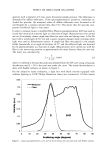
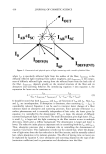
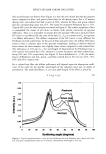
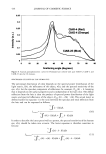
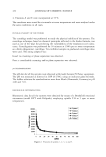
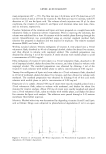
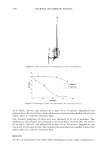
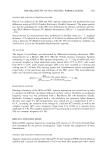
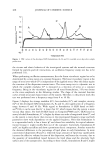
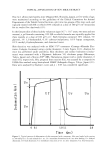
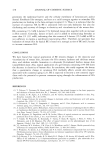
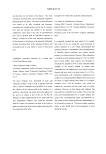
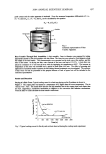
EFFECT OF HAIR COLOR ON LUSTER 425 aperture with a diameter of 6 mm, and a horizontal sample position. The reflectance is dominated by diffuse reflectance. If the spectrophotometer's geometric conditions ex- cluded the specular, the measured values of diffuse reflectance were decreased at all wavelengths by a constant amount (less than 1%). This shows that the specular com- ponent of reflected light is very small. In order to measure luster, a modified Brice-Phoenix goniophotometer (GP) was used to record the intensity of scattered light as a function of angle. Measurements were carried out on 30 randomly chosen single hair fibers for each color and dyeing time. A He-Ne laser with a wavelength of 632 nm and a quartz tungsten halogen lamp emitting white light were used as illumination sources. A single hair fiber was placed in the sample holder horizontally at an angle of incidence of 45 ø and the reflected light was detected by the photomultiplier as a function of angle. Measurements were carried out with the fiber in the root-to-tip position at approximately the same distance from the root end. The luster was calculated by: S -- L=S+D 100% (1) where S is defined as the specular peak area obtained from the GP curve using a Gaussian distribution and (S + D) is the total area under the curve. The actual deconvolution is done with Peakfit software, as shown in Figure 1. For the subjective luster evaluation, a light box with black interior equipped with uniform lighting (a 20-W Philips fluorescent lamp) was constructed. A black (matte 0.35 0.3 0.25 0.1 0.05 - - - Fitted S+D i i 0 10 40 50 60 70 80 90 Scattering angle (degrees) Figure 1. Typical goniophotometric curve and its deconvolution into specular peak with Peakfit software.
Purchased for the exclusive use of nofirst nolast (unknown)
From: SCC Media Library & Resource Center (library.scconline.org)