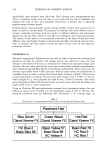
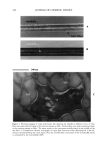
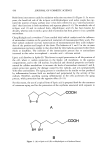
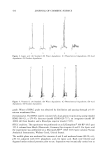
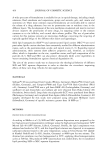
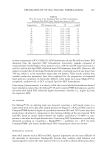
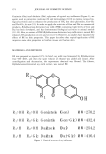
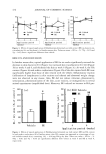
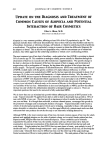
474 JOURNAL OF COSMETIC SCIENCE Genistein (Gen) and daidzein (Dai), aglycones of typical soy isofiavone (Figure 1), are agents used in preventive medicine (8) and dermatology (9,10) to express various bio- logical activities and to enhance the production of HA, but their glycosides, Gen-Glc and Dai-Glc, do not (11). In order to apply the activities of Gen and Dai to commercial products, Bifidob•cteriz/m-fermented soy milk (FSM) containing high levels of Gen and Dai has been developed, and has demonstrated biological activities in animal models (12-14). Also, an extract of FSM (Bifia/ob•cteriz/m-fermented soy milk extract, named BE) enhances HA production i, vitro and i, vivo (15). However, no studies have reported the effects of BE on skin properties. This paper describes that topical application of BE improves some skin properties in hairless mouse and human skin. MATERIALS AND METHODS BE was prepared as reported (15). In brief, soy milk was fermented by Bifia/ob•cteriz/m breve YIT 4065, and then the same volume of ethanol was added and mixed. After centrifugation and decantation, the supernatant obtained was filtered. The flitrate, Bifia/ob•cteriz/m-fermented soy milk extract, was named BE. R= R1 Ri'0H R2'0H 6enJsteiq (6en) Ri'0H R2'G ]c G enJstiq M W '270.2 (G en-G Is) M W '432.4 Ri'H R2'0H Daidzeia •DaJ) M W '254.2 Ri'H R2'G ]c Daidzia (Dai-G ]c) MW :416.4 Figure 1. Chemical structure of soy isofiavones.

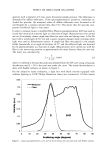
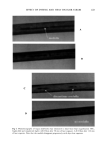
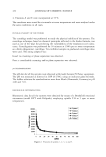
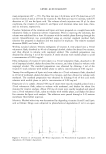
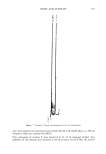
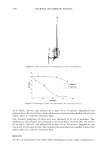
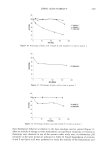
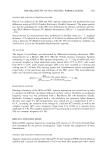
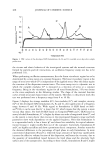
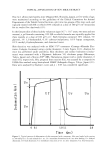
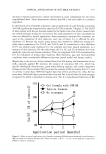
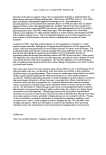
TOPICAL APPLICATION OF SOY MILK EXTRACT 475 Hos: hr-1 albino male hairless mice (Nippon SLC, Shizuoka, Japan), at five weeks of age, were maintained according to the guidelines of the Ethical Committee for Animal Experiments of the Yakult Central Institute, split into two groups of five mice each, and topically treated with BE or vehicle (50% ethanol) at a dose of 100 pl/5 cm2/mouse/day for six weeks (five days/week) (11). In the forearm skin of three healthy volunteers (ages 36.7 + 10.7 years, two men and one woman), a gel formula containing 10% BE or vehicle formula was topically applied for three months at a dose of 100 pl/5 cm 2. Both formulas contained 10% ethanol, 5% glycerol, 3% 1,3-buthanediol, 0.1% carboxyvinylpolymer, 0.1% kappa carrageenan, 0.1% methyl p-hydroxybenzoate, and deionized water. Skin elasticity was analyzed with an SEM 575 © cutometer (Courage+Khazaka Elec- tronic, Cologne, Germany) using a probe (diameter, 2 mm Figure 2) (1). Analysis for mice was performed under anesthesia. Skin thickness and surface hydration (conduc- tance) were measured with a Digimatic Indicator 543 thickness gauge (Mitsutoyo, Tokyo, Japan) and a Skicon-200 © (lBS, Hamamatsu, Japan) with a probe (diameter, 6 mm) (16), respectively. HA, prepared from murine skin, was assayed by a competitive ELISA-like method using biotinylated HABP (Seikagaku Kogyo, Tokyo, Japan) (11). Data were analyzed by Student's t-test and p 0.05 was considered significant. Uf Ua Ue 0 0.1 1.0 1.1 2.0 Tine {e½) Figure 2. Typical pattern of deformation of skin measured with cutometer. Skin was loaded with suction at 300 mHp for 1 sec and relaxed for 1 sec. Ue: immediate distension for 0.1 sec after loading. Uv: delayed distension. Uf.' final distension. Ur: immediate retraction at 0.1 sec after relaxation. Ua: final retraction.
Purchased for the exclusive use of nofirst nolast (unknown)
From: SCC Media Library & Resource Center (library.scconline.org)