EFFECT OF DYEING AND HEAT ON HAIR COLOR 447 REFERENCES (1) N. A. Barnicot and M. S.C. Birbeck, "The Electron Microscopy of Human Melanocytes and Melanin Granules," in Biology of Hair Growth (Academic Press, New York, 1958), pp. 239-252. (2) R. McMullen and J. Jachowicz, Thermal degradation of hair. I. Effect of curling irons,J. Cosmet. Sd., 49, 223-244 (1998). (3) R. Alexander-Kartz and R. G. Barrerra, Surface correlation effects on gloss, J. Po/ym. Sci. B: Po/ym. Phys., 36, 1321-1334 (1998). (4) ASTM D 523-85 •t, Standard test method for specular gloss, pp. 52-56 (1985). (5) G. Sauremann, U. Hoppe, R. Lunderstadt, and B. Schubert, Measurement of the surface profile of human hair by surface profilometry, J. Cosmet. ScJ., 39, 27-42 (1988). (6) I.J. Kaplin, A. Schwan, and H. Zahn, Effects of cosmetic treatment on the ultrastructure of hair, Cosmet. Toilerr., 97, 22-27 (1982). (7) J. Gould and R.L. Sneath, Electron microscopy image analysis: Quantification of ultrastructural changes in hair fiber cross sections as a result of cosmetic treatment, J. Soc Cosmet. Chem., 26, 53-59 (1985). (8) C. R. Robbins, Chemical and Physical Behavior of Human Hair, (Springer-Verlag, New York, 1994). (9) C. Scanavez, M. Silveira, and I. Joekes, Human hair: Color changes caused by daily care damages on ultra-structure, Col. Surf B: Biointerfaces, 28, 39-52 (2003). (10) C. Scanavez, M. Zoega, A. Barbosa, and I. Joekes, Measurement of hair luster by diffuse reflectance spectrophotometry, J. Cosmet. Sci., 51, 289-302 (2000). (11) M. A. Berthianne, J. H. Merrifield, and D. A. Riccio, Effects of silicon pretreatment on oxidative hair damage,J. Soc. Cosmet. Chem., 46, 231-245 (1995). (12) K. Yakagi, Silicones as conditioning agents in shampoos,J. Soc Cosmet. Chem., 43, 275-284 (1992).

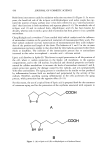
j. Cosmet. sci., 55, 449-461 (September/October 2004) Stability study of lipoic acid in the presence of vitamins A and E in o/w emulsions for cosmetic application A. SEGALL, M. SOSA, A. ALAMI, C. ENERO, F. HORMAECHEA, M. T. PIZZORNO, C. BREGNI, and R. SERRAO, Department of Pharmaceutical Technology, School of Pharmacy and Biochemistry, University of Buenos Aires. Jun/n 956, 1113 Buenos Aires (A.S., M.S., F.H., M.T.P., C.B., R.S.), and Laboratorios Codac S. R.L., Ggnova 4045, 1702 Ciudadela (A.A., C.E.), Argentina. Accepted for publication July 7, 2004. Synopsis The effectiveness of any cosmetic product containing a functional ingredient is determined by the skin delivery of the active molecule, which is influenced by the type of carrier and the molecule itself. Further- more, the functional ingredient should be stable in the formulation. The purpose of this paper is to study the stability of lipoic acid in the presence of vitamins A (as palmitate) and E (as acetate) in semisolids for cosmetic use. The systems formulated were studied in regard to their aspect, pH, stability under centrifugation, and rheological behavior. The chemical analyses of lipoic acid and vitamins A and E were carried out by HPLC after studying the specificity of the method employed in each case. The quantitation of the active principles was performed by HPLC with C•s (5 pm) columns. The mobile phase was methanol for the vitamins, with spectrophotometric detection at 325 nm for vitamin A and 230 nm for vitamin E. The mobile phase for lipoic acid was methanol:water (80:20) and phosphoric acid at pH 3.0, with spectrophotometric detection at 332 nm. All systems were stable to centrifugation, and no significant modification of rheological behavior was observed in relation to the base emulsion used as control. The chemical studies performed indicated that although lipoic acid is not very stable in these formulations, the presence of vitamin A favors its chemical stability. INTRODUCTION Lipoic acid, also called thioctic acid, is a powerful antioxidant within the cells and, at the same time, a coenzyme that participates in complex reactions of cellular metabolism (1). Furthermore, lipoic acid plays an important role as topical photo-protectant thanks to its interesting antioxidant property (2). Some authors have studied the transdermal delivery of lipoic acid from different cosmetic formulations (3). This vitamin has two forms of molecular structure: the oxidized form, a cyclic disulfide, and the reduced open-chain form, dihydrolipoic acid, which has two sulfi•ydryl groups. 449
Purchased for the exclusive use of nofirst nolast (unknown)
From: SCC Media Library & Resource Center (library.scconline.org)