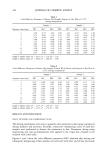
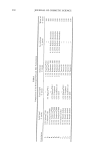
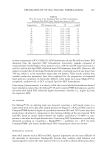
VISCOELASTICITY OF SLN AND NLC FORMULATIONS 465 PARTICLE SIZE AND ZETA POTENTIAL ANALYSIS Particle size analysis of the SLN and NLC aqueous dispersions was performed by laser diffraction using an LS230 (Coulter Electronics, Krefeld, Germany). The mean particle size and the polydispersity index (PI) were determined by photon correlation spectros- copy (PCS) (Malvern Zetasizer IV, Malvern Instruments, UK) (n = 5, standard deviation 2%). Zeta potential (() measurements were performed in distilled water (n = 3, standard deviation 5%) adjusted to a conductivity of 50 12S/cm by addition of 0.9% (m/V) NaC1, using a Zetasizer IV (Malvern Instruments, UK) (8). The electrophoretic mobility was converted to a ( by the Helmholtz-Smoluchowski equation. DSC ANALYSIS The degree of crystallinity was determined by differential scanning calorimetry (DSC) measurements on a Mettier DSC 821e (Mettier Toledo, Giessen, Germany). Samples containing 15 mg of SLN or NLC aqueous dispersions, i.e., 1-3 mg of solid lipid, were accurately weighed in 40-121 aluminium pans, heated from 25øC to 85øC, and cooled from 85øC to 25øC under liquid nitrogen. DSC scans were recorded at a heating and cooling rate of 5 K/min. The melting points and crystallization points corresponded, respectively, to the maximum and minimum of the DSC curves. The recrystallization index was calculated using the following equation (9): AHsLN or NLC aqueous dispersion RI( % ) = AH3ulk .tat .... l X Cøncentratiøn/jpid p3ase X 1 O0 RHEOLOGICAL ANALYSIS Rheological analysis of the SLN and NLC aqueous dispersions was carried out in order to compare the different viscoelastic behaviors of these carriers. Therefore, an oscillation frequency sweep test was performed with a RheoStress RS 100 rheometer (Haake, Karlsruhe, Germany), equipped with a cone-and-plate test geometry (plate diameter 20 ram, cone angle 4ø). All measurements were carried out at a temperature of 20 ø + 0.1øC, recording the variation of the storage (G') and loss (G") moduli, as well as the complex viscosity (•q*), over a frequency range from 0 to 10 Hz at a constant stress amplitude of 5 Pa. The complex modulus (G*) was measured as a function of shear stress (Pa) at a constant frequency of 1 Hz. RESULTS AND DISCUSSION SLN and NLC aqueous dispersions containing 10% (m/m) or 15% (m/m) of lipid phase were developed for the present investigation. Table I shows the composition of these formulations. PARTICLE SIZE AND ZETA POTENTIAL ANALYSIS Aqueous dispersions prepared with Softisan©138 and Compritol©888 showed physical stability and. a narrow size distribution (0.25) one week after preparation when stored

466 JOURNAL OF COSMETIC SCIENCE
Purchased for the exclusive use of nofirst nolast (unknown)
From: SCC Media Library & Resource Center (library.scconline.org)