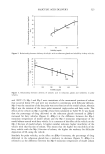
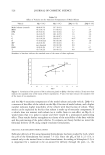
j. Cosmet. Sci., 55, 519-531 (November/December 2004) Deposition of salicylic acid into hamster sebaceous glands M. R. MOTWANI, L. D. RHEIN,* and J. L. ZATZ, Department of Pharmaceutics, College of Pharmacy, Rutgers University, 160 Frelinghuysen Road, Piscataway, NJ 08854. Accepted for publication February 2, 2004. Synopsis In an earlier paper, we identified vehicles that are miscible with sebum, using differential scanning calorimetry (DSC). In this paper, the potential of these vehicles to deliver salicylic acid (SA) into the sebum-filled follicles of hamster ears is examined. The main objective of this study is to correlate the melting transitions of a model sebum with the follicular delivery of SA, using two different types of vehicles (fatty and polar). Generally, the fatty vehicles show higher deposition than the polar vehicles. Follicular delivery of salicylic acid correlates well with its solubility in the respective vehicles. This extent of depo- sition also shows a relationship with the effect of the vehicle on thermal behavior of the model sebum. The nature of the relationship depends on the vehicle (polar or fatty) tested. We conclude that DSC could be used to identify appropriate vehicles for drugs whose follicular delivery depends on solubility. The results also suggest that delivery into the sebaceous glands occurs by two different mechanisms, depending upon the polarity of the vehicle and the physicochemical properties of the drug. The results of these experiments are further extended to investigate follicular delivery of SA from two different types of oil-in-water emulsion formulations. From these studies we conclude that either increasing the volume of the oil phase or changing the emulsion to a water-in-oil emulsion would increase follicular deposition. Our research highlights the role of sebum, its compatibility with drug molecules, and vehicle selection in the transport of drugs into the follicles. The overall results of these experiments provide a reasonable understanding of the mechanisms underlying the transport of drugs to, and subsequently through, the sebaceous follicle. INTRODUCTION Targeted delivery of drugs into the sebaceous glands can help treat follicular diseases like acne, alopecia, and follicular cancer. Sebaceous glands produce an oily secretion, sebum, which is composed of triglycerides, free fatty acids, and waxes (1). It is likely that efficient drug delivery into the sebum-filled sebaceous gland would depend on the interaction of drug and vehicle, drug and sebum, and vehicle and sebum. It is hypoth- esized that vehicles, which are miscible with sebum or a part of it, will be effective in preferentially delivering drugs to the sebaceous glands. In earlier publications, we char- * Independent consultant. Address all correspondence to M. R. Motwani at Therics Inc., 115 Campus Drive, Princeton, NJ 08540. 519

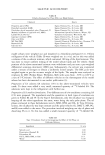
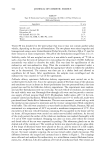
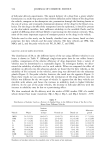
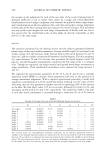
520 JOURNAL OF COSMETIC SCIENCE acterized model sebum (see Table I) and identified vehicles with which it is miscible (2,3). In this publication, we have investigated the follicular delivery of salicylic acid (SA) using some of those vehicles. However, since it is not practical to use neat vehicles as topical applications, we have also made o/w emulsions of SA with those vehicles and evaluated them for follicular delivery into the hamster ear model. This model for investigating follicular delivery was first developed by Lieb eta/. (4) and has been used to investigate delivery of erythromycin (5), cimetidine (6), o•-interferon and cyclosporin -A (7), monoclonal antibodies (8), and plasmid DNA (9). Salicylic acid (SA: molecular weight -- 138.12 pK a -- 2.3 log octanol-water partition coefficient = 2.2) is used in low concentrations (0.5-2%) as a keratolytic agent for the treatment ofacne (10). The objectives of this study were to evaluate the effect of different vehicles on the sebaceous deposition of SA and to evaluate its correlation to lipid transition temperatures. To further gain an insight into the mechanism of follicular delivery, we also evaluated simple emulsions. EXPERIMENTAL MATERIALS Of the materials listed in Table I, [•4C] SA (12 mCi/mmol), chloroform, and methanol were obtained from Sigma Chemical Company, St. Louis, MO. The vehicle components (Labrafil ILl, maleated soyabean oil [MSO], isopropyl myristate [IPM], oleic acid [OA], glycerin [G], dimethyl isosorbide [DMI], Transcutol IT], MP Diol IMP], propylene glycol [PG], and butanediol [B]) and their sources are given in Table II. Salicylic acid, dibasic sodium phosphate, monobasic potassium phosphate, sodium chloride, potassium chloride, scintillation fluid (Scintiverse©), and glacial acetic acid were purchased from Fisher Scientific, Fairlawn, NJ. Tween 80 was purchased from Specialty Chemicals, Wilmington, DE. The preservative, diazolidinyl urea (Germall II), was a gift of Sutton Laboratories Chatham, NJ. Hamster ears (Golden Syrian males, 10-12 weeks) were obtained from Charles River Laboratories, Wilmington, MA. Skin digesting fluid, Solv- able, was obtained from Packard Instrument Company, Inc., Meriden, CT. METHODS Preparation oflipid samples and DSC analysis. Model sebum with the composition given in Table I was prepared. This is based on data from Nordstorm et al. (11). The lipids of the Table I Components of the Model Sebum Used to Investigate the Effect of Different Vehicles* Components Purity (% weight) % Weight in mixture Squalene 98 13.00 Wax ester-palmitic acid myristyl ester 99 27.00 Triglycerides-tripalmitin 99 6.67 Triglycerides-tripalmitolein 98 3.33 Fatty acids-palmitic acid 99 33.33 Fatty acids-palmitoleic acid 99 16.67 Total 100 * As given by Nordstrom eta/. (11).
Purchased for the exclusive use of nofirst nolast (unknown)
From: SCC Media Library & Resource Center (library.scconline.org)