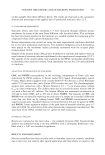
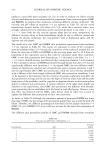
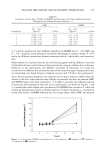
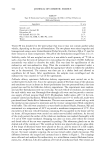
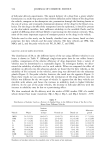
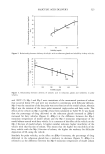
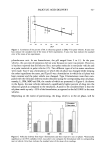
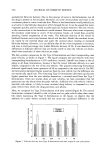
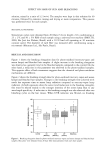
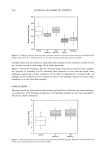
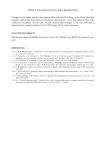
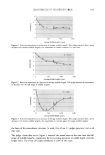
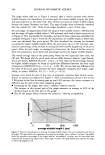
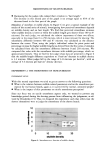
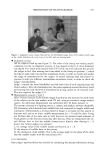
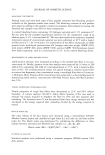
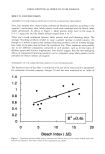
SALICYLIC ACID DELIVERY 527 -I.0 0.0 1.0 2.0 3.0 4.0 5.0 6.0 7.0 8.0 AMp-4 Figure 5. Correlation of the percent of SA in sebaceous glands to AMp-4 for polar vehicles. X-axis error bars indicate the standard error of the mean of three experiments. Y-axis error bars indicate the standard error of the mean of six experiments. pilosebaceous unit. In our formulations, the pH ranged from 2 to 2.3. In the pure vehicles, the question of ionization did not arise because no water was present. However, it has been reported that SA behaves like a non-polar molecule in non-polar vehicles and as a polar molecule in polar vehicles (15). Two different types of oil-in-water emulsions were made. Type I was a formulation in which the oil phase was changed while keeping the other ingredients the same, and Type II was a formulation in which the oil phase was kept constant and the polar vehicle was changed. Type I formulations were then com- pared with the follicular delivery results obtained using the corresponding neat oil phase, namely, L, IPM, MSO and OA, the results of which are presented in Figure 6. As shown in the figure, the neat vehicles delivered a significantly higher percent of drug into the sebaceous glands as compared to the emulsions. A point to be considered here is that the oil phase made up only -22% of the formulation, as opposed to the full 100% in the neat vehicles. Depending on the extent of partitioning, the drug, which is in the oil phase, will be I F1 Fonnfiatiom * [] Neat Vehicles * * ,1 * ,,, L IVISO IP• OA Figure 6. Follicular delivery from Type I formulations and their respective neat oil phases. *Statistically significant at the 95% confidence level, two-tailed t-test compares the formulation with its corresponding neat oil vehicle Error bars indicate the standard error of the mean of six readings.

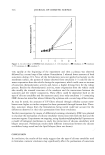
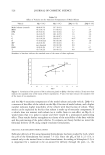
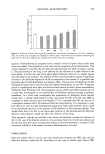
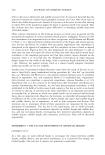
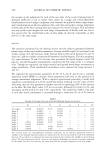
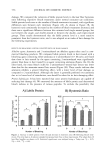
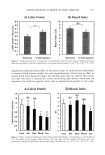
528 JOURNAL OF COSMETIC SCIENCE available for follicular delivery. Due to the presence of water in the formulation, not all the drug is present in the oil phase. Moreover, oil is the internal phase and water is the continuous phase in contact with the skin. Water in the formulation would probably act as a barrier to the follicular deposition of SA through the oil. It can be argued that water evaporates quickly, and we would actually expect an increase relative to the neat vehicle, as the concentration in the formulation would increase. However, when water evaporates, the emulsion could break or invert. If the emulsion breaks, oil would float, possibly retarding further evaporation of the water. The follicular delivery of SA would be hindered because water stays between the oil and the skin. Should the emulsion invert, oil would be the external phase and water the internal phase, leading to increased follicular delivery. However, it is not definite that all the water evaporates in six hours, and even a small percentage may hinder follicular delivery of SA. It was observed that differences in follicular delivery that are clearly visible in neat oily vehicles are dimin- ished when emulsions of these vehicles are made. We did a similar comparison for the Type II formulations and their corresponding neat polar vehicles, as shown in Figure 7. The figure compares the neat vehicles with their corresponding formulations at a 95% confidence interval. Labrafil was chosen as the oil phase in all these formulations, because it had the lowest follicular delivery as a neat vehicle, compared to the rest of the oily vehicles. The glycerin-containing formulation delivered significantly lower quantities of SA as compared to the neat vehicle. For MP, the formulation delivered higher quantities than the neat vehicle, but the difference was not statistically significant. The remaining Type II formulations delivered significantly higher quantities than the neat vehicles themselves, a reversed trend from the Type I formulations. From our studies done on neat vehicles, we have postulated that SA partitions into the sebum from the polar vehicles. Addition of an oily vehicle, which is miscible with sebum, is likely to cause increased drug delivery as compared to a neat polar vehicle from which the drug partitions into sebum. Next, we compared the Type II formulations with their control (Figure 8). The control formulation contained Labrafil in the oil phase and no polar vehicle other than water. On closely examining the Type II formulations in the figure, we observe that the addition of a polar vehicle actually did not cause any significant difference in the G MO DM1 B T PC} Figure 7. Follicular delivery from Type II formulations and their respective neat polar phases
Purchased for the exclusive use of nofirst nolast (unknown)
From: SCC Media Library & Resource Center (library.scconline.org)