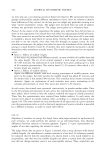
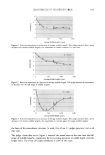
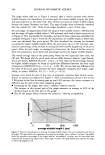
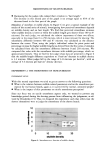
534 JOURNAL OF COSMETIC SCIENCE damages cause degradation of cystine, but the exact mechanism is not well known. Literature suggests that the photodegradation of cystine occurs through the C-S fission pathway and is different from the chemical oxidation of cystine that proceeds mainly via the S-S fission route (5). Contradictions are also found in the literature about the effect of specific wavelength ranges of ultraviolet radiation on hair properties. Authors generally attribute hair dam- age to the total ultraviolet range of the solar spectrum (5). Pande et al. (6) indicate that UVA and visible radiation do not cause direct damage to hair because they are not absorbed by hair proteins. Ratnapandian et al. (7) studied the effect of humidity on the mechanical properties of hair exposed to UV radiation. The authors observed that greater damage happens when hair is exposed to very high or very low relative humidity and that the mechanical properties of hair are less affected when hair is exposed to 30% RH. Comparing the effect of bleaching and sun exposure on the mechanical properties of hair, we intend to have more clues to understand the differences in the degradation mecha- nisms. In addition, by relating the effect of different ultraviolet wavelength ranges on hair properties and comparing the extension of hair photodamage caused by different ultraviolet sources, we hope to improve knowledge of the physicochemical properties of hair. MATERIALS AND METHODS HAIR SAMPLES Tresses of virgin dark-brown hair from De Meo Brothers Inc. (New York), each weigh- ing 1.0 g and approximately 20-cm in length, were initially washed with 2.0 w/v % lauryl sodium sulfate solution. The following procedure was used: (a) hand-washing with 1 ml of the solution for 1 min, (b) rinsing with 40øC water for 1 min, and (c) wet combing four times using a polypropylene comb. After applying this treatment twice on each hair sample, the samples were dried at room temperature, combed, and stored in a black desiccator prior to treatment. EXPOSURE TO ARTIFICIAL ULTRAVIOLET RADIATION Sun exposure was simulated by irradiation with xenon or mercury-vapor lamps. The samples were exposed to the mercury vapor lamp (OSRAM HQL 125W, Sio Paulo, Brazil) for 1344 h (up to 1.7 x 10 4 J), as described in a previous work (8). Exposure to the xenon lamp was performed for 200 h. The following exposure conditions were used: (a) exposure to UVB, UVA, and visible light from mercury-vapor and xenon lamps, (b) exposure to UVA and visible light from the mercury-vapor lamp. In this procedure, a common boron-silicate glass of 50-cm length, 40-cm width, and 0.4-cm thickness was used as a UVB filter. During the irradiation processes, the temperature and relative humidity were measured daily, maintaining average values of 30 + 2øC and 50 + 2% RH, respectively. BLEACHING TREATMENT Hair was bleached using a commercial persulfate-peroxide solution. The bleaching treatment was performed with H202 (40 vol) and a commercial persulfate-peroxide

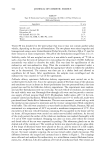
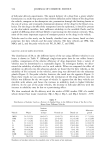
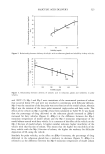
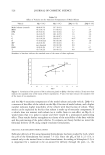
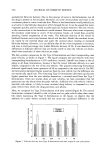
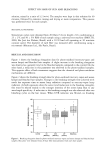
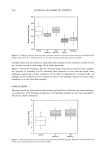
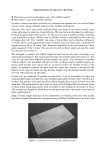
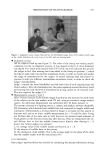
EFFECT ON HAIR OF SUN AND BLEACHING 535 solution, mixed in a ratio of 1:2 (w/w). The samples were kept in this solution for 40 minutes, followed by extensive rinsing and drying at room temperature. This process was performed twice for each sample. MECHANICAL PROPERTIES Stress/strain curves were obtained from 20 fibers (5.0-cm length 24 h conditioning at 25 + 2øC and 50 + 5% RH) of each sample using a universal test machine (EMIC DL 2000, Sgo Jos• dos Pinhais, Brazil) with a 10 N load cell operating at 10 ram/rain constant speed. The diameter of each fiber was measured after conditioning using a micrometer (Mitutoyo Ltd., Sgo Paulo, Brazil). RESULTS AND DISCUSSION Figure 1 shows the breaking elongation data for photo-oxidized (mercury-vapor and xenon lamps) and bleached hair samples. A slight increase in the breaking elongation was observed as a general trend in the bleached samples compared to the control. On the other hand, a reduction in this parameter was observed in the photo-oxidized samples. This opposite effect of both treatments suggests that the chemical and photo-oxidation mechanisms are different. Figure 2 shows the breaking strength data for photo-oxidized (mercury-vapor and xenon lamps) and bleached hair samples. Changes in the breaking strength were achieved with much less exposure time to xenon lamp radiation compared to mercury-vapor lamp radiation. As both exposures show the same trend (reduction in the breaking strength), this must be related mainly to the stronger intensity of the xenon lamp than to any wavelength specificity. A reduction in the breaking strength was also observed after two bleaching cycles on the hair tresses. When UVB radiation was filtered, no breaking lOO 8o 70, 60, 50 I I I I I Control UV UVA UV' Bleaching (Mercury) (Mercury) (Xenon) Figure 1. Breaking elongation data for photo-oxidized (mercury-vapor and xenon lamps) and bleached hair samples. Box plots were obtained from 20 hair fiber measurements from each hair sample.
Purchased for the exclusive use of nofirst nolast (unknown)
From: SCC Media Library & Resource Center (library.scconline.org)