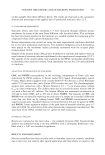
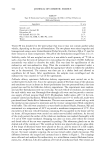
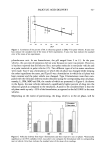
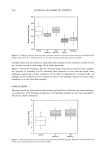
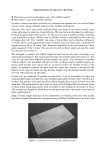
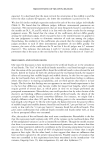
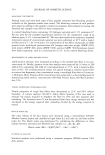
SALICYLIC ACID DELIVERY 523 .. Figure 1. Photomicrographs showing sebaceous glands before and after scraping. (x 10). A. Before scraping. B. After scraping. the dorsal sides of the ear were also digested and assayed for drug content. Digestion was performed by adding 2 ml of skin digesting fluid and incubating the skin for 24 hours at 60øC in an incubator (Precision Scientific Co., Chicago IL). The samples were then removed, brought to room temperature, and neutralized with 0.1 ml of glacial acetic acid. Drug content was measured using a scintillation counter. RESULTS AND DISCUSSION The different routes of penetration of drugs across skin are the intact stratum corneum, the sweat glands, and the follicles. The drug can reach the lower dermis and hence into the circulation via diffusion through the stratum corneum or by diffusion after travelling through the appendages. This is important to keep in mind while analyzing the results

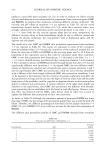
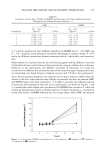
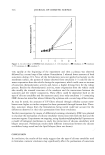
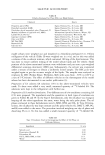
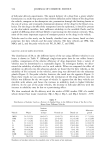
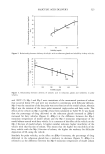
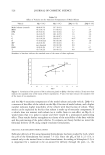
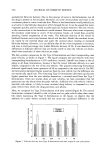
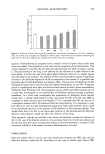
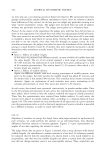
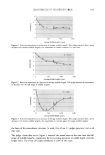
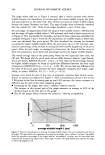
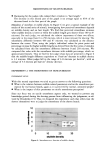
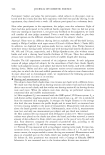
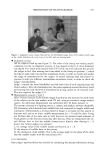
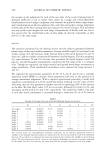
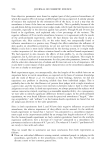
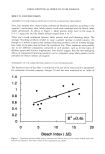
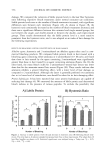
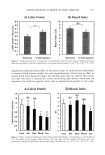
524 JOURNAL OF COSMETIC SCIENCE of follicular delivery experiments. The topical delivery of a drug from a given vehicle/ formulation is a multi-step process that involves diffusion and/or release of the drug from the vehicle, transport to the absorption site, permeation through the limiting barrier at the site of action, and eventually elimination/clearance of the drug by the blood circu- lation. For the drug to be effectively transported into the epidermis, it should be present at the skin/vehicle interface, have sufficient solubility in the available fluids, and be capable of diffusing down the hair follicle or partioning into the stratum corneum. Thus, some of the more important aspects of transport pertain to the drug in the vehicle. Vehicles used in this study can be broadly classified into two classes, based on their polarities: the fatty vehicles and the polar vehicles. The fatty vehicles are IPM, OA, MSO, and L, and the polar vehicles are PG, B, MP, T, and DMI. SALICYLIC ACID IN SIMPLE SOLUTIONS The distribution of SA in the different layers of the ear using different vehicles in six hours is shown in Table V. Although single-time-point data do not reflect kinetic profiles, comparisons of the relative efficiency of drug disposition from a variety of vehicles may be determined to a reasonable degree. To investigate further, we deter- mined the solubility of salicylic acid in each vehicle. When we compared the effect of solubility on delivery into the sebaceous glands, we found that for fatty vehicles, as the solubility of SA increased in the vehicles, more drug was delivered into the sebaceous glands (Figure 2). For polar vehicles, however, the trend was the opposite (Figure 3). From these results we can conclude that the mechanism of the drug delivery into the follicle was different for the two types of vehicle. It appears that the fatty vehicles are miscible with sebum, and hence the increase in solubility leads to higher follicular delivery. In the case of the polar vehicles, the decrease in follicular delivery with the increase in solubility may be due to a partitioning effect. We then correlated the SA delivery with the results of DSC studies. DSC of a model sebum showed four major transitions: Mp-1, Mp-2, Mp-3, and Mp-4 between -50øC Table V Distribution of Salicylic Acid as a Percent of Applied Dose in the Different Strata of the Ear in Six Hours From Different Vehicles Stratum corneum Sebaceous Vehicle Wipes (strips) Ventral ear Dorsal ear glands MSO 54.5 (5.23) 3.8 (0.47) 3.9 (0.75) 20.2 (1.61) 17.7 (3.63) IPM 33.7 (7.07) 3.3 (0.29) 2.5 (0.42) 33.2 (4.58) 27.3 (2.86) OA 27.7 (3.28) 4.3 (1.84) 2.8 (1.19) 41.6 (2.39) 23.6 (1.20) L 67.2 (2.19) 2.4 (0.40) 3.0 (0.69) 14.8 (1.83) 12.6 (0.79) G 56.8 (6.17) 5.2 (1.54) 3.9 (1.22) 17.8 (3.96) 16.3 (2.81) B 72.8 (1.90) 6.3 (0.71) 1.6 (0.59) 9.5 (1.59) 9.7 (0.92) MP 69.9 (8.29) 4.4 (1.54) 1.6 (0.38) 7.8 (1.10) 9.5 (2.36) PG 67.1 (3.05) 7.6 (1.05) 1.4 (0.19) 14.2 (1.89) 9.7 (1.22) DMI 80.6 (4.02) 2.4 (0.47) 1.0 (0.26) 9.1 (2.40) 6.8 (1.29) T 78 (5.72) 3.8 (0.95) 1.8 (0.45) 7.9 (3.09) 8.5 (2.78) Numbers in brackets indicate the standard error of the mean of six replicates.
Purchased for the exclusive use of nofirst nolast (unknown)
From: SCC Media Library & Resource Center (library.scconline.org)