554 JOURNAL OF COSMETIC SCIENCE BLEACHING TREATMENTS Normal, hard, and extra-hard types of four popular consumer hair-bleaching products available on the Japanese market were tested. The bleaching contents of each product were mixed according to the supplier's instruction manuals. After exhaustive rinsing, the bleached hair samples were dried at room temperature. A control bleaching lotion containing 3% hydrogen peroxide and 1.2% ammonia (0.7 M) was used for the standard experiments however, for the comparative study of an alkaline agent, 4.3% 2-aminoethanol (0.7 M) was substituted for the ammonia. Standard treatments typical of conventional customer use were performed at 30øC with a liquid- to-fiber ratio of 1:1 for 30 minutes. For examination of the effects of peptides on lablie protein levels, hydrolyzed proteins from silk [average molecular weight (AMW) 850], wool keratin (AMW 400), wheat (AMW 3500), and soy (AMW 700) (Seiwakasei, Japan) were added separately, each at a concentration of 2%, to the control bleaching lotion. MEASUREMENT OF LABILE PROTEIN LEVELS Labile protein amounts were measured according to the method described in our pre- vious study (4). Briefly, proteins in the hair samples were extracted for 16 hours in 200 mM of Tris containing 200 mM of 2-mercaptoethanol at 37øC, with a liquid-to-fiber ratio of 50:1. The resultant protein extract was passed through a cellulose acetate filter to remove hair fragments, then concentrated using a centrifugal filter device (Centricon- 3, Millipore, MA). Aliquots of the concentrates were subjected to a dye-binding assay for determining labile protein concentrations (Bio-Rad Protein Assay, Bio-Rad Laborato- ries, CA). TENSILE PROPERTIES (HYSTERESIS RATIO) Tensile properties of single hair fibers were determined at 25øC and 60% relative humidity. A texture analyzer (TA-XT2, Stable Micro Systems, U.K.) was used to measure the energy required to lengthen the fiber by 20% and that regained after unloading. The hysteresis ratio (5) was determined from these energy amounts and was calculated as the energy regained after unloading divided by the energy required to extend. BLEACH INDEX (AE) The color indexes of the hair tresses were measured using a chromometer (CR300, Minolta Camera, Japan) and classified as light index (L), red index (a), and blue-yellow index (b). The bleach index was determined by calculating the differences in these indexes between untreated and bleached hair samples (i.e., AL, Aa, Ab): Bleach index (AE) = SQRT{(AL) 2 + (Aa) 2 + (Ab) 2} STATISTICAL ANALYSIS Statistical analyses were performed using a computer program (EXSAS version 4.00, Arm, Japan).

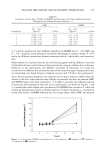
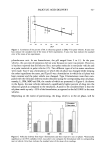
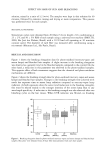
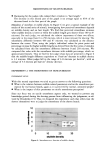
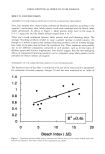
LABILE PROTEIN AS INDEX OF HAIR DAMAGE 555 RESULTS AND DISCUSSION ASSESSMENT OF HAIR DAMAGE INDUCED BY PRACTICAL BLEACHING TREATMENTS First, hair samples were treated using commercial bleaching products according to the supplier's instructions then, lablie protein levels were measured and the bleach index values determined. As shown in Figure 1, lablie protein levels were in the range of 0.4-1.2 mg/g hair and the bleach indexes ranged from 4 to 17. There was a weak correlation between labile protein level and bleaching index. The stronger bleaching products tended to cause a greater increase in labile protein. Al- though it is widely accepted that stronger bleaching products tend to severely damage hair, some of the plots were far from the correlation line. These variations were possibly due to the different components contained in each product, such as diverse types of alkaline agents and distinct supplements. Our results suggest that the hair-damaging effects of commercial bleaching products can be compared using labile protein levels, provided the bleach indexes are aligned. SUPERIORITY OF THE LABILE PROTEIN INDEX TO THE HYSTERESIS RATIO The hysteresis ratio of hair fiber is considered to be one of the most sensitive parameters for evaluation of tensile property changes (5) and has been employed as an index of •.4 1,2 - 1 0.8 0.6 0,4 - 0,2 - o o I I R 2 =0.46 5 10 15 20 Bleach Index (AE) Figure l. Correlation between lablie protein amounts and bleach index in hair tresses treated with com- mercial hair bleaches. The mean values of four experiments are shown.
Purchased for the exclusive use of nofirst nolast (unknown)
From: SCC Media Library & Resource Center (library.scconline.org)