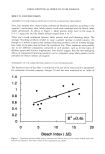
560 JOURNAL OF COSMETIC SCIENCE Application in cosmetics by using microcapsule involving UV absorbers was examined. It was possible to apply organic UV absorbers in water - rich formulations without any surfactant. This formulation demonstrated a good moisturizing and soft skin feel. The result showed this microcapsule might be widely applied in cosmetics. Enhancement of Human Fibroblast Growth and Other Dermatological Effects Induced by Cell Extract from Heat - Shocked Blue Green Alga (Cyanobacteria) Shigeno Sasaki, Toshiaki Kobayashi, Shigenori Kumagai, Tetsuo Hiyama, Nippon Shikizai Inc., Saitama University It has been known that high amounts of 'heat shock proteins (HSPs) ' are produced under heat and other environmental stresses in cells. Recently, it was reported that HSP could also be accumulated in some dermal cells to protect the cellular proteins from damage caused by ultraviolet radiation. Here, the authors have focused on thermophilie eyanobaeteria and the heat shock treatment. Thermophilic cyanobacteria are known to thrive under extreme environmental conditions, and produce distinctively high amounts of HSP when exposed to higher temperatures. We tested cell extract from heat - shocked eyanobaeterial cells on a number of skin- related biological activities and found it significantly effective. The eyanobaeterial cells, originally collected from a spa as hot as 55øC, were cultivated in the laboratory at 50øC and broken by a freeze - fracture method. The extract thus obtained had a superoxide dismutase (SOD) - like activity and inhibited lipid peroxide formation. We found that the extract obtained from the heat - shocked (at 63øC) cells showed a much stronger SOD- like activity, while the inhibitory effect on lipid peroxide formation remained almost the same. Furthermore, the SOD- like activity could withstand heat up to 70øC for as long as 1 h. Most remarkably, supplementing this heat- shocked extract strongly promoted the proliferation of human dermal fibroblast culture. Extracts from the cells grown at a regular temperature (50øC) did not promote the proliferation of the fibroblasts. The heat - shocked extract was fracfionated by ultrafiltration for further analysis. A fraction (molecular weight, 10000 to 30000) has shown the strongest activity so far. These results indicate that the heat- shocked cyanobacterial extract with its increased amounts of HSPs is a promising potent ingredient for anti - aging cosmetic materials. Promotion of Hair - Growth with Laminaria angustata Extracts Yutaka C•awa, Shinobu Tamaki, Shigetoyo Sawaki, Yasushi Tomita, Technoble Life Science Laboratory, Technoble Co., Ltd., Technoble Co., Ltd., Department of Dermatology, Nagoya University Graduate School of Medicine The mechanism of hair growth has been clarifying itself by the improvement in the culture techniques for hair follicle cells. Recently stem cells inducing the anagen phase in the hair follicle cycle have been discovered in the bulge region of the outer root sheath (ORS). To find growth - promoting agents for the ORS cells, we evaluated the effect of various botanical extracts on the growth of cultured human hair follicles. We found that Laminaria angustata extract increased the ORS cell growth. Further, hair - growth in the shaved skin of C3H mice was also promoted by the topical application of the extract. Volume 38, Facial Distribution of Subcutaneous Fat in Women Mayumi Satoh, Shinobu Mori, Naonobu Yoshizuka, Yoshinori Takcma Biological Science Laboratories, Kao Corporation There is great interest in the cosmetic field in improving the shape of the face, which is determined by the amount of No. 2, 2004 bone, muscle and subcutaneous fat. We examined the amount of facial subcutaneous fat in healthy women by magnetic resonance imaging (MRI) , and investigated the distribution of fat in relation to the body shape. Thirty - eight healthy women, 10 lean, 18 normal and 10 obese subjects, were examined by cephalometric MRI to obtain T1 - weighted images, by which fat regions can be clearly observed. The area of subcutaneous fat was greater in obese

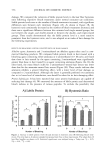
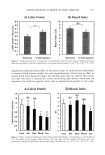
ABSTRACTS 561 subjects than in normal subjects, and was decreased in lean dispersion of L and a in the skin color (standard deviation) subjects. At 45 measured points, the thickness of in the middle- aged and elderly women. These results subcutaneous fat was greater in the cheek near the nose independently of the body shape, and the surface of the masseter muscle and lower jaw increased according to the body mass index (BMI). This research suggested that there are two types of regions, one type maintains fat mass and the other type increases with BMI. suggest that there may be no differences between the different age groups in the linguistic concept of transparency, while there may be differences in the physiological characteristics of skin that are utilized in making the judgment of transparency. The Structure of Consciousness and the Physiological Characteristics of the Skin regarding Skin Transparency --Comparison between the Young and Middle - Aged and Elderly Women-- Tomomi Seiya, Mika Nomura, Shoji Hayashi, Takashi Hasegawa Cosmetics Laboratory, Kanebo Cosmetics Inc., University of the Sacred Heart Transparency of the skin is an important keyword that is frequently used in questionnaires related to the female skin condition and skin consciousness, as well as an index for "before and after" comparisons of the effect of cosmetics. However, the concept of "transparency" has not been concretely defined. In the present study, we investigated the importance of "transparent skin" and the relationship between transparency and other expressions for skin condition comparing the young with middle- aged and elderly women. Furthermore, we also analyzed the correlation between the subjective assessment score of transparency of panels made by evaluators and the skin physiological parameters of those panels, and compared the difference of their relationship when the young and middle - aged and elderly women were employed as evaluators. Regarding the consciousness of the young women, the importance of "transparent skin" was ranked in the top position while "skin roughness" was the chief worry of the middle - aged and elderly women. On the other hand, both age groups indicated that transparent skin is a complex concept composed of skin texture, color, and moisture. Analysis of the relationship between the subjective assessment and the skin physiological parameters showed that the uneven dispersion of b in the skin color (standard deviation) , the water content of stratum comeurn, and the skin surface configuration (depth of furrows, amount of furrows) closely correlated with the judgment of skin transparency in the young group, in contrast to the uneven Evaluation of Fatigue Caused to Human Body by Solar Exposure by Measuring Brain Function Performance Toshio Horikoshi, Kohji Matsue, Takumi Takahashi, Hiroaki Ishii, Ken- ichi Yamada, Shoji Hayashi, Mitsuharu Yabune, Motoko Murakami, Osami Kajimoto, Cosmetics Laboratory, Kanebo Cosmetics Inc., SOIKEN Inc., Center of Health Care, Osaka University of Foreign Studies Following direct exposure to sunlight while pursuing leisure activities, many have noticed a strong sense of fatigue in the evening. In this regard, our results of a survey of awareness showed that the development of fatigue from solar exposure of the body was generally recognized. On the other hand, a tool for objective and quantitative determination of mental fatigue has recently been reported. Known as the Advanced Trail Making Test (ATMT) , it is a method of evaluating brain function. In the present study, we attempted to determine fatigue development caused by exposure of the human body to solar radiation using ATMT results. For 3 days in the summer season, 15 male subjects (26 to 41 years old) received exposure to the sun equivalent to 100 kJJcm2 of ultraviolet radiation 3 to 4 times each day. During the periods of exposure, the subjects wore short- sleeved shirts and short pants, and covered their heads with a towel. Following the 3 - day period, they were divided into 2 groups based on their subjective evaluation of a sense of tiredness, fatigued (n = 10) and non - fatigued (n=5) . In the fatigued group, a significant increase in the subjective score for fatigue sense was observed in the evening of all 3 days following sun exposure, as well as in the morning of the third day, as compared with those in the non - fatigued group. Further, a significant increase in average ATMT value was also observed in the fatigued group in the evening of the first and second days following sun exposure, as well as in the morning of the third day. These results indicate that ATMT may be a useful evaluation tool for quantitative and
Purchased for the exclusive use of nofirst nolast (unknown)
From: SCC Media Library & Resource Center (library.scconline.org)