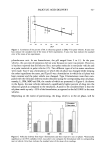
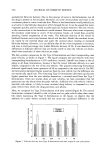
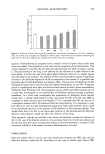
SMOOTHNESS OF SHAVEN BEARDS 5 51 The higher the average length and the density of stubble hairs, the lower the per- ceived smoothness. Specifically, we find that a reduction of 1 hair/cm 2 in hair density yields the same improvement in tactile smoothness as when L decreases some 6 pro. The orientation of the stubble influences perceived smoothness such that if the hairs are oriented vertically in the plane of the skin surface (usually against beard growth), tactile smoothness is lower. There is some, not fully understood, evidence that skin quality is an influence on smoothness perception. ACKNOWLEDGMENTS Many thanks to all subjects and judges, and our colleagues Mari•lle Bisschop, Patricia van Kemenade, Femke Wagemakers, Anke Sinnema, Erik Houbolt, Jan Engel, and Paul Ackermans for their ideas and support. REFERENCES (1) M. M. Breuer, R. L. Sheath, C. S. Ackerman, and S.J. Pozzi, Perceptual evaluation of shaving close- ness,J. Soc. Cosmet, Chem., 40, 141-149 (1989). (2) M. Krantz, Halotic recognition of objects in children,.J. Genet. Psycho/., 120, 121-133 (1972). (3) S. Lederman and R. L. Klatzky, Hand movements: A window into haptic object recognition, Cog. Psycho/., 19, 342-368 (1987). (4) S.S. Stevens and J. R. Harris, The scaling of subjective roughness and smoothness,J. Exp. Psycho/., 64, 489-494 (1962). (5) S.J. Lederman and M. M. Taylor, Fingertip force, surface geometry, and the perception of roughness by active touch, Percq). PJychophys., 12, 401-408 (1972). (6) B. G. Green, S.J. Lederman, and J. C. Stevens, The effect of skin temperature on the perception of roughness, Sensory Process., 3, 327-333 (1979). (7) R.T. Verillo, S.J. Bolanowski, and F. P. McGlone, Subjective magnitude of tactile roughness, So- matosensory Motor Res., 16, 352-360 (1999). (8) B. Hughes and G. Jansson, Texture perception via active touch, Hz/m, Movements Sci., 13, 301-333 (1994). (9) B. G. Green, Tactile roughness and the 'paper effect', B,//. Psychonom. Soc, 18, 155-158 (1981). (10) S. Louw, A. M. L. Kappers, and J. j. Koenderink, Haptic detection threshold of Gaussian profiles over the whole range of spatial scales, Exp, Brain Res., 132, 369-374 (2000). (11) J. W. Wiechers and V. A. L. Wortel, Bridging the language gap between cosmetic formulatots and consumers, Cosmet. Toilerr., 115, 33-41 (2000). (12) A.M. Smith, Some shear facts and pure friction related to roughness discrimination and the cutaneous control of grasping, Can. J. Physiol. Pharmacol., 72, 583-590 (1994). (13) A. A. Koudine, M. Barquirts, P. Anthoine, L. Aubert, and J. L. Leveque, Frictional properties of skin: Proposal of a new approach. Int. J, Cosmet. Sci., 22, 11-20 (2000). (14) D. I. Perret, B. Tiddeman, et al., Novel approaches in texture measurement for cosmetic anti-aging evaluation, ProceedingJ of the 22nd IFSCC Congress, Edinburgh (2002). (l 5) R. Drozdenko, Product testing measurement methods: Applications to shaving, Cosmet. Toilerr., 109, 67-72 (1994). (16) W.A. Wagenaar, Note on the construction of all-gram-balanced Latin squares, Psychol. BMI., 72, 384-386 (1969). (17) G. E. Pi•rard, EEMCO guidance for the assessment of dry skin (xerosis) and ichtyosis: Evaluation by stratum comeurn strippings, Skin Res. Technol., 2, 3-11 (1996). (18) R. Lundstr•3m, Local vibrations--Mechanical impedance of the human hand's glabrous skin, J. Bio- mechan., 24, 157-162 (1991). (19) C. Robbins, Chemical and Physical B•,havio•r of H•man Hair, 3rd ed. (Springer-Verlag, New York, Berlin, Heidelberg, 1994). (20) R. R. Wickerr and L. G. Walter, Beard length measurement by image analysis, Cosmet. Toilerr., 105, 71-74 (1990).

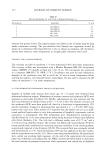
j. Cosmet. Sci., 55, 553-558 (November/December 2004) Practical use of labile protein as an index of hair damage TAKAFUMI INOUE, KENJI KIZAWA, MAYUMI ITO, MASAKAZU SHINKAI, and YOSHIMICHI IWAMOTO, Cosmetics Laboratory, Kanebo Cosmetics Inc. (T.I., K.K., M.I., M.S.), and Beauty Care Laboratory, Kanebo Ltd. (Y.I.), 5-3-28 Kotobz/ki-cho, Odawara, 250-0002, Japan. Accepted for publication October 18, 2004. Presented at the 2003 IFSCC International ConJ•rence, Seoul, Korea, September 22-24, 2003. Synopsis Because of small fluctuations, it is difficult to evaluate hair damage caused by bleaching using previously utilized hair damage indexes. Application of commercial bleaching products elevates partially extractable labfie hair protein amounts in the range of 0.4-1.2 mg/g of hair. Within this range, the level of labile protein fluctuates greatly, depending on the extent of bleaching. In the current study, it was found that the effects of alkaline constituents and various peptides contained in bleaching lotions on hair damage could be evaluated by measuring labile protein amounts without employing harsher bleaching conditions. INTRODUCTION A variety of methods have been used for the assessment of hair damage, including measurement of tensile property and chemical property changes (1), though it is difficult to assess hair damage induced by normal-strength bleach due to slight fluctuations of those properties. As a result, most investigations of hair damage have employed harsher bleaching conditions (2). However, an accurate and sensitive method for hair damage assessment that is applicable under milder conditions, similar to normal consumer usage, is required to evaluate actual hair damage. We previously established a novel method for the partial extraction of hair protein (3) termed labile protein, and we proposed its use for hair damage assessment (4). In the present study, we measured labile protein levels to develop a hair damage index more sensitive than other conventional indexes as a means of assessing normal bleaching conditions. We found that the hair damage index results varied, depending on the alkaline composition and peptide supplements in the bleaching lotion. MATERIALS AND METHODS HAIR SAMPLES Hair strands 20 to 40 cm long were obtained from Japanese women who had not employed any chemical treatments. Hair tresses were made, each weighing 1 g, washed with a 0.2% sodium laureth sulfate solution, and subjected to bleaching treatments. Address all correspondence to Takafumi Inoue. 553
Purchased for the exclusive use of nofirst nolast (unknown)
From: SCC Media Library & Resource Center (library.scconline.org)